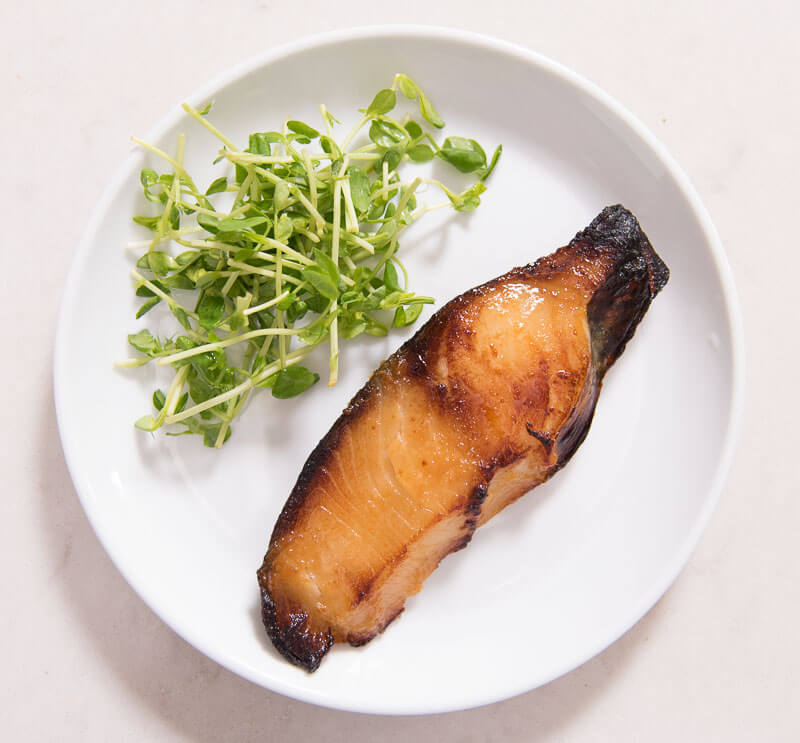
Irresistible Miso Marinated Black Cod | Gindara Misoyaki Recipe
Miso black cod — gindara misoyaki (銀鱈味噌焼き) — is one of those dishes that looks like you spent hours in the kitchen but actually rewards patience more than technique. Sweet, salty, impossibly rich, with a lacquered caramel crust that forms under the broiler. I’ve made this dozens of times at home and it never gets old. The secret isn’t complicated: it’s the marinade time and knowing how to handle the fish.
Last updated: April 2026
Key Takeaways
- Black cod (sablefish/Anoplopoma fimbria, called gindara in Japanese) is prized for its exceptionally high fat content — roughly 15–20% by weight — which gives it a silky, buttery texture unlike any other fish.
- The four-ingredient miso marinade (white miso, mirin, sake, sugar) caramelizes under the broiler to form a deeply savory, lacquered crust via Maillard browning.
- Marinating 24–48 hours delivers optimal flavor; beyond 48 hours the fish becomes progressively saltier without proportional flavor gain.
- Always wipe off excess marinade before broiling — miso’s sugar content chars rapidly, and the difference between a perfect caramel glaze and a burned surface is about 60 seconds.
- Batch-prepped portions freeze well after 24 hours of marinating and cook straight from the refrigerator, making this an ideal meal-prep recipe.

What Is Black Cod (Gindara 銀鱈)?
Black cod is sablefish (Anoplopoma fimbria) — a deep-water fish from the North Pacific, not a true cod despite the name. In Japan it’s called gindara (銀鱈), literally “silver cod,” and it’s commercially harvested from Alaska, British Columbia, and northern Japan.
What makes gindara extraordinary for misoyaki is its fat content. According to USDA FoodData Central (USDA, 2024), sablefish is one of the highest-fat finfish commercially available, carrying roughly 15–20% fat by weight — richer than salmon, richer than mackerel. That fat is what creates the buttery, almost silky texture that melts in your mouth when properly cooked. The fat also acts as a flavor carrier: the miso marinade penetrates the flesh and the lipids amplify every bit of umami.
From a sustainability standpoint, black cod is a good choice. NOAA rates Alaskan sablefish as well-managed with harvest at sustainable levels. If you can’t find it, Chilean sea bass (Patagonian toothfish) is the closest substitute in fat content and texture — though it’s pricier and sustainability varies by fishery. (Best for: home cooks who want the closest possible texture match to gindara.) A well-marbled salmon fillet (Copper River or King) is the most accessible substitute; the flavor profile is lighter but the technique transfers perfectly. (Best for: weeknight cooking when gindara isn’t available locally.)
The Nobu Connection — and What Came Before It
Most people first encounter miso black cod through Nobu Matsuhisa’s restaurants, where it’s been a signature dish since the 1990s. But the technique is much older. The original form is kasuzuke (粕漬け) — marinating fish in sake lees, the fermented rice solids left over from sake production. Sake lees are rich in enzymes that tenderize protein, complex amino acids that add depth, and natural sugars that caramelize during cooking.
Traditional kasuzuke gindara is still sold at high-end Japanese fishmongers and department store food halls. The problem is sake lees are nearly impossible to source outside Japan. Nobu recognized this and made a practical substitution: miso, which delivers similar fermentation complexity, amino acid richness, and caramelizing sugars in a form widely available in the US. The result was misozuke — and it’s arguably even easier to work with than the original.
This is my home version of that same technique. I’ve eaten gindara kasuzuke in Japan, and I’ve made this miso version more times than I can count. The home cook advantage: you control the sweetness, the marinade time, and the doneness — all areas where even good restaurants frequently fall short.

Understanding the Miso Marinade (Misodoko 味噌床)
The marinade — called misodoko (味噌床) in Japanese — uses only four ingredients, but each one does a specific job:
- White miso (shiro miso): The base. White miso is milder, sweeter, and less salty than red miso. It brings umami from fermentation — glutamic acid and free amino acids that develop during the koji fermentation process. White miso also caramelizes beautifully under heat, creating that signature lacquered surface.
- Mirin: A sweet rice wine (roughly 14% alcohol, high sugar). It adds sweetness, gloss, and helps the marinade cling to the fish. The sugars in mirin participate in Maillard browning during broiling, giving the surface its caramel color.
- Sake: Dry rice wine. It draws moisture from the fish during marinating (osmosis), tenderizes the protein slightly, and neutralizes any fishiness. The alcohol cooks off, leaving subtle rice wine notes that complement the miso.
- Sugar: Accelerates caramelization and balances the salt content of the miso. Use less if your miso is already sweet (most white miso is); use more if you’re using a saltier red or mixed miso. I tend conservative — 2 tablespoons is my baseline.
On miso type: White miso is the standard choice — mild, sweet, lower salt. Yellow (shinshu) miso adds more depth. Red miso produces a stronger, saltier result; if using it, reduce sugar slightly and watch the broiling time closely since it burns faster. Mixed (awase) miso splits the difference and works well.
| Miso Type | Flavor Profile | Salt Level | Caramelization Speed | Best For |
|---|---|---|---|---|
| White (Shiro) | Mild, sweet, delicate | Low | Moderate — forgiving under broiler | First-timers; classic misoyaki result |
| Yellow (Shinshu) | Earthy, slightly tangy | Medium | Moderate | Deeper flavor without full red miso intensity |
| Mixed (Awase) | Balanced, complex | Medium | Moderate–fast | Versatile everyday choice |
| Red (Aka) | Bold, assertive, savory | High | Fast — burns easily | Experienced cooks who want an intense, robust glaze |
The Techniques That Make the Difference
Pre-salt the fish first
Before the fish touches the marinade, sprinkle it lightly with salt and let it sit on a paper towel-lined plate for 30–60 minutes (uncovered is fine). This draws surface moisture out through osmosis, which accomplishes three things: it removes moisture that would otherwise dilute your marinade, it firms the texture slightly so you get a better crust under the broiler, and it reduces residual fishiness. Wipe the fish dry before applying the marinade.
Marinate 48–96 hours (2–4 days)
The conventional wisdom from Nobu is a 3-day marinade. In my experience — and serious recipe testing backs this up — 24 hours is the sweet spot. Marinades don’t penetrate particularly far into fish flesh; they work primarily on the surface layers. Extended marinating past 48 hours makes the fish progressively saltier without adding proportional flavor. One day is ideal. Four days is traditional for the deepest flavor. Even 8 hours gives you excellent results if time is short.
One of the best things about this recipe: you can batch-prepare a large quantity of marinating fish, then freeze individual portions after 24 hours in the marinade (wiped clean). They’ll keep well for 2–3 weeks and cook straight from the refrigerator — no need to thaw completely first.
Wipe off excess marinade before cooking
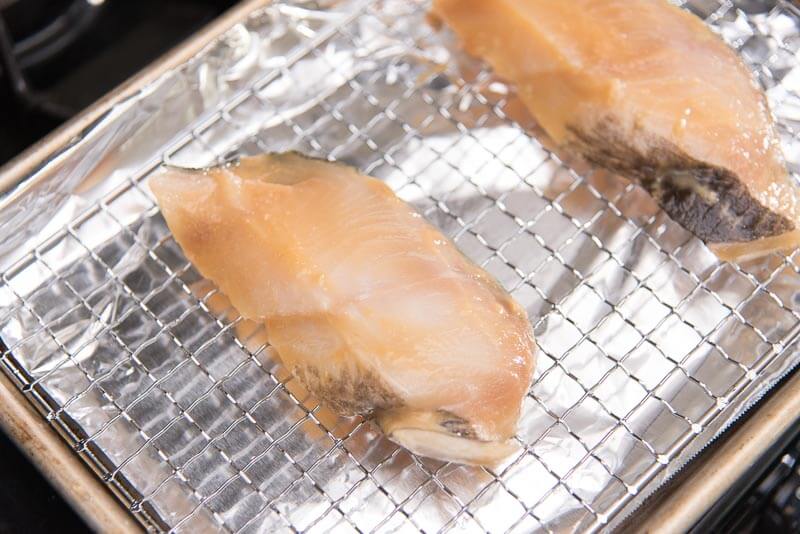
This is the step people skip and then wonder why their fish burned. Miso contains sugar — it chars rapidly under a hot broiler. Wipe away as much marinade as you can with paper towels, leaving only a thin, near-transparent coating on the fish. The residual layer is enough to give you flavor and color without burning.
Broil on a wire rack and watch it constantly
A wire rack over a foil-lined baking sheet lets heat circulate under the fish, giving you even browning without flipping in most cases. Set the oven to broil and position the rack in the upper-middle position. With the broiler running, 1-inch thick fillets typically take 8–10 minutes. Watch continuously — the difference between a perfect caramel glaze and burned miso is literally 60 seconds.
The fish is done when:
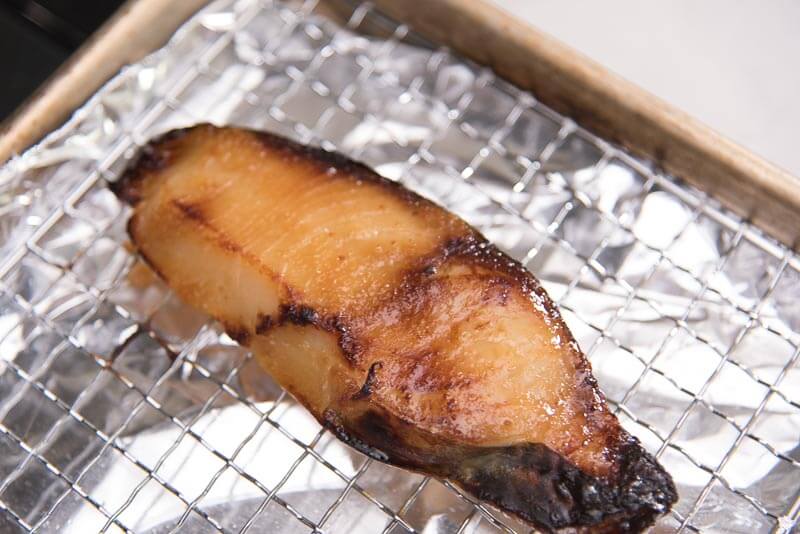
- The surface is deep amber, not black
- The flesh is opaque and flakes slightly at the thickest point
- A thin skewer or thermometer probe slides smoothly through the flesh without resistance — this means the muscle membranes have broken down and the fish is ready
- Internal temperature reaches 130–135°F (54–57°C) — black cod’s high fat content keeps it silky even at these temperatures, which are slightly below the USDA recommendation for white fish
How to Serve Miso Black Cod
Gindara misoyaki is best served with clean, simple accompaniments that let the fish take center stage — its richness and intense umami flavor can be easily overwhelmed by bold sides. The traditional Japanese approach pairs it with neutral and lightly acidic elements for balance.
- The classic Japanese set: Steamed short-grain white rice, a bowl of miso soup, and tsukemono (Japanese pickles). The umami from the fish, the neutral rice, and the briny pickles form a perfect triangle. This is exactly how it appears in a traditional Japanese breakfast (ichiju sansai).
- On sunflower sprouts or watercress: The slight bitterness of sprouts cuts through the richness beautifully. Dress with mirin, rice vinegar, and sesame oil for a restaurant-style presentation.
- With daikon oroshi: Grated raw daikon alongside the fish is a classic Japanese pairing. The daikon is cooling and mildly astringent — a perfect palate-cleanser between bites of the sweet-savory fish. A squeeze of yuzu or sudachi over the top elevates it further.
- Japanese bento: Cold gindara misoyaki is excellent in a bento box. The flavors actually deepen slightly at room temperature. Pack it over rice with tamagoyaki (rolled egg) and pickled vegetables.
- With soba noodles: Serve the fish alongside a cold soba noodle salad dressed with dashi, soy, and mirin. The earthy buckwheat provides a sophisticated contrast to the rich, sweet fish.
- Western-style plating: At a dinner party, plate it on roasted cauliflower purée or creamy polenta with some crispy capers and a wedge of Meyer lemon. The miso flavor profile works surprisingly well with European-style sides.
Wine and Drink Pairings
Pairing drinks with miso black cod is a genuinely fun challenge. The fish is rich and fatty; the marinade is sweet, savory, and packed with umami. You need something that holds its own without overpowering the delicate fish.
Sake (the first choice)
Junmai Daiginjo sake is my top recommendation. It’s fragrant, clean, and has a subtle fruitiness that plays off the sweet miso glaze without competing with it. The rice-based fermentation in sake has a natural affinity with the fermented rice in the miso marinade. Serve it chilled. A good-quality junmai (pure rice sake) works beautifully if daiginjo is unavailable or feels like overkill for a weeknight.
White wine
White Burgundy (Chardonnay) is the classic Western pairing — a village-level Mâcon or premier cru Chablis gives you mineral crispness that cuts the fat without clashing with the marinade’s sweetness. Avoid heavily oaked California Chardonnay; the buttery oak fights with the fish’s natural richness and makes the overall experience muddy.
Grüner Veltliner from Austria is an underrated choice — its white pepper spice and bright acidity handle the umami beautifully. White Rhône blends (Roussanne, Marsanne) bring enough body to stand up to the rich fish without overwhelming it. Viognier works if the aromatics aren’t too heavy — look for a restrained, cool-climate style.
What to avoid
Tannic reds like Cabernet Sauvignon clash with the fish’s sweet marinade and create a metallic aftertaste. Sweet Riesling or Gewürztraminer can overlap with the already-sweet marinade, making the whole experience cloying. Sparkling wine is fine if you want bubbles, but the effervescence scrubs away the miso’s subtle complexity — save the Champagne for raw oysters.
Variations and Substitutions
Other fish that work well
The miso marinade works with any fatty fish. My other favorites are Japanese mackerel and king salmon. Chilean sea bass is excellent but expensive. Halibut works but is leaner — reduce marinade time to 8–12 hours maximum to avoid over-salting the flesh.
| Fish | Fat Content | Flavor | Marinade Time | Availability | Best For |
|---|---|---|---|---|---|
| Black Cod (Gindara / Sablefish) | Very high (15–20%) | Rich, buttery, silky | 24–96 hours | Specialty / Japanese markets | The authentic, most luxurious result |
| Chilean Sea Bass | High (~11–13%) | Rich, mildly sweet, firm | 24–48 hours | Upscale grocery stores | Closest texture match; premium dinner parties |
| King / Copper River Salmon | Medium–high (~10–12%) | Lighter, more pronounced fish flavor | 8–24 hours | Widely available | Weeknight cooking; most accessible substitute |
| Japanese Mackerel (Saba) | Medium–high (~13%) | Bold, oily, assertive | 8–24 hours | Asian grocery stores | Deeply savory, traditional Japanese flavor |
| Halibut | Low (~2–3%) | Clean, mild, lean | 8–12 hours max | Widely available | Lighter version; reduce marinade time to avoid over-salting |
Cooking method variations
Pan-sear: Heat a cast-iron or stainless steel skillet over medium-high until smoking. Add a thin film of neutral oil and cook skin-side down first for 3–4 minutes, pressing gently to prevent curling. Flip and cook 2–3 more minutes. You get a better crust than broiling with more control over the outcome.
Grill: The original misoyaki preparation. Use a clean, well-oiled grill over medium-high heat. The miso marinade will smoke and char quickly — this is traditional, not a mistake. Keep a spray bottle of water nearby to manage flare-ups from the dripping fat.
Toaster oven: Works better than a full oven broiler for small portions — the compact space concentrates heat more efficiently. 4–5 minutes on high broil, watching closely.
Reusing the marinade
The marinade can be reused once more — it works well for chicken thighs, pork tenderloin, or another round of fish. After two uses, it will develop too much fishiness. Store used marinade in an airtight container in the refrigerator and use within 2 days.
Storage and Make-Ahead
Batch prep and freeze: After 24 hours in the marinade, wipe each piece clean, wrap individually in plastic wrap, and freeze in an airtight container. They’ll keep 2–3 weeks. Thaw overnight in the refrigerator and broil — no need to bring to room temperature first. This is how I always make this recipe: big batch on a Sunday, dinners ready for weeks.
Cooked fish storage: Leftover cooked gindara keeps refrigerated for 3 days. Reheat gently in a covered pan over low heat with a tablespoon of water, or briefly in the microwave at 60% power. The fresh glaze won’t come back, but the flavor holds well.
Freezing cooked fish: Can be frozen for up to a month — the texture deteriorates on reheating. Always freeze marinated raw instead.
Miso Marinated Black Cod | Gindara Misoyaki 🐟
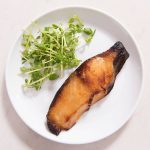
Gindara misoyaki (銀鱈味噌焼き) — miso marinated black cod — is one of the most iconic Japanese fish preparations. The marinade is four ingredients: white miso, mirin, sake, and sugar. The technique is the key. A 24-hour marinade, careful pre-salting, and 5–6 minutes under a hot broiler produce a lacquered, caramel-crusted fish that is impossibly rich and buttery. This is the home version of the dish made famous by Nobu — and it is just as good.
- Prep Time: 5 minutes
- Cook Time: 7 minutes
- Total Time: 13 minutes
- Yield: 6 people 1x
- Category: Main Dish
- Cuisine: Japanese
Ingredients
- 1 whole black cod (cleaned and filleted)
- 2–3 Tablespoons sugar (~30–45 ml)
- 2 Tablespoons sake (~ 30 ml)
- 2 Tablespoons mirin (~ 30 ml)
- 3/4 cup white miso (~ 200 ml )
Instructions
To prepare the misoyaki marinade
- Clean and fillet the fish. Cut into 2-inch wide pieces (about 4–6 oz each).
- Lightly sprinkle salt over both sides of the fish pieces and set aside on a paper towel-lined plate for 30–60 minutes. The salt draws out surface moisture, concentrates flavor, and reduces fishiness.
- While the fish rests, prepare the marinade: in a bowl, combine the sugar, sake, and mirin and stir until the sugar begins to dissolve. Add the white miso and mix until smooth.
- Wipe the fish dry with fresh paper towels to remove the drawn-out moisture.
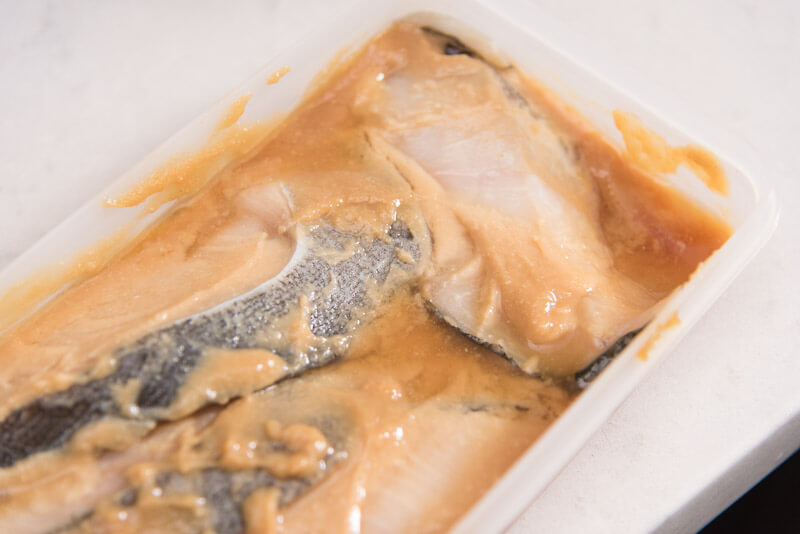
- Coat the fish pieces thoroughly in the miso marinade, using a zip-lock bag or airtight container to ensure even coverage.
- Marinate in the refrigerator for 24 hours (minimum 8 hours, maximum 48 hours).
To cook the miso black cod
- Preheat the broiler on high. Position the rack in the upper-middle position.
- Remove the fish from the marinade and wipe off as much excess as possible with paper towels — leave only a thin, near-transparent coating. This step is critical: the miso-sugar mixture burns rapidly under the broiler.
- Place the fish on a wire rack set over a foil-lined baking sheet. The wire rack allows heat to circulate underneath and produces better browning without flipping.
- Broil for 4–6 minutes, watching continuously. The fish is ready when the surface is deep amber (not black) and the flesh is opaque. A thin skewer or probe should slide smoothly through the thickest part without resistance. Internal temperature 130–135°F (54–57°C).
- If the surface is darkening faster than the fish is cooking through, move the rack down one level and/or reduce to 450°F for the final 2–3 minutes.
- Serve immediately with steamed short-grain rice, miso soup, and a wedge of citrus.
Notes
Wire rack tip: Broiling on a wire rack means heat reflects from underneath the fish as well. In most cases you will not need to flip the fish at all. This also produces a drier, better-textured crust. Always use a rack if you have one.
Make-ahead / freeze: After marinating 24 hours, wipe the fish clean, wrap each piece individually in plastic wrap, and freeze in an airtight container for up to 6 weeks. Thaw overnight in the refrigerator before broiling.
Marinade reuse: The marinade can be reused once for chicken thighs, pork tenderloin, or another batch of fish. After two uses, discard — it will become too fishy.
Frequently Asked Questions
What is miso black cod called in Japanese?
Gindara misoyaki (銀鱈味噌焼き) is the full Japanese name for miso-grilled black cod. Gindara means “silver cod” — the Japanese name for black cod/sablefish (Anoplopoma fimbria) — and misoyaki means “miso-grilled.” The dish is also sometimes called gindara no misozuke (銀鱈の味噌漬け), referring specifically to the marinating (漬け, zuke) technique rather than the grilling method.
Can I marinate for less than 24 hours?
Yes — even 8 hours produces good results with solid surface flavor. Thirty minutes is the bare minimum; the flavor will be lighter but the fish will still caramelize nicely under the broiler. For the best result, marinate 24 hours. Beyond 48 hours, the fish becomes progressively saltier without proportional flavor gain.
Can I use red miso instead of white?
Yes, but you’ll need to adjust the recipe. Red miso is saltier and more intensely flavored than white miso. Reduce the sugar slightly to compensate for its stronger seasoning, and watch your broiling time closely — red miso burns faster than white due to its higher protein content. The result is deeper and more assertive, which some people prefer. Mixed miso (awase) is a good middle ground that balances both qualities.
Why does my miso black cod taste too salty?
Three common causes are responsible: marinating beyond 48 hours, skipping the pre-salt-and-wipe step (which leaves excess surface moisture that concentrates the marinade), or using a high-sodium miso variety. Fix it by shortening the marinade time to 24 hours, completing the pre-salt osmosis step properly before applying the marinade, or switching to a lower-sodium white miso.
Can I substitute another fish for black cod?
Yes — several substitutes work well depending on your priorities. Chilean sea bass is the closest match in fat content and texture (best for: the most authentic result when gindara is unavailable). Salmon is the most accessible substitute (best for: weeknight cooking with wide supermarket availability). Halibut works but is much leaner, so reduce marinade time to 8–12 hours to avoid over-salting. Avoid very lean white fish like tilapia or true cod — they lack the fat content needed to carry the miso marinade properly.
Why does the miso burn when I broil it?
Excess marinade left on the fish is the most common cause. The miso-sugar mixture caramelizes almost immediately under broiler heat — leaving too thick a coating guarantees burning before the interior cooks through. Wipe the fish with paper towels until only a thin, near-transparent coating remains. Keep the rack in the upper-middle position (not the top slot) and watch the fish continuously for the entire 8–10 minutes it’s under the broiler.
How do I know when the fish is done?
Three reliable signs indicate doneness: the surface is amber-caramel (not black), the flesh is opaque and flakes at the thickest point, and a thin probe slides smoothly through the muscle membranes without resistance. Internal temperature should read 130–135°F (54–57°C). Black cod’s high fat content — roughly 15–20% by weight — keeps it silky and moist even at these temperatures, which are slightly below the standard USDA recommendation for white fish.
What is the history of miso-marinated fish in Japanese cooking?
The technique predates Nobu’s famous version by centuries. The original form, kasuzuke (粕漬け), used sake lees — the fermented rice solids left over from sake brewing — to marinate fish. Sake lees contain enzymes that tenderize protein and natural sugars that caramelize during cooking. When chef Nobu Matsuhisa brought the dish to his US restaurants in the 1990s, he substituted miso (a more widely available fermented rice product) for the sake lees, creating the misozuke version most people know today.
Can I reuse the miso marinade?
Yes, once. The used marinade works well for chicken thighs, pork tenderloin, or a second round of fish. After two uses it develops excessive fishiness and should be discarded. Store used marinade in a sealed container in the refrigerator and use within 2 days.

Sounds delicious. I like how simple the marinade is.
indeed indeed 😉 have you made anything similar?
Yes, I’ve marinated salmon in teriyaki/soy sauce, brown sugar, grated fresh ginger and garlic. I’ve added mirin and miso paste too sometimes.
I think i’ll be buying some salmon this weekend 😉