Kombu Types Guide: Which Variety is Best for Your Dashi
Kombu is the foundation of Japanese cuisine. Without kombu dashi, there is no proper miso soup, no refined broth for ramen, no authentic sukiyaki base. But kombu is not one thing — there are several distinct varieties harvested from different areas of Hokkaido, each with its own flavor profile, glutamate content, and ideal use. Knowing the difference helps you cook more intentionally and source the right kombu for each purpose.
Why Kombu Produces Umami
Kombu is one of the richest natural sources of glutamic acid — the compound that produces the “fifth taste,” umami. Specifically, dried kombu contains up to 3,000mg of glutamic acid per 100 grams, the highest concentration of any food. When steeped in water, this glutamate dissolves to create the foundational savory backbone of Japanese cuisine.
Different kombu varieties have different glutamate concentrations and accompanying minerals, resulting in notably different dashi flavor profiles. The variety you choose significantly affects the character of your dashi.
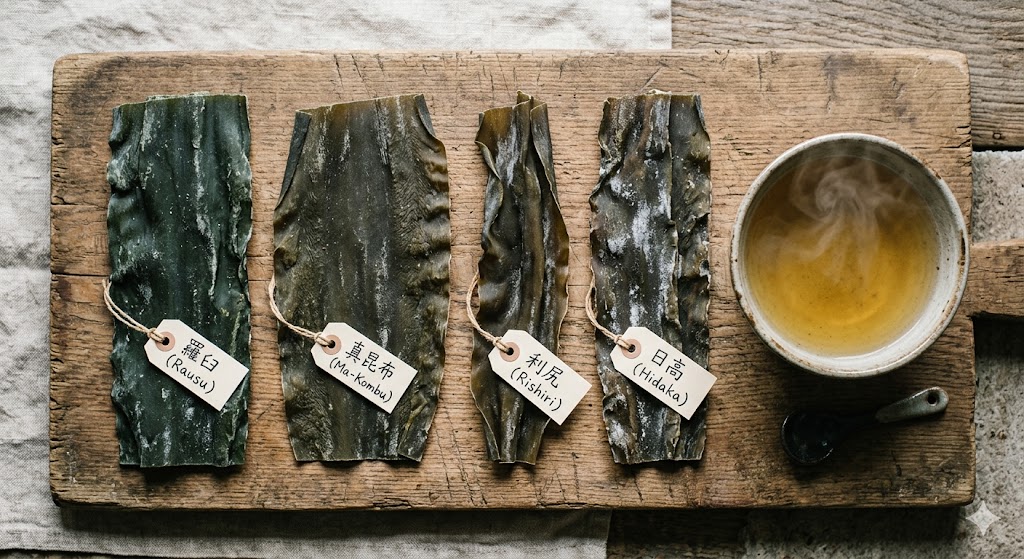
Ma Kombu (True Kombu)
Ma kombu is considered the standard, the baseline against which other kombu is measured. Harvested primarily around Hakodate in southern Hokkaido, ma kombu produces the clearest, most refined dashi — clean umami, pale golden color, light sweetness, elegant rather than assertive.
Best uses:
- Clear soups where color and delicacy matter (suimono)
- Dashi for chawanmushi (savory egg custard)
- Formal Japanese cuisine where kombu dashi is a supporting element rather than the star
- Cold dashi where clarity is valued
Ma kombu is the kombu used in high-end Kyoto kaiseki cooking. Its refinement comes at a premium price — it’s the most expensive common kombu variety.
Rausu Kombu
From the Rausu region on the Shiretoko Peninsula in eastern Hokkaido, rausu kombu produces the richest, most intensely flavored dashi of any variety. The glutamate content is extremely high, and the resulting dashi is deep amber in color with pronounced, complex umami that’s almost sweet.
Best uses:
- Nabe (hot pot) dashi where strong flavor is needed to stand up to meat and vegetables
- Ramen broth bases
- Miso soup where a richer foundation is desired
- Cold ramen or chilled noodle broths where intensity holds up in cold temperature
Rausu kombu produces yellowish, slightly turbid dashi — not appropriate for dishes where color clarity matters, but exceptional where maximum flavor is the goal. Browse our rausu kombu here.
Rishiri Kombu
Named for Rishiri Island off the northwest coast of Hokkaido, rishiri kombu produces clean, highly refined dashi with good clarity and strong but elegant umami. It’s considered by many chefs the best all-purpose premium kombu — less expensive than ma kombu but delivering similar clarity with more flavor presence.
Best uses:
- Everyday miso soup where quality matters
- Dashi for udon and soba noodle soups
- Awase dashi (combined kombu and bonito) base
- Any application where you want both clarity and strong umami presence
Rishiri kombu is the working professional choice — excellent quality at a more practical price point than ma kombu. See our rishiri kombu selection.
Hidaka Kombu (Mitsuishi Kombu)
Hidaka kombu from the Hidaka region of southern Hokkaido is the most affordable and widely consumed everyday variety. Thinner and softer than the other varieties, it produces more turbid dashi with a milder, slightly less complex umami. Its softness makes it excellent for eating as well as making dashi.
Best uses:
- Everyday cooking where premium quality isn’t required
- Tsukudani (simmered kombu) — the soft texture makes it ideal for eating after dashi-making
- Kombu in nimono (simmered dishes) where the kombu is consumed as part of the dish
- Kombu dashi for beginners — more forgiving and the results are good even with less-than-perfect technique
How to Make Kombu Dashi
The fundamental technique works for all varieties, with slight adjustments per type:
- Wipe the kombu with a damp cloth to remove surface dust (do not wash — the white powder is glutamate crystals)
- Place kombu in cold water (typical ratio: 10g kombu per 1 liter water)
- Heat slowly over low-medium heat
- Remove the kombu just before the water reaches a simmer (around 60-70C)
- Do not boil kombu — boiling releases bitter compounds and muddies the dashi
For richer, cold-steeped dashi: soak kombu in cold water overnight (minimum 8 hours). This produces exceptionally clear, complex kombu water with maximum glutamate extraction.
Frequently Asked Questions
What is the white powder on kombu?
The white powder is crystallized glutamic acid and mannitol (a natural sweetener) that has migrated to the surface during drying. It is not mold, salt, or any undesirable substance — it’s part of what makes kombu valuable and should not be washed off before use. It dissolves into the dashi when the kombu is steeped.
Can I reuse kombu after making dashi?
Yes, particularly with hidaka kombu. First-use kombu has given most of its glutamate to the dashi, but the used kombu still has excellent flavor and texture for cooking. Slice and simmer in soy sauce, mirin, and sake for tsukudani. Add to nimono. The used kombu from premium varieties like ma kombu or rausu kombu can be cold-steeped a second time for a lighter secondary dashi.
What is “natto kombu” or “tororo kombu”?
Tororo kombu is shaved from the outer surface of kombu to create very fine, hair-like strands. It’s used as a topping for rice, soup, and onigiri, dissolving partially into the liquid around it and releasing concentrated kombu flavor. It’s a different product from whole kombu used for dashi.
Is kombu appropriate for vegan and vegetarian dashi?
Yes. Pure kombu dashi (ichiban kombu dashi) is completely plant-based and is the primary stock option for vegan Japanese cooking. It delivers substantial umami without any animal products. Combining kombu with dried shiitake mushrooms creates an even richer vegan dashi with the glutamate-guanylate umami synergy.
How should I store kombu?
In a cool, dry location in an airtight container. Properly stored dry kombu keeps for 1 to 2 years. Humidity is the main enemy — store with a silica gel packet in humid climates. Do not refrigerate unless in a perfectly sealed container, as condensation damages the surface glutamate crystals and may cause mold.