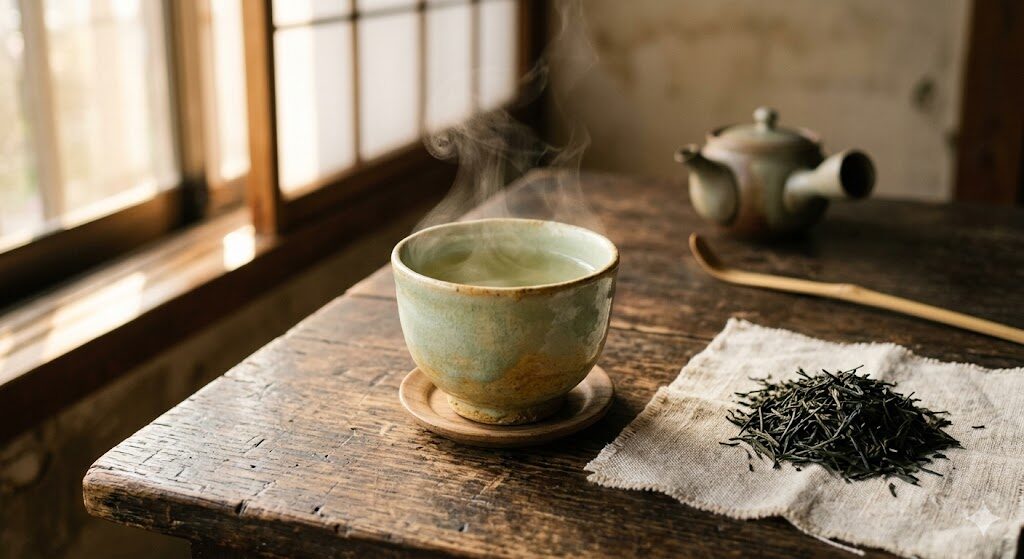
Kagoshima Sencha: Japan’s Bold Southern Green Tea
Japan’s southernmost major
Kagoshima’s Tea Geography
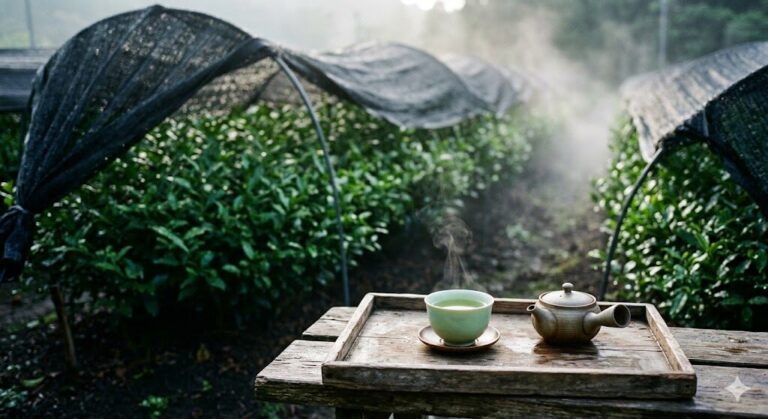
Kagoshima Prefecture occupies the southern tip of Kyushu island. The climate is warmer and sunnier than the central Japanese
The combination of warmth, mineral soil, and longer sun exposure produces leaves with higher catechin content and a more assertive, slightly astringent character that differs from the lighter, more vegetal profile associated with classic Japanese sencha.
How Kagoshima Sencha Tastes
The flavor profile has several distinctive characteristics:
- Fuller body — more substance and weight in the cup than Shizuoka sencha
- Robust green character — deep vegetal notes, sometimes with a slight mineral edge
- Higher catechin presence — translates to more astringency that resolves into a satisfying dryness
- Warm, earthy finish — the volcanic soil influence is real and detectable
Within Kagoshima, specific areas have distinct profiles. Chiran is the most famous sub-region, producing well-balanced sencha. Kirishima (the mountainous interior) produces higher-elevation sencha with more complexity. Minami Kyushu has emerged as a certified
Fukamushi Kagoshima Sencha
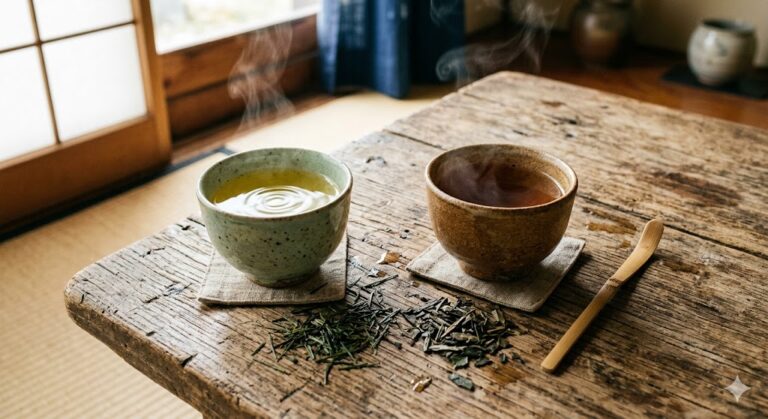
Much of Kagoshima’s sencha is processed as fukamushi (deep-steamed), steamed two to three times longer than standard sencha. This breaks down the cell walls of the larger Kagoshima leaves, producing a powder-fine texture and extracting more compounds into the brew. Fukamushi Kagoshima sencha is:
- Deeper green in color (more leaf particles in suspension)
- Richer and creamier in texture
- Less visually clear but more flavor-dense
- Faster-brewing (30 to 40 seconds is enough)
Browse our Kagoshima sencha options here.
Brewing Kagoshima Sencha
The higher catechin content means Kagoshima sencha responds differently to brewing variables than delicate Uji sencha. Use these parameters as a starting point:
For standard Kagoshima sencha:
- Water: 70-75C
- Ratio: 1 teaspoon per 150ml
- Steep: 45-60 seconds
For fukamushi Kagoshima sencha:
- Water: 70C
- Ratio: 1 heaped teaspoon per 150ml
- Steep: 30-40 seconds (fine particles extract quickly)
- Use a fine-mesh filter
Kagoshima vs Shizuoka Sencha
The two dominant sencha regions are frequently compared:
- Shizuoka — lighter, more aromatic, distinctly grassy and bright; the classic Japanese sencha profile
- Kagoshima — fuller, more robust, mineral and bold; better for those who find standard sencha too thin
Neither is superior. They serve different preferences. Many dedicated
Food Pairings for Kagoshima Sencha
The boldness of Kagoshima sencha pairs well with food. It can stand up to strongly flavored Japanese dishes without being overwhelmed:
- Breakfast with a Japanese meal (miso soup, rice, pickles)
- Grilled fish — the assertive green notes cut through fat
- Tempura and fried foods
- Yakitori and grilled chicken
- Savory rice crackers
Frequently Asked Questions
Is Kagoshima sencha lower quality than Shizuoka or Uji sencha?
No. This misconception exists because Kagoshima is associated with high-volume production. But Kagoshima produces exceptional specialty sencha. The fuller, bolder character is a regional style preference, not a quality indicator. Chiran-grown premium sencha rivals any other Japanese region.
Why is Kagoshima tea harvested earlier than other regions?
The warmer southern climate accelerates the growing season. Kagoshima’s first flush (ichibancha) arrives in late March, three to four weeks before Shizuoka and six weeks before Uji. This early harvest captures the freshest, most amino-acid-rich spring growth.
Does Kagoshima sencha contain more caffeine?
Generally yes, slightly more than Shizuoka sencha due to the warmer climate and higher catechin content. Approximately 35-45mg per 8oz cup versus 25-35mg for lighter Shizuoka sencha.
Can I make cold brew with Kagoshima sencha?
Yes, and the results are impressive. The fuller body translates well to cold brew, producing a rich, almost savory cold beverage. Use 1 tablespoon per 300ml cold water, steep 8 hours in the refrigerator. Cold extraction reduces bitterness significantly.
What is Chiran sencha?
Chiran is the most prestigious sub-region within Kagoshima, located in Minami Kyushu City. Chiran sencha is considered the flagship expression of Kagoshima terroir — well-balanced, with the region’s characteristic body but more refinement than bulk Kagoshima production.