Rice Cooker Buyer’s Guide for Japanese Cooking
Rice in Japan is not a side dish — it’s the center of the meal. Japanese rice cookers, developed by Japan’s precision engineering culture over decades, treat rice preparation as the serious endeavor it is in Japanese culinary tradition. Understanding what makes Japanese rice cookers different from basic appliances helps you make an investment that will change how you cook — every day, for decades.
Why Japanese Rice Cookers Are Different
A basic rice cooker does one thing: apply heat until a thermostat detects that all free water has boiled away, then switch to “warm.” It works. It’s not remarkable.
Japanese rice cookers from manufacturers like Zojirushi, Panasonic, Tiger, and Cuckoo take a different approach. They use computer-controlled heating profiles — ramping temperature gradually, holding precise temperatures for specific durations, applying different techniques for different rice types — to produce consistently superior results that approximate what a skilled Japanese cook achieves with traditional methods.
The Three Technology Tiers
Basic heated plate (conventional):
- Simple bottom-heating element
- Mechanical or basic electronic thermostat
- Good for everyday use, acceptable results
- Price: budget range
Fuzzy logic:
- Microcomputer controls the heating cycle with adjustments based on real-time temperature sensing
- Multiple cooking settings (white rice, brown rice, sushi rice, porridge, etc.)
- Significantly more consistent results than basic models
- Price: mid-range
IH (Induction Heating) with fuzzy logic:
- Induction coils heat the entire inner pot (not just the bottom) for even cooking
- Often combined with pressure cooking capability in premium models
- Most closely approximates traditional kamado (wood-fired earthen pot) rice cooking
- Price: premium to luxury range
Key Features Worth Paying For
IH heating: The most important upgrade from basic to premium. Even heat distribution eliminates the hot-bottom problem of conventional models where the bottom layer overcooks while the top steams.
Pressure cooking capability: Pressure allows higher-than-boiling temperatures. This gelatinizes more of the rice starch, producing the “glossy” sticky rice that Japanese restaurants serve. Premium Zojirushi and Tiger IH pressure models produce restaurant-quality rice.
Inner pot material: Basic models use thin aluminum. Premium models use thick, multi-layer pots with specific coatings. The thickness and material affect even heating. Some high-end models use ceramic, carbon, or cast iron pots that function like miniature donabe.
Keep-warm function: The quality of the keep-warm function determines whether your rice stays excellent for hours or dries out. Premium models maintain precise low temperatures and add occasional bursts of steam to preserve texture.
Japanese Brands: What They’re Known For
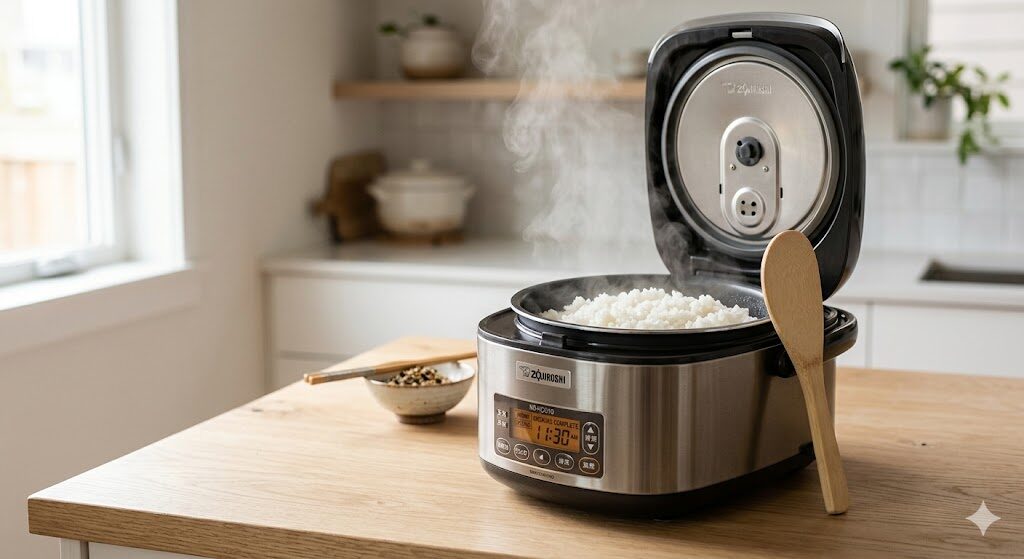
Zojirushi: Japan’s premium rice cooker leader. Known for reliability, excellent fuzzy logic systems, and the best-in-class IH pressure models. The “Neuro Fuzzy” and “Induction Heating System” product lines are reference-quality products.
Tiger: Equal prestige to Zojirushi in Japan, less well-known internationally. Particularly known for pressure IH models and innovative inner pot designs including “synchro-cooking” that steams vegetables while the rice cooks.
Panasonic: Reliable mid-to-premium range. The “SR-HB” series are Japanese market models that perform excellently. Less international availability than Zojirushi but respected in the Japanese market.
Cuckoo: South Korean manufacturer that competes directly with Japanese premium brands. Known for high-pressure models and strong durability reputation.
Sizing Guide
Japanese rice cookers are sized in “cups” — Japanese rice measurement cups (180ml, smaller than Western measuring cups):
- 1-3 cup: single person or couples
- 5-cup: most appropriate for families of 2-4
- 10-cup: large families or entertaining
Under-filling a large rice cooker (making 2 cups in a 10-cup model) produces inferior results — the proportions are calibrated for the pot’s optimal fill range. Match cooker size to your typical cooking volume.
Beyond White Rice: What Japanese Rice Cookers Cook
A quality Japanese rice cooker handles:
- Short, medium, and long grain white rice
- Sushi rice (calibrated for the sticky-firm texture needed for rolling)
- Brown rice (longer cycle needed)
- Congee / okayu (Japanese rice porridge)
- Takikomi gohan (seasoned mixed rice)
- Steamed fish or vegetables (using the steaming basket above the rice)
- Cake and bread (some premium models)
Frequently Asked Questions
Is an expensive Japanese rice cooker worth it?
If you eat rice daily, yes. A premium IH model will produce noticeably better rice for 15 to 20 years. The per-use cost amortized over its lifespan is negligible. If you eat rice once a week, the quality difference may not justify the investment — a good mid-range fuzzy logic model serves occasional rice cooking very well.
Do I need to wash rice before cooking in a Japanese rice cooker?
Yes for Japanese short-grain rice. Washing removes excess starch that creates gummy, over-sticky results. Wash gently (don’t aggressively scrub) 2-3 times until the water runs mostly clear. Some premium rice cookers have specific “unwashed rice” settings that adjust the cycle for unwashed grain.
What is “sushi rice” mode?
A specific heating cycle that produces rice slightly firmer and less sticky than standard white rice mode — the texture that works for sushi rolling without falling apart. It’s not about flavor (you season separately with rice vinegar), only about texture calibration.
Why does rice cooker rice taste better than stovetop rice?
Consistency and the resting period. Rice cookers automatically rest the rice after cooking (10-15 minutes in “steam” mode) which allows moisture to equalize and produces a more uniform texture. Stovetop rice is often served immediately or not rested consistently. The sealed environment also prevents moisture loss during cooking.
Can I use a Japanese rice cooker for non-rice grains?
Many premium models include settings for quinoa, millet, barley, and other grains. Check the specific model’s feature list. Generic use of the white rice setting for other grains often produces poor results — the hydration ratios and timing are different from rice and require calibrated settings.