Japanese Grater Buyer’s Guide: Oroshigane, Daikon, and Specialized Tools
Japanese grating is an art. The texture of freshly grated daikon radish, ginger, and wasabi affects the flavor, texture, and chemical reactivity of the ingredients in ways that pre-grated or coarsely chopped alternatives cannot replicate. Japanese kitchen culture has developed specialized graters for each purpose.
The Oroshigane: Japan Primary Grater
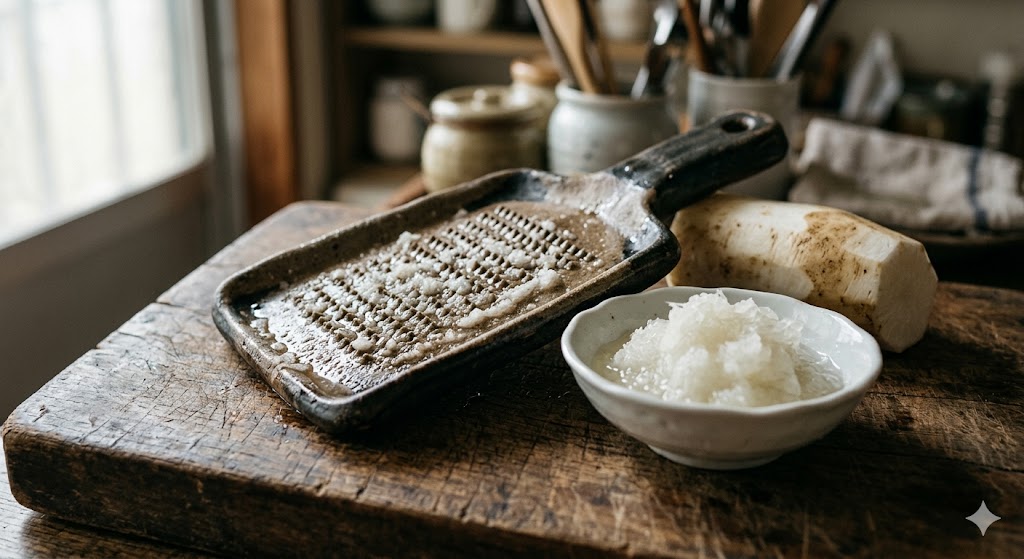
Oroshigane (literally grating metal) is the fundamental Japanese grater. Unlike a Western box grater, a traditional oroshigane has a juice channel and collection trough that catches the grating liquid for use in sauces and dressings.
Quality oroshigane comes in several materials. Stainless steel is most common, durable, and easy to clean. Ceramic produces the finest, smoothest grate and is non-reactive — favored for fresh ginger and wasabi where subtle flavor compounds matter. Browse our Japanese grater collection here.
Daikon Grating: The Key Technique
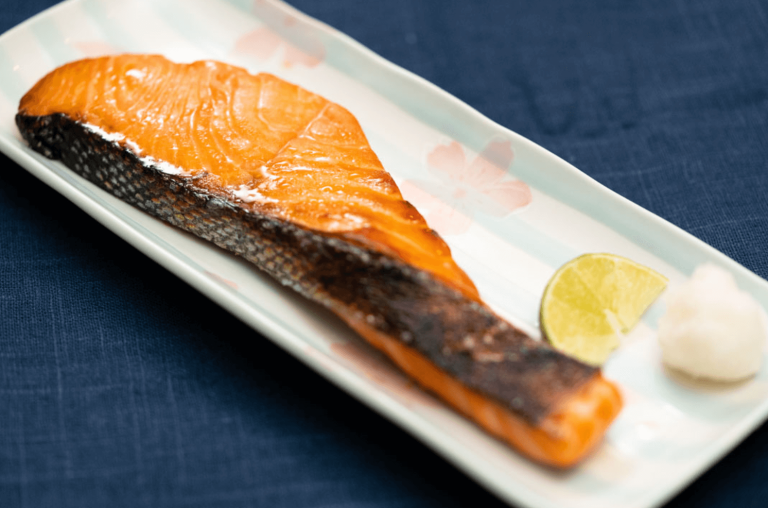
Grated daikon (daikon oroshi) appears throughout Japanese cuisine — with ponzu sauce, alongside grilled fish, in dipping sauces for soba and udon, and as a garnish for tempura. Fresh daikon oroshi is significantly superior to pre-grated. Tips: Use the tip end for spicier grated daikon, the shoulder end for milder. Grate in circular motions for a fluffier texture. The juice is valuable — use it in sauces.
Ginger Grating: Ceramic vs Metal
For ginger, ceramic graters produce the best result. The fine teeth create an almost pasty grate that disperses evenly into sauces and marinades. The traditional Japanese ginger grater (shoga oroshi) has very fine, closely spaced teeth designed specifically for ginger fibrous texture.
Sharkskin Wasabi Grater (Samegawa Oroshi)
Real wasabi (Wasabia japonica) requires a sharkskin (samegawa) paddle to grate fresh wasabi rhizome in circular motions. Metal graters damage the cell structure differently and produce a coarser result. Sharkskin graters are the standard tool in Japanese restaurants serving authentic wasabi.
Caring for Your Japanese Grater
- Clean immediately after use — dried daikon and ginger fiber is difficult to remove
- Brush against the tooth direction with a small brush to clean the teeth from the back
- Dry immediately, particularly for aluminum and stainless steel models
- Handle ceramic graters gently — the fine ceramic teeth can chip if dropped
Frequently Asked Questions
What is the difference between a Japanese grater and a Western Microplane?
A Microplane uses photo-etched razor-sharp holes producing very fine gratings through a shearing action. A Japanese oroshigane uses raised, pointed teeth working through a rubbing-and-pushing action. Microplanes are excellent for firm ingredients (Parmesan, citrus zest) but can be overly aggressive for ginger and daikon. Japanese graters produce a paste-like texture specific to their ingredient set.
Why does fresh grated ginger taste different from jarred minced ginger?
Freshly grated ginger releases aromatic oils and gingerols in their intact enzymatic form. The grating process (especially with fine ceramic) creates cell-rupture that activates these compounds differently than chopping or factory processing. For any preparation where ginger bright, fresh heat is important, freshly grated is meaningfully superior.
Is an expensive Japanese grater worth it over a cheap one?
Yes, primarily for tooth quality. Premium oroshigane uses sharper, more uniformly spaced teeth that produce consistently finer and fluffier grated texture. Budget models often have uneven or less sharp teeth requiring more force. For daily use with Japanese cooking, a mid-range quality grater significantly outperforms cheap options.
Can I grate wasabi with a regular grater?
Yes, but the result is coarser. Grate in very small circular motions to simulate the traditional technique. A fine ceramic grater is a reasonable home substitute for proper samegawa for occasional use.
How do I know when my grater teeth are dull?
A sharp grater produces fine, fluffy grated daikon with proper juice release in 30-60 seconds per tablespoon. A dull grater requires more force, produces a less uniform texture, and generates heat from friction that can affect flavor. Traditional oroshigane eventually need replacement as the teeth cannot be resharpened by hand.