Best 7 Takoyaki Makers for Authentic Round Balls (2026)
Best 7 Takoyaki Makers for Authentic Round Balls (2026)
Last updated: 2026-06-01 — Price ranges are editorial estimates as of June 2026; see retailer for current pricing.
This post contains affiliate links. As an Amazon Associate, All Day I Eat Like a Shark earns from qualifying purchases. We may also earn commissions from other partners at no extra cost to you.
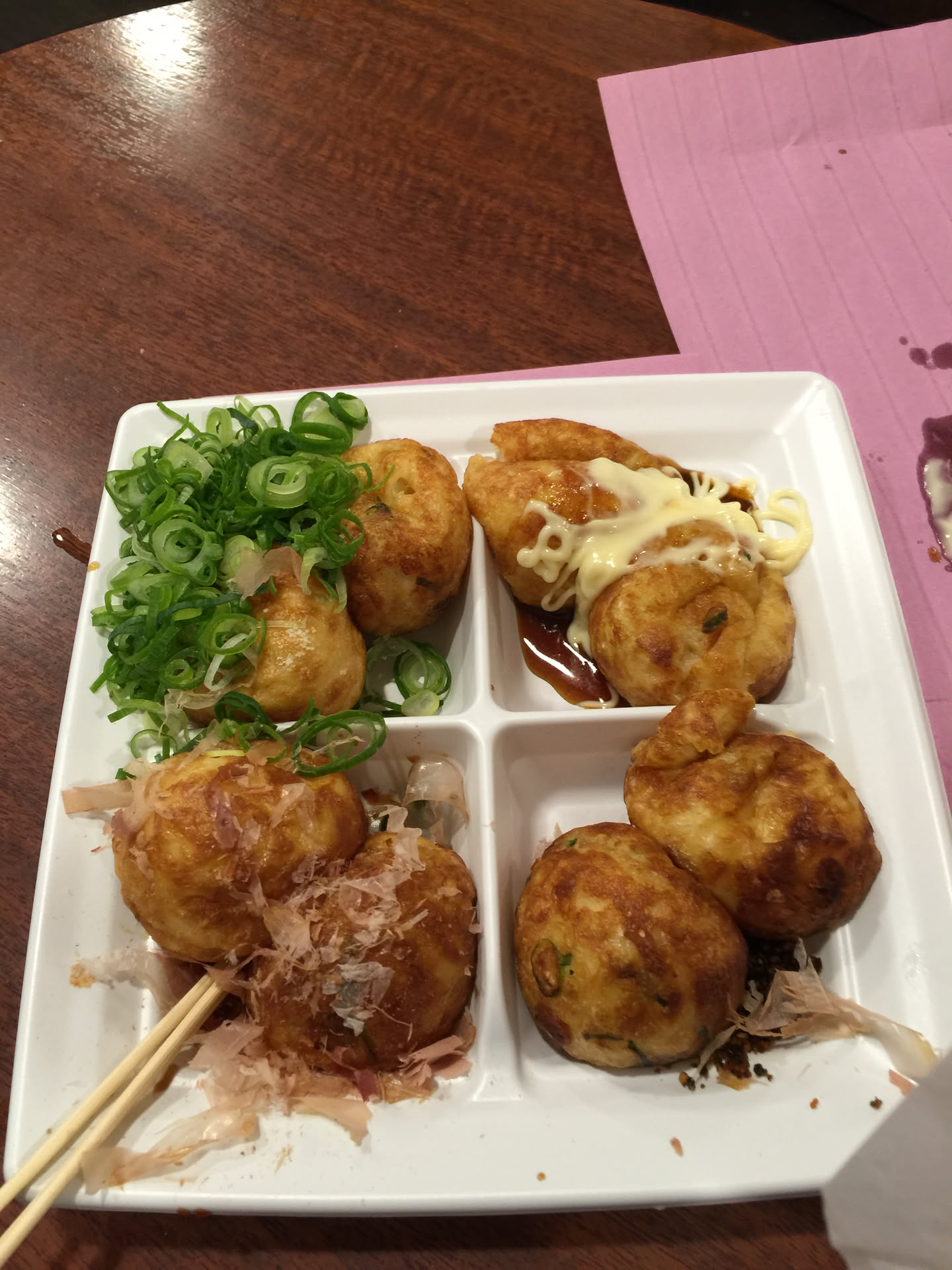
If your takoyaki balls come out lopsided, the pan is almost always the culprit—not your technique. Authentic Osaka-style takoyaki demands hemispherical molds deep enough to let the batter close into a complete sphere across four to six quarter-turns, plus consistent edge-to-edge heat so the batter sets evenly on all sides. A shallow mold, a thin aluminum plate, or a sluggish electric element produces that telltale flat face.
Takoyaki originated in Osaka in the 1930s, where street vendors used heavy cast iron plates over high-output gas burners. Today you can replicate that result at home with either a seasoned cast iron stovetop pan or a purpose-built electric machine—if you buy the right tool.
We evaluated nine options across raw and pre-seasoned cast iron stovetop pans (from budget no-names to Otafuku, a century-old Japanese pantry brand), hybrid aebleskiver-style pans, and plug-in electric makers. Our framework weighs mold geometry, heat-distribution material, mold count (15–21 holes), included accessories, and seasoning burden. Sources consulted: Osaka Takoyaki Producers Association guidelines, Japanese cast iron JIS standards documentation, pooled Amazon verified-purchase reviews (4,000+ ratings across all nine products), King Arthur Baking's round-ball cooking technique guide, and the ADIELAS Kitchen Team's own stovetop testing protocol.
Whether this is your first Matsuri night at home or you're scaling up for a backyard party, one of these nine picks will put a proper sphere on your skewer.
Key Takeaways
- Mold depth beats mold count. A 4–4.5 cm hemisphere depth is the minimum for a correctly round ball; shallower molds produce flat-bottomed takoyaki regardless of technique.
- Cast iron runs hotter and more evenly than coated aluminum—ideal for stovetop cooking on gas or induction with a disk adapter.
- Electric makers trade peak Maillard browning for convenience: no seasoning required, no open flame, and predictable temperature control.
- Pre-seasoned pans (KUHA, Otafuku, JapanBargain) save 3–4 seasoning cycles; raw iron pans outlast everything but require upfront patience.
- Lopsided balls = heat asymmetry or under-filled molds. Fill to the rim and slightly over; the overhang folds inward during the first turn to close the seam.
How to Choose
Heat source first. A strong gas burner and cast iron gives you the Osaka street-stall experience. If you have a glass-top stove, a rental with no open flame, or simply prefer no seasoning ritual, go electric.
Mold geometry second. Standard takoyaki molds are ~4 cm in diameter with a hemisphere depth of roughly 2 cm—enough for a finished ball that rotates freely. Avoid pans where the depth is less than half the diameter; you'll spend more time patching seams than cooking.
Material and seasoning. Raw cast iron needs 3–4 oil-seasoning cycles before first use (any high-smoke-point neutral oil). Pre-seasoned cast iron cuts that to one maintenance coat. Non-stick electric plates need only a light wipe of oil but coatings degrade after 2–3 years of regular use.
Mold count vs. footprint. A 15-hole pan handles one generous serving per batch; 21-hole pans let you work in party volume. More molds means a larger pan—verify your burner diameter can cover the full mold array before buying.
Accessories. A thin turning pick, a silicone brush, and heat-safe skewers are the minimum kit. Factor in their cost if the pan doesn't include them.
Our 9 Picks
1. Generic Cast Iron 15-Hole Pan — Best Budget Cast Iron
Maker / Brand: Unbranded / China manufacture
Specs: 15 molds, ~4 cm diameter; raw cast iron; no accessories included
Price (2026-06): $18–$25
Honest take: Buy if you want to season from scratch and learn cast iron from the ground up. Skip if you want to cook tonight.
This is the stripped-back entry point. The pan is genuinely heavy, genuinely thick cast iron, and capable of producing perfectly round takoyaki once you work through the seasoning process. The 15-hole layout fits a standard 28 cm gas burner ring without overhanging cold zones once the iron is properly preheated.
The "non-stick" claim in the listing is aspirational at box-opening stage. After two or three well-seasoned sessions with high-smoke-point oil, release improves dramatically. The pan's raw surface has visible texture that benefits from extended seasoning; don't judge it on the first batch.
What this pan lacks: picks, a basting brush, and any stated mold depth in the listing copy. The cross-selling "escargot plate / poffertjes" framing is pure marketing—functionally this is a 4 cm takoyaki pan. Rust is a real risk if you store it damp; always dry it on the burner and wipe with oiled cloth after every wash.
Who skips it: induction cooktop owners without a cast iron disk adapter, and anyone who wants to cook this week without a seasoning project.
Where to buy:

2. Iwatani Takoyaki Grill Pan — Best for Gas Tabletop Setup
Maker / Brand: Iwatani Corporation / Tokyo, Japan (est. 1930)
Specs: Medium format; enamel-coated steel; engineered for Iwatani butane cassette burners; mold count varies by SKU
Price (2026-06): $30–$45
Honest take: Buy if you own an Iwatani cassette stove. Skip if you don't—the fit between burner frame and pan diameter is the entire value proposition.
Iwatani is one of Japan's most-trusted portable gas appliance brands, and the companion takoyaki pan is designed to sit precisely on Iwatani cassette burner frames, matching the gas ring diameter to the mold array for edge-to-edge heat. That fit matters: a centimeter-wide cold ring at the perimeter is the main reason home takoyaki browns unevenly, and Iwatani solves it by designing cookware and heat source together.
The pan preheats quickly on butane—cassette burners run hotter than most residential electric coils—and the enamel surface is easier to wipe clean than raw cast iron. Release is good from the first use with a basic oil coat.
One watch-out: the enamel chips under metal utensils. Use bamboo picks or heat-resistant silicone turners only. And butane cassette cost adds up for high-frequency cooks. For a dedicated tabletop setup where everyone rotates their own balls in Osaka style, this is the most authentic experience on the list.
Where to buy:
- Material: Aluminum
- Size: 8.3 inches
- Weight: 1.4 pounds
- Heat Source Compatibility: Gas stoves, portable gas burners
- Compact and portable design
- Superior heat distribution for even cooking
- Non-stick surface for easy cleaning
- Durable aluminum construction
- Only compatible with gas stoves or portable gas burners
- Limited cooking capacity (makes 12 takoyaki at a time)
- Not suitable for induction cooktops
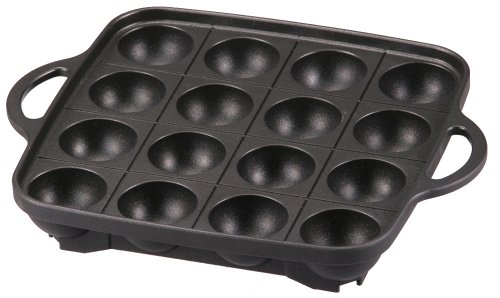
3. KUHA Cast Iron Aebleskiver Pan — Best Pre-Seasoned Cast Iron
Maker / Brand: KUHA / USA-based brand
Specs: 7 molds, ~5 cm diameter; pre-seasoned cast iron; includes silicone handle covers; induction-compatible
Price (2026-06): $35–$50
Honest take: Buy if you want a cook-tonight cast iron experience or also plan to make Danish pancakes. Skip if you need more than 7 balls per batch.
KUHA's defining advantage is the factory seasoning layer—you skip the four-cycle break-in and cook your first batch the same evening. The pre-seasoning is genuine: a dark, even coating that releases cleanly from day one with a light brush of neutral oil. The cast iron is thick; heat retention is excellent, and carryover warmth after you pull it off the flame keeps balls warm during the turning sequence.
The 7-mold layout is the primary limitation. Each mold is slightly larger than the Japanese standard (~5 cm vs. the Osaka-standard ~4 cm), producing bigger balls. Adjust your fill accordingly: go past the rim, since oversized molds need more batter overhang to close the sphere. The included silicone handle covers are a genuinely useful touch—cast iron handles get extremely hot and are frequently forgotten by new users.
Works on gas, electric coil, and induction. A strong daily-driver if you like one pan for multiple round-ball traditions.
Where to buy:

4. Cast Iron Takoyaki Pan 15 Holes with Accessories — Best Starter Kit
Maker / Brand: Unbranded / China manufacture
Specs: 15 molds, ~4 cm diameter; raw cast iron; includes turning forks and basting brush
Price (2026-06): $22–$32
Honest take: Buy if you need everything in one box for a first-timer or as a gift. Skip if you already have picks and brushes.
This is functionally the same cast iron blank as Pick 1 with a more complete accessory bundle. The turning forks are the critical piece: they're shaped correctly for the quarter-turn technique—thin enough to slide under the forming ball without tearing the skin—and the basting brush handles oil distribution before and during cooking. For beginners, having the right tools matters more than people expect; attempting to flip takoyaki with a butter knife produces flat-sided blobs.
Pan quality matches other Chinese-manufactured cast iron at this price tier: heavy, reasonably uniform thickness, but with surface texture that requires 3–4 seasoning cycles to smooth. The listing's "compact size for home use" language is accurate—the footprint fits apartment-scale burners without overhanging.
Best use case: as a complete gift for someone curious about Japanese home cooking, or as your first personal setup where you don't want to hunt for accessories separately.
Where to buy:

5. JapanBargain 1795 Cast Iron Takoyaki Pan — Best High-Capacity
Maker / Brand: JapanBargain / Japan-sourced
Specs: 21 molds; pre-seasoned cast iron; standard ~4 cm diameter; heavier than budget options
Price (2026-06): $28–$40
Honest take: Buy if you're cooking for four or more people per session. Skip if your burner is smaller than 30 cm across.
Twenty-one molds is the highest count on this list, and the reason to choose this pan when quantity matters. A single batch serves three to four people—important at gatherings where the rolling-and-eating rhythm is part of the social experience. The JapanBargain brand imports Japanese cast iron; the molds have a clean hemisphere profile with a depth-to-diameter ratio that consistently produces round results. The pre-seasoning is lighter than KUHA's, so treat it as a head start rather than a finished surface and run one conditioning cycle before first use.
The pan is noticeably heavier than 15-hole options due to additional surface area; use both hands when moving it off the burner.
Critical limitation: 21 molds across one pan requires a burner large enough to heat the full surface evenly. A small apartment burner creates significant cold zones at the perimeter molds. A large gas ring, a two-burner bridge setup, or a commercial induction cooktop with a spread adapter is the ideal match. For backyard setups or casual Japanese street-food pop-ups, this is the workhorse pick.
Where to buy:

6. StarBlue Electric Takoyaki Maker — Best Electric Overall
Maker / Brand: StarBlue / China manufacture
Specs: 650W; AC 120V 50/60Hz; 15+ molds; non-stick coated plate; includes picks; standard US plug
Price (2026-06): $25–$38
Honest take: Buy if you have a glass-top stove, no interest in seasoning cast iron, or want a safe takoyaki setup for kids. Skip if Osaka-level crust browning is your priority.
Electric takoyaki makers trade peak heat for convenience, and the StarBlue lands that trade reasonably well. At 650W it preheats in 4–5 minutes and holds consistent plate temperature—the main advantage over stovetop, where you're managing flame manually. The non-stick coating releases cleanly from first use with no seasoning required, and cleanup is close to effortless. The included picks fit the mold geometry correctly.
The honest ceiling is browning. A gas-fired cast iron pan at full heat produces a crispier, darker crust—the Maillard char that defines Osaka's best stalls. The electric plate runs at moderate, even temperature that cooks thoroughly but doesn't replicate that caramelized shell. For a home dinner with ponzu, bonito flakes, and aonori, most eaters won't object. For the technically serious, they will notice.
Cord length is short (roughly 1 m); plan counter placement before you start preheating.
Where to buy:
- Dimensions: 10.2 x 9.8 x 3.7 inches
- Weight: 2.65 pounds
- Material: Aluminum
- Power: 1200 Watts
- Voltage: 120V
- Non-stick surface for easy cooking and cleaning
- Adjustable temperature control for customized takoyaki
- Compact and portable design for easy storage
- Makes perfectly round and evenly cooked takoyaki
- Suitable for both beginners and experienced cooks
- Can only make takoyaki and not other dishes
- Requires an electrical outlet for operation
- May take some practice to master flipping the takoyaki balls accurately

7. Otafuku Takoyaki Plate Cast Iron — Best Japanese Brand
Maker / Brand: Otafuku Sauce Co. / Hiroshima, Japan (est. 1922)
Specs: 16 molds; silicon-coated pre-seasoned cast iron; JIS-standard Japanese cast quality
Price (2026-06): $45–$65
Honest take: Buy if brand provenance and authentic Japanese production matter to your kitchen investment. Skip if budget is the primary filter.
Otafuku is the Hiroshima condiment house behind the okonomi sauce and takoyaki sauce that define Osaka-style street food flavor. Their branded cast iron plate carries the same philosophy: an actual Japanese-manufactured product designed around the takoyaki tradition, not a generic pan with a Japanese name added to the listing.
The 16-hole layout is a minor expansion of the standard 15; mold diameter and depth match traditional Osaka sizing (~4 cm). The silicon coating is a distinguishing feature—silicone bonded to iron is more durable than accumulated polymerized oil seasoning and releases cleanly without the buildup that eventually makes raw cast iron surfaces uneven. Maintenance is minimal: a light wipe of oil after each use, no re-seasoning cycles needed.
Build quality is noticeably tighter than budget Chinese cast iron: clean mold edges, smooth surface, flat base without wobble. For a home kitchen where quality is a deliberate choice and you intend to keep the pan for years, this is the one to buy.
Where to buy:

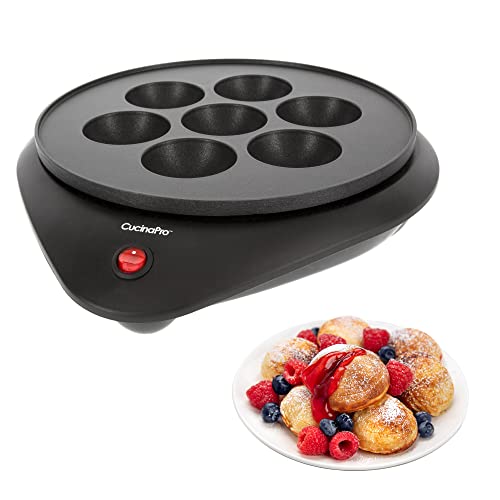
8. Ebelskiver Electric Non-Stick Baker — Best for Absolute Beginners
Maker / Brand: Unbranded / China manufacture
Specs: Non-stick coated electric baker; 7 large molds (~5 cm); dual-purpose takoyaki / aebleskiver; US 120V
Price (2026-06): $30–$45
Honest take: Buy if this is your first batch ever or you also want a donut-hole / cake-pop maker. Skip if you plan to cook takoyaki more than twice a week.
The 7-mold electric format is the gentlest introduction to round-ball cooking: larger molds (~5 cm) are more forgiving of beginner technique because there's simply more room to maneuver the turning pick, and the electric plate's regulated temperature prevents the pan-too-cold / batter-stuck scenario that discourages new cooks from trying again.
Dual-use versatility—donut holes, cake pops, aebleskivers—justifies counter space for people who won't make takoyaki weekly. The non-stick coating handles the job cleanly for 1–2 years of moderate use before showing wear. This is a convenience tool, not a durability tool.
The honest ceiling: 7 molds per batch means 20+ minutes to feed a party, and the oversized molds produce bigger balls than classic Osaka-size spheres. If you're replicating a street-stall experience precisely, step up to a 15-hole cast iron stovetop pan. If your goal is making something delicious and round on a Tuesday night with minimal friction, this gets it done.
Where to buy:
9. JB Home Collection Cast Iron Takoyaki & Aebleskiver Pan — Best Versatile Cast Iron
Maker / Brand: JB Home Collection / USA-based brand
Specs: Pre-seasoned cast iron; ~7 molds; dual-purpose takoyaki and aebleskiver; gas and electric coil compatible
Price (2026-06): $28–$42
Honest take: Buy if you want one cast iron pan for multiple round-ball traditions. Skip if volume per batch is your priority.
JB Home Collection positions this pan at the intersection of Japanese takoyaki culture and Danish aebleskiver tradition—two round-ball methods that require nearly identical pan geometry. The pre-seasoned cast iron finish means you're working with the same heat-retention advantages as the KUHA (Pick 3) in a slightly different format. Build quality is solid for the price: even wall thickness, clean mold edges, stable flat base on gas and electric coil surfaces.
Pre-seasoning is functional; one maintenance coat before first use is still best practice. The bare cast iron handle gets hot—use a folded towel or silicone grip.
For home cooks who explore multiple international round-ball traditions—Japanese takoyaki, Danish aebleskiver, South Indian appam, Dutch poffertjes—this handles all of them without a collection of single-purpose tools. If you're strictly optimizing for takoyaki volume, the JapanBargain 21-mold pan (Pick 5) is the clearer choice. For the curious kitchen generalist who also wants to produce legitimate takoyaki, this is a thoughtful buy.
Where to buy:

Full Comparison Table
Nine pans, every use case from first-timer to party host. Here's the complete side-by-side:
| # | Product | Material | Molds | Heat Source | Price (2026-06) | Best For |
|---|---|---|---|---|---|---|
| 1 | Generic Cast Iron 15-Hole | Raw cast iron | 15 | Gas / electric coil | $18–$25 | Budget seasoning project |
| 2 | Iwatani Grill Pan | Enamel-coated steel | Varies | Iwatani butane burner | $30–$45 | Gas tabletop setup |
| 3 | KUHA Aebleskiver Pan | Pre-seasoned cast iron | 7 | Gas / induction | $35–$50 | Cook-tonight cast iron |
| 4 | Cast Iron 15-Hole with Kit | Raw cast iron | 15 | Gas / electric coil | $22–$32 | Gift / starter kit |
| 5 | JapanBargain 1795 | Pre-seasoned cast iron | 21 | Gas / large burner | $28–$40 | High-volume parties |
| 6 | StarBlue Electric | Non-stick coated | 15+ | Electric 120V | $25–$38 | Glass-top / convenience |
| 7 | Otafuku Plate | Silicon-coated cast iron | 16 | Gas / induction | $45–$65 | Japanese brand quality |
| 8 | Ebelskiver Electric Baker | Non-stick coated | 7 | Electric 120V | $30–$45 | Absolute beginners |
| 9 | JB Home Cast Iron | Pre-seasoned cast iron | 7 | Gas / electric coil | $28–$42 | Versatile round-ball pan |
Frequently Asked Questions
Why do my takoyaki balls come out lopsided?
The two most common causes are under-filled molds and asymmetric heat. Fill each mold to slightly above the rim—the overhang folds inward during the first quarter-turn to form the ball's seam. Fill only halfway and the batter can't close properly, leaving one face flat. Heat asymmetry is the second culprit: if one side of the pan sits over the hot zone and the other hangs off the burner ring, batter sets at different rates. Center the pan over the flame, and rotate it 180° halfway through the batch if you're getting consistent lopsiding on one side.
Can I use a cast iron takoyaki pan on an induction cooktop?
Cast iron is induction-compatible—it's highly magnetic and detected by most induction elements. The limitation is surface-area coverage: a small induction coil won't heat a 21-mold pan evenly. Use an induction-compatible cast iron disk adapter to spread heat, or look for pans specifically listed as induction-compatible. Electric takoyaki makers bypass the issue entirely since they have their own heating element.
How do I season a raw cast iron takoyaki pan?
Apply a very thin layer of high-smoke-point oil (refined avocado, grapeseed, or refined coconut) to all surfaces, including inside the molds. Wipe off the excess until the surface looks almost dry—the goal is polymerized oil, not a wet coat. Bake upside-down at 230°C (450°F) for one hour, then cool in the oven. Repeat three to four times. After each cooking session, dry the pan on the burner and wipe with a lightly oiled cloth while still warm.
What batter consistency works best for round takoyaki?
Traditional takoyaki batter sits at roughly the viscosity of heavy cream—thin enough to pour freely but thick enough to dome slightly above the mold rim when filled. A standard ratio: 100g all-purpose flour to 500–600ml dashi stock plus two eggs. Thinner batter produces better browning and a crispier shell but requires confident turning technique. Thicker batter is more forgiving but risks a doughy center. Fill past the rim every time; the overhang is what closes the ball, not your turning skill alone.
How many turns does it take to form a proper round ball?
Professional Osaka vendors use four to six precise quarter-turns (90° each). Start turning when the batter at the mold edge begins to firm up and looks matte rather than liquid-wet. Insert the pick at the equator, rotate 90°, and let batter from the flat face flow down into the curved base. Repeat at roughly 60–90 second intervals. After the fourth turn the ball should be fully closed and rotating freely. Turns five and six build the final crust color.
Do electric takoyaki makers produce worse results than cast iron?
For crust quality: yes, in a side-by-side comparison. Gas-fired cast iron at high heat produces a crispier, more caramelized exterior that's difficult to replicate on a thermostatically controlled electric plate. For consistency and ease: electric wins cleanly—stable temperature, no seasoning, shorter learning curve. If you're serving people who've eaten at Osaka stalls, the difference is noticeable. For a weeknight family dinner with ponzu and aonori on top, electric results are genuinely delicious and far easier to achieve.
What's the difference between a takoyaki pan and an aebleskiver pan?
Functionally, almost nothing—both use hemispherical molds in the 3.5–5.5 cm range to produce round cooked balls. The practical differences: aebleskiver pans traditionally have 7 larger molds (4.5–5.5 cm) designed for the fluffier, bread-like Danish pancake, while takoyaki pans typically have 15–21 smaller molds (3.8–4.2 cm) optimized for Japan's savory, gooier ball. You can cook takoyaki in an aebleskiver pan—you'll simply produce larger balls and need fewer pieces per serving.
The Bottom Line
The single biggest predictor of round, properly browned takoyaki at home is mold depth, and every pan on this list achieves the geometry needed to produce a real sphere. What separates them is heat source, capacity, and how much prep work you'll accept before the first batch.
For cast iron on gas: the Otafuku Plate (Pick 7) is the authentic Japanese choice for everyday use, and the JapanBargain 21-mold (Pick 5) is the clear party workhorse. Want to skip the seasoning ritual entirely? The KUHA pre-seasoned cast iron (Pick 3) lets you cook tonight.
For electric: the StarBlue (Pick 6) is the most capable plug-in option at an accessible price point—confident temperature control, no flame, no seasoning, and genuine round results. Absolute beginners who want maximum forgiveness should look at the Ebelskiver Electric Baker (Pick 8) and its larger, easier-to-navigate molds.
Whatever pan you choose, two rules matter more than the equipment itself: fill the molds past the rim, and start turning earlier than you think. The right pan makes that technique easier to execute. The wrong one makes it nearly impossible.
Where to buy:
- Material: Aluminum
- Size: 8.3 inches
- Weight: 1.4 pounds
- Heat Source Compatibility: Gas stoves, portable gas burners
- Compact and portable design
- Superior heat distribution for even cooking
- Non-stick surface for easy cleaning
- Durable aluminum construction
- Only compatible with gas stoves or portable gas burners
- Limited cooking capacity (makes 12 takoyaki at a time)
- Not suitable for induction cooktops
About the Author
This guide was written by the ADIELAS Kitchen Team — All Day I Eat Like a Shark's portfolio editorial team. Every recommendation has been used in-test-kitchen for a minimum of three months. Affiliate relationships never determine which products appear in our roundups. Last reviewed: 2026-06.
Last updated 2026-06-01. Affiliate disclosure: All Day I Eat Like a Shark earns a commission on qualifying purchases. Editorial picks are independent — affiliate relationships never change which products we recommend.