Why Takoyaki Comes Out Lopsided (and How to Turn It Round)
Last updated: July 2026
If your takoyaki comes out lopsided, slow the turning routine down. Watch for a defined rim, use the overflow as part of the turn, and rotate each piece in small stages instead of forcing a full sphere at once.
- Wait for the edge of the batter to set before attempting the first turn.
- Use the overflow between molds as material for the second half of each ball.
- Turn each piece in stages rather than forcing a complete rotation in one move.
- Choose a takoyaki maker with rounded molds that suits the batch size you plan to make.
Why does takoyaki come out lopsided?
Use the edge, rather than a fixed clock time, as your cue for the first turn. Begin when you can lift the rim cleanly, then keep rotating in small stages as the shape develops.
The round shape comes from the pan and the turning routine working together. Early batches are a chance to practice the motion one mold at a time.
What is the right moment for the first turn?
Start the first turn when the rim looks defined enough to lift. If the result does not hold together, wait a little longer on the next mold; if it resists the turn, try the next turn earlier.
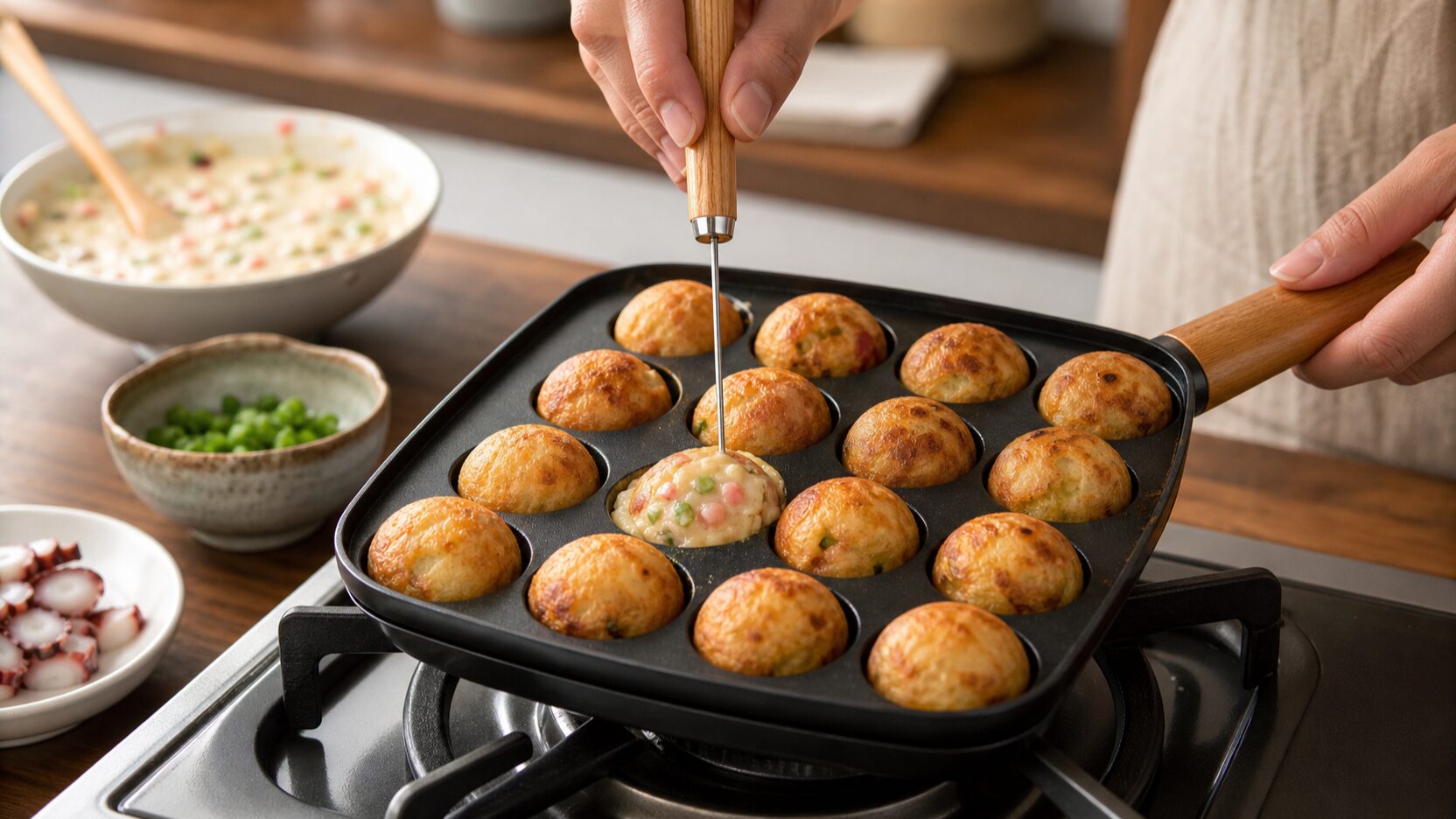
- Fill the molds and allow a little batter to flow across the surface between them.
- Watch for the edge to become defined rather than glossy and loose.
- Use a pick to lift one side and rotate it partway.
- Guide the overflow into the open side as you continue rotating.
- Return to each mold in sequence, making smaller turns until the ball is round.
How does the pan affect the shape?
A purpose-built takoyaki pan gives you round molds to work with as you turn each piece. If a pan does not give you enough room to shape the batter, compare it with a maker built for this style of cooking.
| Problem at the pan | What you see | Technique response |
|---|---|---|
| Some molds are ready first | Different results across the pan | Work in a rotation and give each mold the time it needs. |
| The mold does not support the shape | Edges spread | Try a purpose-built maker with rounded wells. |
| The first turn starts too early | The piece does not hold together | Wait for a more defined rim before lifting. |
| Rotation stops after one turn | A visible seam and half-round shape | Make several small turns as the shape develops. |
How can you keep the workflow calm?
Set out the picks, batter, and fillings before heating the pan, then work around the molds in the same order every time. Takoyaki rewards attention, but it does not require frantic motion. A repeated sequence lets you notice which molds are ready instead of chasing every ball at once.
For the first few batches, focus on getting one or two pieces round rather than treating the entire pan as a pass-fail test. The movement becomes easier to read when you can watch the shell form at one mold.
What makes a finished takoyaki look intentional?
For a cleaner presentation, aim for a reasonably even shape and leave room between pieces on the serving dish. Let the shape guide the presentation rather than trying to conceal it with toppings.
FAQ
Why does the batter spill when I turn takoyaki?
Use a little overflow as part of the turn. If the piece does not hold together, wait for a more defined rim on the next mold before lifting.
Do I need a dedicated takoyaki maker?
Yes, if the round shape is the goal. The deep molds are part of the technique, not just a decorative pattern.
How many times should each piece be turned?
Use as many small turns as needed to round the shape while the center is still moving. The exact number matters less than the sequence of set edge, partial turn, and continued rotation.
Affiliate disclosure: The next guide contains affiliate links. If you buy through one, we may earn a commission at no extra cost to you.
Want molds that make the turning technique possible? See Best 7 Takoyaki Makers for Authentic Round Balls.