Why Hojicha Tastes Flat (and How to Brew More Depth)
Last updated: July 2026
If your hojicha tastes flat to you, simplify the next brew instead of changing several variables at once. Keep the water amount and vessel the same, try a brief first infusion, and adjust leaf quantity before extending the steep.
- Start with freshly heated water and a brief first steep, then taste before changing the next cup.
- If the cup is thin, add a little more leaf before making the steep much longer.
- Warm the teapot and cup so the first pour does not lose its momentum immediately.
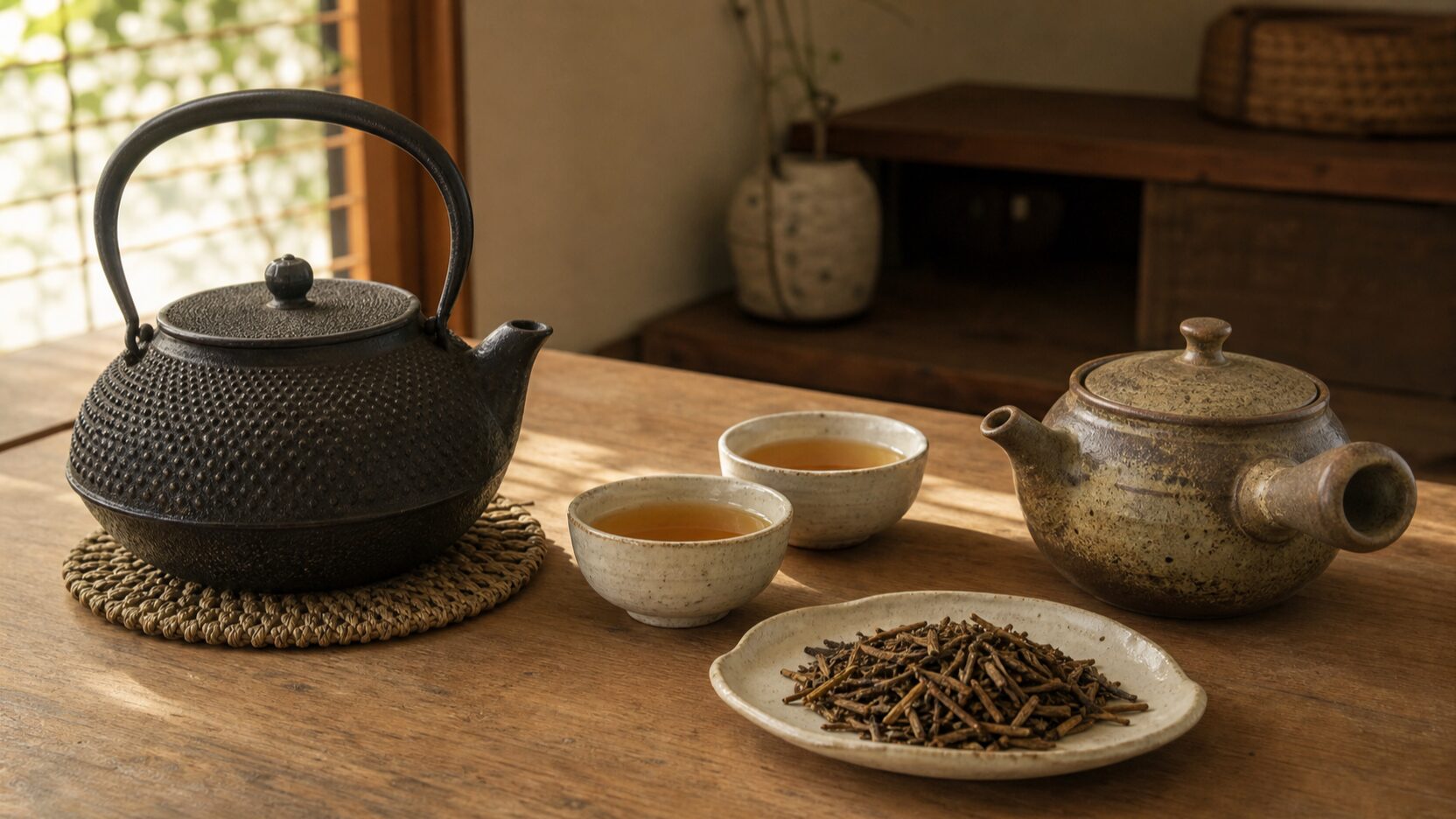
- If you use a tetsubin, follow the maker’s instructions and keep it part of a repeatable
tea routine.
Why does hojicha taste flat?
“Flat” is a taste judgment, so use one variable at a time to find the cup you prefer. Start by comparing a modest leaf adjustment with a different steep time rather than changing both together.
Use the first brew as a calibration cup: pay attention to fragrance, texture, and finish before changing several variables at once.
How should you calibrate a better cup?
Calibrate in a narrow sequence. Keep the vessel and water amount the same, then change leaf quantity first, steep time second, and water temperature only when needed. This creates a useful record of what your particular
- Warm the teapot and cup with hot water, then discard that water.
- Add a measured amount of hojicha and pour freshly heated water over the leaves.
- Keep the first steep short enough that the roast remains clear rather than muddy.
- Pour the cup fully, then taste before changing the next infusion.
- If it is thin, increase the leaf quantity for the next attempt; if it is too forceful, reduce it slightly.
Does a tetsubin solve a flat cup?
A tetsubin does not replace a measured brewing routine. It may suit a brewer who enjoys a slower water-heating step before steeping the leaves.
Use the vessel as its maker instructs. If you keep water heating and leaf steeping as separate steps, measure the
Which variables are worth changing first?
Change one variable per brew. The comparison below keeps the adjustment tied to the taste problem instead of turning each cup into a guess.
| If the cup tastes… | Try first | Why this is the clearest test |
|---|---|---|
| Thin or watery to you | A modest increase in leaf quantity | It isolates concentration as the next variable to test. |
| Dull after a long steep | A shorter first steep | It gives you a clean timing comparison. |
| Cool before it reaches the cup | Warm the brewing vessel and cup | It keeps the serving routine consistent. |
| Inconsistent from cup to cup | Measure leaf and water | It gives you a baseline for the next adjustment. |
How does serving change the experience?
For a more deliberate serving routine, use small cups and pour each cup in alternating passes. That gives you a consistent way to compare the cups at the table.
FAQ
Should hojicha be brewed with boiling water?
Use the maker’s
Why does my hojicha smell good but taste weak?
The aroma can arrive before enough
Can I brew hojicha more than once?
Yes. Use the second pour as a separate cup and adjust its timing from what the first infusion taught you.
Affiliate disclosure: The next guide contains affiliate links. If you buy through one, we may earn a commission at no extra cost to you.
Building a