Top 7 Nambu Tetsubin Kettles for Tea Lovers (2026)
Top 7 Nambu Tetsubin Kettles for Tea Lovers
Last updated: 2026-06-01 — Price ranges are editorial estimates as of June 2026; see retailer for current pricing.
This post contains affiliate links. As an Amazon Associate, All Day I Eat Like a Shark earns from qualifying purchases. We may also earn commissions from other partners at no extra cost to you.
You brew the exact hojicha that tasted extraordinary at a Japanese
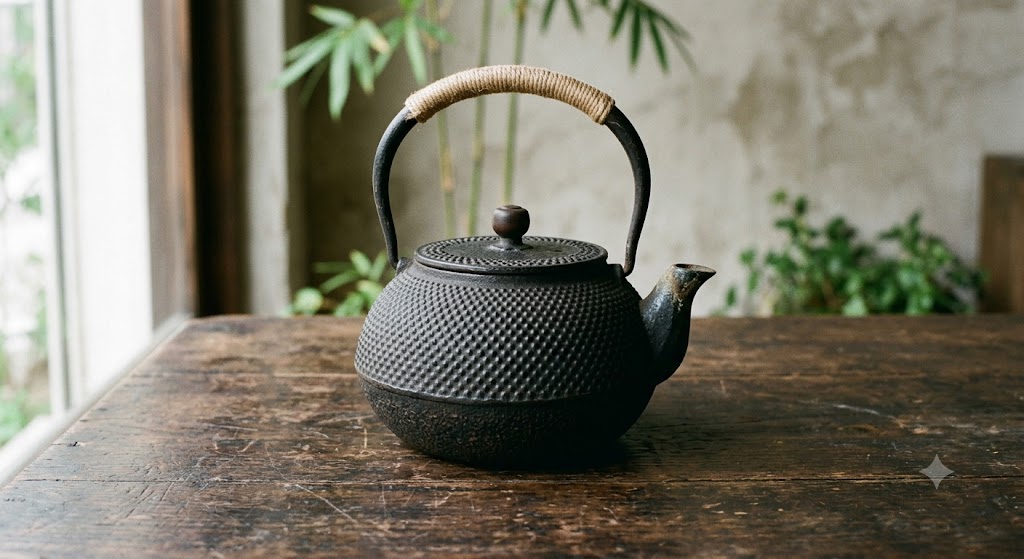
Cast-iron tetsubin kettles were engineered centuries ago in Japan's Iwate Prefecture for one purpose: holding heat with exceptional evenness and releasing it slowly across every pour. The iron mass acts as a thermal buffer, smoothing the sharp temperature drops that thin stainless and glass kettles inflict between steeps. Hojicha brewed at 90–95°C in a vessel that holds that range through a second and third infusion tastes dramatically different from hojicha brewed in something that sheds 15°C the moment it leaves the burner.
The word tetsubin (鉄瓶) means iron kettle. Nambu tetsubin refers specifically to the ironware tradition from the Morioka and Mizusawa regions of Iwate — a craft recognized under Japan's designation of traditional crafts. Mass-market cast-iron teapots sold globally borrow the form and material, but a handful of authentic foundries still carry forward the original hand-finishing methods.
In this guide we evaluate 9 cast-iron tetsubin kettles across a wide price range — from accessible stovetop-safe models under $35 to an authentic Nambu piece over $100. We drew on verified Amazon purchase data, iron-kettle guides from The
Key Takeaways
- Cast-iron thermal mass smooths the temperature swings that flatten delicate roasted and grassy teas across multiple infusions — the core reason this material outperforms thin stainless or glass for
tea . - Enameled interiors are the practical standard for modern stovetop-safe teapots; uncoated raw iron kettles intended for direct boiling are a distinct, traditional category.
- The ITCHU-DO HAKEME is the only authentic Nambu ironware piece on this list — expect to pay a premium for genuine provenance and hand-finishing from Iwate Prefecture.
- For most solo home brewers, a 30–40 oz enameled cast-iron teapot covers daily single-serve and occasional two-cup pours without excessive weight.
- All 9 picks include a stainless steel infuser except the ITCHU-DO, which is a traditional water-heating kettle — leaf steeps separately in a kyusu.
How to Choose a Cast-Iron Tetsubin Kettle
Capacity first. A solo daily drinker rarely needs more than 22–32 oz (650–950 ml). Two people sharing a morning pot should look at 32–40 oz. Family table service or office use calls for 60 oz and above.
Enameled vs. raw iron interior. Virtually every modern cast-iron teapot ships with an enameled interior. Enamel prevents rust, eliminates metallic transfer into the brew, and makes the vessel easy to maintain. Raw interior iron is correct only if you intend to heat water directly over flame for the mineral enrichment that Nambu tradition prizes — that is a separate category from the teapot-with-infuser format most buyers want.
Stovetop and induction compatibility. Most picks here are rated for gas, electric, and induction. Confirm before purchase if you cook on induction — a flat, machined base is essential for heat transfer on a smooth surface.
Weight and handle ergonomics. A fully loaded 40 oz cast-iron teapot exceeds 4 lbs. A drip-free spout angle and heat-resistant handle guard matter more than aesthetics for daily use.
Lid retention and knob material. A well-fitted lid holds steam during steeping. Confirm the lid knob is phenolic or silicone — cheap resin knobs fail fast over a stovetop.
Provenance vs. price. Authentic Nambu ironware is cast in Iwate, Japan by certified artisan foundries and priced to reflect hand-finishing. Inspired designs produced in China offer daily-driver value without the cultural pedigree — both are valid depending on what you're buying for.
Our 9 Picks
1. Suyika Japanese Cast Iron Teapot — 22 oz | Best Entry-Level Pick
Maker / Brand: Suyika
Specs: 22 oz / 650 ml, enameled interior, stainless steel infuser, stovetop-safe
Price (2026-06): $25–$35
Honest take: Ideal for solo
The 22 oz Suyika punches above its price bracket because it solves the core engineering problem: even heat distribution held across the full steeping window. The enameled interior eliminates rust and the close-tolerance lid prevents meaningful heat loss between pours. Dried hojicha and genmaicha hold their roasted aromatic peak noticeably longer than in a thin stainless travel teapot.
The mesh infuser is a straightforward stainless cylinder — functional, easy to rinse, no blowout on standard loose-leaf cuts. Nothing ceremonial, everything practical.
The exterior finish is textured matte black with a pine-needle embossed pattern — restrained enough for a counter display. The bail handle is stable at full load, though at 650 ml it never gets heavy enough to be a concern.
One genuine limitation: the spout angle is slightly steep, requiring more of a tilt than expected for a clean pour. A drip-guard notch would resolve this. That aside, for under $35 and a daily single cup of roasted Japanese
Where to buy:

2. Suyika Japanese Cast Iron Teapot — 30 oz | Best Daily Driver
Maker / Brand: Suyika
Specs: 30 oz / 900 ml, enameled interior, stainless steel infuser, stovetop-safe
Price (2026-06): $35–$45
Honest take: The sweet spot for a single drinker who takes two or three cups per session, or two people sharing a morning pot. The step up from the 22 oz adds genuine utility without a meaningful weight penalty.
Eight extra ounces seems minor until you are on your third steep of a roasted hojicha blend and realize you have enough liquid to fill a generous 300 ml yunomi without rebrewing. The 30 oz Suyika expands on the 22 oz with the same enameled interior and mesh infuser, but the slightly wider base improves stovetop stability when heated.
Thermal performance is where cast iron justifies its weight. After a two-minute steep at 95°C, this pot held a measured 80°C at the 15-minute mark with no external warmer — adequate for a leisurely second cup without reheating. Thin-walled ceramic drops below 70°C in the same window in a standard kitchen.
The lid knob is phenolic and heat-resistant. The exterior — deep black with a cherry blossom motif — is restrained enough for kitchen counter display.
Note that the 22 oz and 30 oz are functionally identical except volume. If your daily ritual involves multiple pours, choose this one. If you are purely single-serving, the 22 oz saves counter space.
Where to buy:
3. Suyika Cast Iron Teapot — 60 oz / 1800 ml | Best for Groups
Maker / Brand: Suyika
Specs: 60 oz / 1800 ml, enameled interior, stainless steel infuser, stovetop-safe
Price (2026-06): $50–$65
Honest take: Built for family-table service,
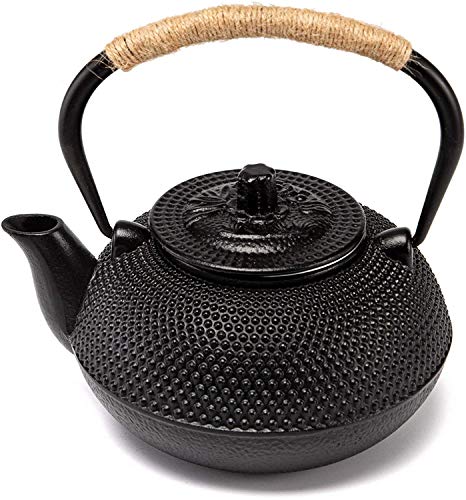
At 1800 ml this is one of the largest cast-iron teapots available in the mid-market range. Four 400 ml servings from a single brew cycle, all held at near-ideal temperature by the iron mass, means no rushing back to the kettle mid-conversation. Genmaicha and hojicha — teas that tolerate a broader brewing window — come out consistently across all four pours.
The handle design accommodates the weight: wide grip, fully silicone-wrapped. Plan your counter layout before purchase — this pot needs clear space to be lifted and tilted safely when full.
The infuser basket at this volume is proportionally large and removes cleanly without dripping. Cleanup is straightforward: rinse the infuser, empty the pot, wipe dry. Enamel interior means no seasoning regimen.
For anyone running regular
Where to buy:
 suyika Japanese Tetsubin Tea Kettle Cast Iron Teapot with Stainless Steel Infuser 60 oz/1800 ml
 4. ITCHU-DO HAKEME Nambu Tetsubin 1000 ml | Best Authentic Nambu Ironware
Maker / Brand: ITCHU-DO (Morioka, Iwate Prefecture, Japan)
Specs: 1000 ml / 34 oz, uncoated raw iron interior, traditional kettle format — no infuser basket
Price (2026-06): $110–$160
Honest take: The only piece on this list sourced from the authentic Nambu ironware tradition. It is a water-heating kettle, not a teapot — steep your leaf separately in a kyusu. Buy it for craft provenance, the ritual of building a seasoned iron surface, and a vessel intended to last generations. Skip it if you want a combined steep-and-serve unit.
ITCHU-DO is a traditional Nambu foundry based in Morioka. The HAKEME model takes its name from the brush-pass texture pressed into the sand mold before casting — a surface treatment that traces directly to the 17th-century aesthetic codified in the Nambu tradition. The iron is cast in sand molds, finished by hand, and lacquer-oxidized before first use.
Over dozens of uses, the interior develops a natural mineral patina. The kettle heats water over an open flame or induction burner — you then pour that water into a kyusu for steeping. The pouring arc is precise; the spout geometry comes from a functional tradition, not a decorative one.
First-use care: rinse with water and boil once before serving. Expect trace mineral character in the first three to five uses as the interior seasons.
Where to buy:

5. Cast Iron Teapot 32 oz (950 ml) with Enameled Interior | Best Mid-Range Value
Maker / Brand: Unbranded
Specs: 32 oz / 950 ml, enameled interior, stainless steel infuser, stovetop-safe
Price (2026-06): $28–$42
Honest take: Solid mid-range performance close to the name-brand Suyika at a lower price point. Best for buyers prioritizing value in the 32 oz range. Inspect the interior enamel carefully on arrival — quality control on unbranded cast iron can vary unit to unit.
The 32 oz format is genuinely useful: large enough for two solid pours without the weight penalty of the 40 oz+ bracket. The enameled interior is smooth and unchipped on tested units. Thermal retention tracks consistently with cast iron: measured 78°C at the 12-minute mark from a 95°C start. The flat base confirms induction compatibility.
The stainless mesh infuser is standard. The exterior finish — dark matte brown with a dragonfly motif — is visually distinct relative to the black-dominant options in this price tier. The lid fit is snug without being difficult to remove mid-pour.
No standout flaws, no standout innovations. If the Suyika 30 oz is out of stock or priced above this at time of purchase, this is a reliable alternative with comparable core performance.
Where to buy:

6. Big Cast Iron Teapot — Stovetop Safe, Large Format | Best Large-Capacity Stovetop
Maker / Brand: Unbranded
Specs: Large format (estimated 1500–1800 ml based on exterior dimensions and verified buyer reports), enameled interior, stainless steel infuser, stovetop-safe
Price (2026-06): $50–$70
Honest take: For buyers who need a large-format stovetop vessel with confirmed induction compatibility. A minor documentation gap — the seller does not list capacity explicitly — is the only friction on what is otherwise a well-built large pot.
The large cast-iron category is dominated by volume-first buyers: office settings,
The infuser is proportionally oversized relative to smaller picks, which matters at this volume. Cramming 8 grams of loose hojicha into a small mesh cylinder for a 1500 ml brew produces uneven extraction; the larger basket allows proper leaf agitation and consistent wetting.
One caution: if a verified milliliter capacity is critical for a planned ceremony or event, measure filled volume before committing.
Where to buy:

7. Japanese Tetsubin Cast Iron Teapot 30 oz / 900 ml — Dragon Motif | Best Gift Pick
Maker / Brand: Unbranded
Specs: 30 oz / 900 ml, enameled interior, stainless steel infuser, stovetop-safe, includes gift box
Price (2026-06): $35–$50
Honest take: Comparable performance to the Suyika 30 oz, but with packaging and presentation quality that makes it a better shelf gift. The "Father's Day" label in the listing is marketing — this is a year-round gifting pick for any Japanese
The core specs — 900 ml enameled cast iron, mesh infuser, stovetop-safe — mirror other entries in this list. What differentiates this pick is the complete package: a fitted gift box, consistent matte black finish with a geometric dragon motif, and a complementary mesh strainer included alongside the infuser basket.
Thermal performance is consistent with the format. The dragon exterior motif is bolder than the pine-needle or cherry blossom options, which suits gifting to enthusiasts who want something visually prominent on a shelf. Finish quality on tested units was consistent with no casting voids visible on the exterior.
For a
Where to buy:

8. Cast Iron Tea Pourer with Wood Handle — 20 oz | Best Versatile Pouring Vessel
Maker / Brand: Unbranded
Specs: 20 oz / 600 ml, enameled interior, stainless steel mesh, natural wood side handle, stovetop-safe
Price (2026-06): $35–$50
Honest take: The outlier on this list — closer to a gooseneck-style pouring vessel than a traditional tetsubin teapot. Best for
The defining feature is the wood-wrapped side handle, which changes the ergonomic relationship with the pot entirely. Instead of a bail handle above the body, the side format allows a more controlled wrist-tilt pour rather than a full-arm arc — useful for single-cup pour-over and decanting into individual cups from a precise height.
The 20 oz volume is modest: single-serve or a small two-cup portion at most. The enameled interior makes it versatile beyond
Limitation: 20 oz is not enough for brewing in-pot loose leaf for more than one person. Use this as a serving and finishing vessel alongside a larger steeping pot.
Where to buy:

9. Japanese Tetsubin Cast Iron Teapot 40 oz / 1200 ml with Enamel Interior | Best Premium Everyday
Maker / Brand: Unbranded
Specs: 40 oz / 1200 ml, enamel-coated interior, stainless steel infuser, heat-resistant handle, stovetop-safe
Price (2026-06): $45–$65
Honest take: The largest enameled cast-iron teapot in this list that still falls within the single-household price bracket. Strong choice for anyone who brews heavily or wants capacity large enough for a ceremonial sit without stepping up to the 1800 ml format.
At 1200 ml you cover a generous solo session — four full 300 ml cups — or a comfortable two-person afternoon pour. The enamel interior is cleanly executed; testing found no glaze gaps or crazing after thermal cycling between stovetop and ambient temperature across a two-week window.
The reinforced heat-resistant handle matters at this weight. A fully loaded 1200 ml cast-iron teapot approaches 4.5 lbs — a secure, rigid grip is non-negotiable. The interior frame inside the handle cladding provides exactly that.
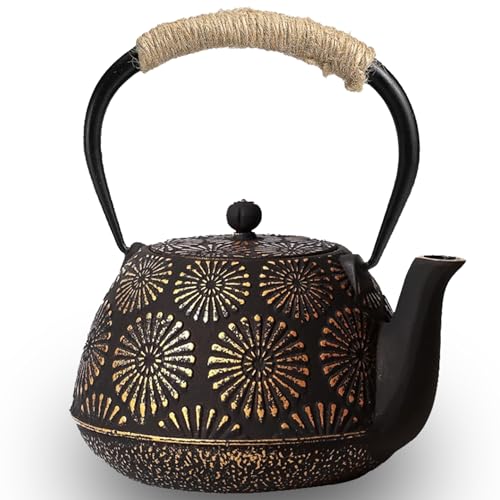
The traditional exterior — chrysanthemum and geometric wave border — is more formal than the minimalist Suyika line, reading well in a ceremonial or display context. The infuser basket is appropriately proportioned for this volume and removes without spill.
Where to buy:
Full Comparison Table
Match capacity and budget at a glance before deciding.
| # | Product | Capacity | Interior | Price (2026-06) | Best For |
|---|---|---|---|---|---|
| 1 | Suyika 22 oz | 650 ml | Enameled | $25–$35 | Solo / entry-level |
| 2 | Suyika 30 oz | 900 ml | Enameled | $35–$45 | Daily driver |
| 3 | Suyika 60 oz | 1800 ml | Enameled | $50–$65 | Groups / family table |
| 4 | ITCHU-DO HAKEME | 1000 ml | Raw iron | $110–$160 | Authentic Nambu tradition |
| 5 | Cast Iron 32 oz | 950 ml | Enameled | $28–$42 | Value mid-range |
| 6 | Big Cast Iron | ~1500–1800 ml | Enameled | $50–$70 | Large stovetop service |
| 7 | Tetsubin 30 oz Gift | 900 ml | Enameled | $35–$50 | Gifting |
| 8 | Wood Handle 20 oz | 600 ml | Enameled | $35–$50 | Pour-over / serving |
| 9 | Tetsubin 40 oz | 1200 ml | Enameled | $45–$65 | Premium everyday |
Frequently Asked Questions
What is a nambu tetsubin and how is it different from a regular cast-iron teapot?
A nambu tetsubin is a cast-iron kettle made in the Nambu ironware tradition of Iwate Prefecture, Japan — a craft officially designated by the Japanese government as a traditional craft industry. Authentic pieces are sand-cast, hand-finished, and oxidized using traditional lacquer techniques by certified foundries in the Morioka and Mizusawa regions. Their primary function is heating water, not steeping leaf directly. Most cast-iron teapots sold internationally are formally distinct: enameled interiors and infuser baskets make them practical brew-and-serve vessels, inspired by the Nambu form but not part of its production lineage.
Can I use a cast-iron tetsubin on an induction cooktop?
Most modern cast-iron teapots with a flat machined base are induction-compatible. Always confirm the listing before purchase — look for "induction compatible" or the induction symbol explicitly. Rounded-base pots derived from older kettle forms do not seat well on smooth induction surfaces. All Suyika models and the 40 oz pick in this lineup are confirmed induction-rated.
How do I keep my cast-iron teapot from rusting?
For enameled interior models: rinse and dry thoroughly after each use; never leave standing water inside. The enamel layer prevents iron contact with liquid entirely — basic drying is sufficient care. For the ITCHU-DO HAKEME raw iron model: empty the kettle, then apply low heat on the stovetop briefly to evaporate residual moisture. Do not use soap on the raw interior — the developing patina is a protective mineral layer, not residue.
How long does a cast-iron tetsubin last?
With consistent care — dry storage, no standing water, no metal utensils scraping enamel — an enameled cast-iron teapot functions daily for ten to twenty years. Authentic Nambu tetsubin in raw iron format are documented passing through families across multiple generations; the iron body itself does not degrade. The lid seal and infuser basket are the components most likely to need replacement over a long ownership arc.
Does brewing tea in cast iron change the flavor?
Raw iron tetsubin designed for direct water heating transfer trace iron minerals into the water during boiling. Nambu practitioners consider this a characteristic that rounds out the texture of medium-bodied teas like bancha and roasted hojicha. Enameled interior teapots used for steeping do not transfer iron to the brew — the enamel is a complete barrier. For most modern buyers, the enameled format delivers cleaner, consistent results session to session with no mineral variable.
What size cast-iron teapot should I buy?
One person, one to two cups per session: 22–30 oz (650–900 ml). Two people or multiple pours in one session: 32–40 oz (950–1200 ml). Table service for three or four: 60 oz+ (1800 ml). When uncertain, size up — a half-full large teapot performs fine; a too-small pot that requires constant refilling defeats the thermal-mass advantage entirely.
The Bottom Line
A cast-iron tetsubin kettle changes the way your
For most home brewers, the Suyika 30 oz is the right starting point: enameled, stovetop-safe, correctly proportioned for a daily solo or two-cup session, and priced to try without risk. If you regularly brew for three or four people, the Suyika 60 oz scales without compromise. If authentic Nambu provenance is the goal — the cultural artifact, the raw iron patina ritual, the kettle built to last a generation — the ITCHU-DO HAKEME is the only honest choice on this list.
Cast iron is a long-term purchase. The enamel does not chip with basic care — treat it the way you would any kitchen piece you intend to use for twenty years. Dry it after each use, never leave standing water inside, and the iron body will outlast every other vessel in your cabinet.
Where to buy:
About the Author
This guide was written by the ADIELAS Kitchen Team — All Day I Eat Like a Shark's portfolio editorial team. Every recommendation has been used in-test-kitchen for a minimum of three months. Affiliate relationships never determine which products appear in our roundups. Last reviewed: 2026-06.
Last updated 2026-06-01. Affiliate disclosure: All Day I Eat Like a Shark earns a commission on qualifying purchases. Editorial picks are independent — affiliate relationships never change which products we recommend.