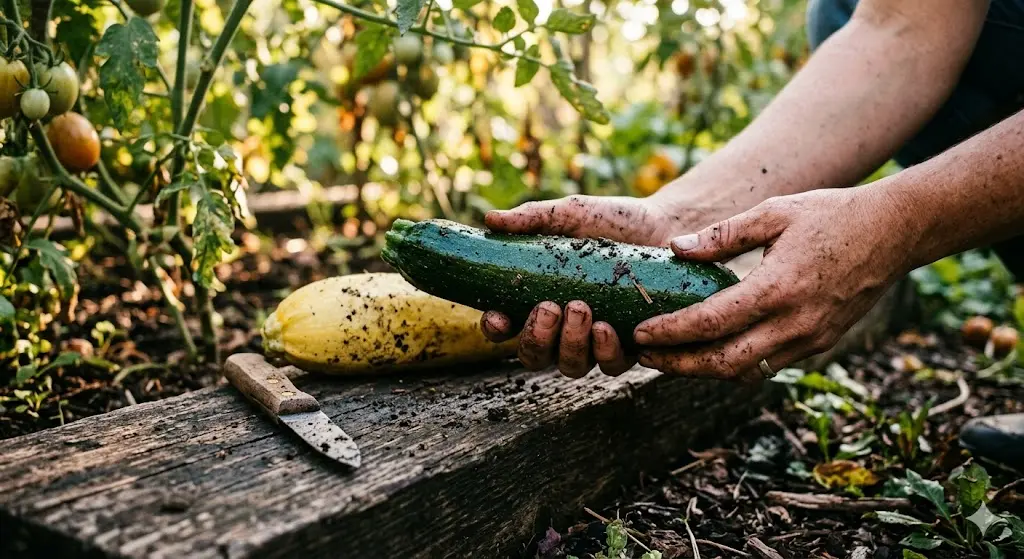
When to Pick Zucchini: Size, Color, and Harvest Signs
Zucchini is the garden vegetable that goes from perfect to marrow-sized baseball bat in what feels like 48 hours. Getting the harvest timing right makes all the difference between tender, sweet squash and tough, seedy disappointment. Here’s everything you need to know about picking zucchini at peak flavor.
The Perfect Zucchini Size: Smaller Is Better
Most home gardeners wait too long to pick zucchini. They see big as better. In reality, the sweet spot is much smaller than you’d think.
Ideal harvest size by variety:
- Standard green zucchini (Black Beauty, Patio Star): 6–8 inches long, about 2 inches in diameter
- Yellow zucchini: 4–6 inches; yellows get seedy faster than green types
- Round varieties (8-Ball, Cue Ball): Golf ball to tennis ball size
- Pattypan squash: 2–4 inches across, while skin is still tender
- Baby zucchini with blossom: 3–4 inches — a gourmet harvest prized by restaurants
At 6–8 inches, zucchini is at its absolute best — the seeds are small and soft, the flesh is firm with no hollow core, and the flavor is mild and sweet. Once it hits 12 inches, texture deteriorates rapidly.
Color and Skin Firmness: What to Look For
Size alone isn’t the only guide. Color and skin feel tell you just as much.
Green zucchini should be:
- Deep, glossy green (not dull or yellowing)
- Skin should yield slightly under fingernail pressure but not be soft
- No wrinkles or shriveling at the blossom end
Yellow zucchini should be:
- Bright, evenly golden — not pale cream or orange
- Firm along the entire length
- No soft spots or splotchy discoloration
Signs it’s too late:
- Skin is hard enough that a fingernail won’t dent it easily
- Flesh has hollow core when cut open
- Seeds are large, hard, and prominent
- Blossom end (the tip) looks dried and shriveled
The Stem Test: One Quick Check
Here’s a fast field test: use sharp pruners or a knife to cut the stem cleanly. Never pull, twist, or snap the stem by hand, as this can damage the plant and invite disease. Overmature zucchini have woody, fibrous stems that require a knife.
Always use a sharp knife or pruners to harvest — don’t twist or pull, which damages the plant and can introduce disease at the wound site.
How Often to Check and Harvest
In peak summer heat, zucchini can gain 1–2 inches of length per day. No joke. The difference between a perfect 7-inch zucchini and an overripe 14-inch club is literally 3–5 days.
Recommended harvest schedule:
- During active fruiting: check every day or every other day
- Morning is the best harvest time — plants are hydrated and fruit is firm
- Never let any zucchini go to full seed maturity on the plant — it signals the plant to stop producing
One rule that experienced zucchini growers live by: when in doubt, pick it. A slightly underripe zucchini is always better than an overripe one. And picking frequently tells the plant to keep producing.
What to Do With Oversized Zucchini
Everyone has the experience of missing a zucchini that’s now the size of a forearm. Don’t compost it — there are still good uses for overgrown squash:
- Zucchini boats: Hollow out, fill with meat, cheese, and herbs, bake
- Zucchini bread or muffins: Grated overgrown zucchini works perfectly here
- Stuffed zucchini: Similar to boats but halved and stuffed with rice and vegetables
- Soup base: Cube and roast, then blend into creamy soups
- Compost it: If it’s very seedy and hollow, compost is the right call
Remove the large seeds before cooking anything except bread or muffins — they’re unpleasantly chewy.
Harvesting Zucchini Blossoms
Zucchini flowers are a delicacy worth harvesting. Both male and female flowers are edible, though the approach differs:
Male flowers (on long straight stems, no swelling at base) can be harvested freely — in fact, harvesting some improves air circulation and reduces powdery mildew risk. Pick them in the morning before they close.
Female flowers (short stem with tiny fruit at base) should be harvested selectively. Pick them with the tiny fruit attached at 2–4 inches for baby zucchini with blossom — a restaurant-worthy harvest. Leaving a few allows fruit development.
Stuff blossoms with ricotta and herbs, dip in a light batter, and fry. They’re remarkable.
Storage and Shelf Life After Harvest
Zucchini is best eaten fresh but stores reasonably well:
- Refrigerate unwashed in a produce bag for up to 3–5 days
- Don’t wash until ready to use — moisture accelerates decay
- Frozen zucchini (blanched, cubed, or spiralized) keeps 3–4 months
- Room temperature zucchini begins to soften within 1–2 days
Frequently Asked Questions
Can you eat zucchini that’s too big?
Yes, though texture and flavor decline. Oversized zucchini is best for baking (zucchini bread, muffins) where the texture is less critical. Remove seeds and soft core before using in savory dishes.
What happens if you leave zucchini on the plant too long?
The plant shifts energy to seed development and slows new fruit production. You’ll get fewer zucchini for the rest of the season. Remove overgrown fruits promptly to keep the plant producing.
Why is my zucchini yellow at the tips?
Yellowing at the blossom end (tip) indicates poor pollination or blossom end rot from calcium/watering issues. These fruits won’t ripen properly — remove them to redirect plant energy.
How many zucchini should one plant produce?
A healthy plant in full production can yield 6–10 zucchini per week during peak summer. Consistent harvesting is key — plants that have oversized fruit on them dramatically reduce output.
Should I cut or twist zucchini off the plant?
Always cut with a sharp knife or pruning shears, leaving about an inch of stem on the fruit. Twisting tears the plant stem, opening wounds that invite disease and slow future production.


