Hinoki Cutting Board Care Guide: Oil, Clean, and Store Right
A good hinoki cutting board is one of those kitchen tools that can last a lifetime — or get destroyed in a month. I have seen both outcomes. The difference is almost entirely in how you care for it. Hinoki (Japanese cypress) is a beautiful, fragrant wood with natural antibacterial properties, but it responds badly to neglect: prolonged water contact, improper drying, and heat will warp or crack it within weeks.
This guide covers everything you need to know to keep a hinoki board in perfect condition for years.
Why Hinoki? What Makes It Different from Other Cutting Boards
Before caring for the board, it helps to understand what you have. Hinoki (Chamaecyparis obtusa, Japanese cypress) is the same wood used in traditional Japanese temple construction. It has been valued for centuries for its:
- Natural fragrance: A clean, citrusy-woody scent that is especially prominent when the board is freshly wet or freshly cut
- Antibacterial properties: Hinoki contains hinokitiol and other compounds that inhibit the growth of bacteria and mold
- Softness: Softer than hardwoods like maple or walnut, which means it is gentler on knife edges
- Self-healing properties: Minor knife marks tend to close up slightly as the wood swells and contracts with moisture
The softness that makes hinoki gentle on knives is also why it requires more care than a hard maple board. It dents and stains more easily, and it responds more dramatically to moisture changes.
First Use: What to Do Before Cutting Anything
When a new hinoki board arrives, do not use it immediately. The wood needs preparation:
- Inspect for cracks or damage from shipping — rare but worth checking
- Rinse lightly with water on both sides and allow to dry completely (this helps the wood adjust to your kitchen humidity)
- Apply your first oil treatment (see below)
- Allow to cure overnight before using
Many hinoki boards from Japan arrive with light sanding already done. Some do not need oiling initially — the wood may be quite smooth. But oiling before first use gives the wood a protective base that helps it handle regular water exposure.
How to Oil a Hinoki Cutting Board
This is the most important maintenance step. Oil prevents the wood from drying out and cracking, and it creates a barrier against moisture absorption that causes warping.
What oil to use:
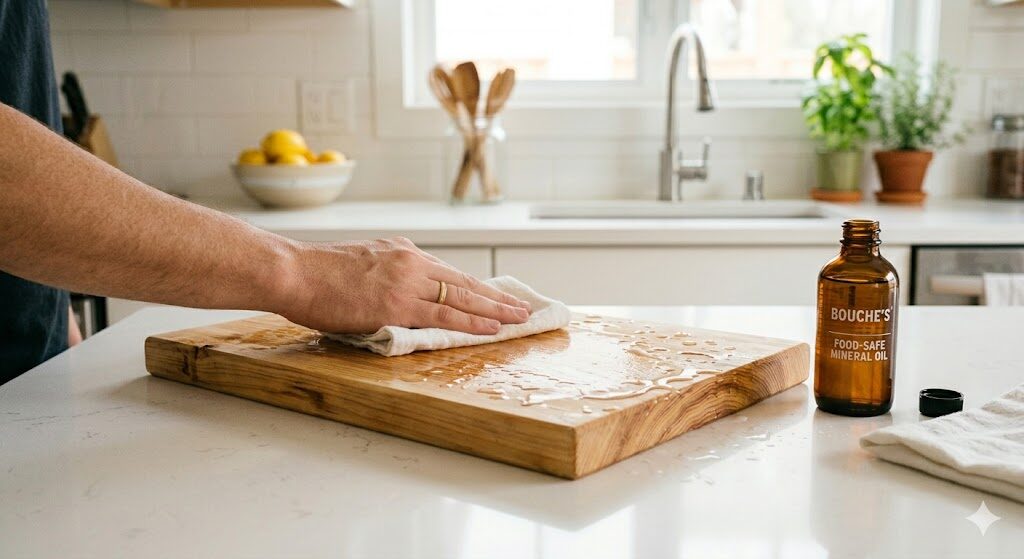
Food-grade mineral oil is the standard recommendation. It does not go rancid, does not affect food taste, and penetrates well. Pure food-grade mineral oil is available at pharmacies and kitchen stores.
Do not use olive oil, coconut oil, vegetable oil, or any food-derived oil. These will go rancid inside the wood over time, creating unpleasant odors and a sticky surface that is hard to reverse.
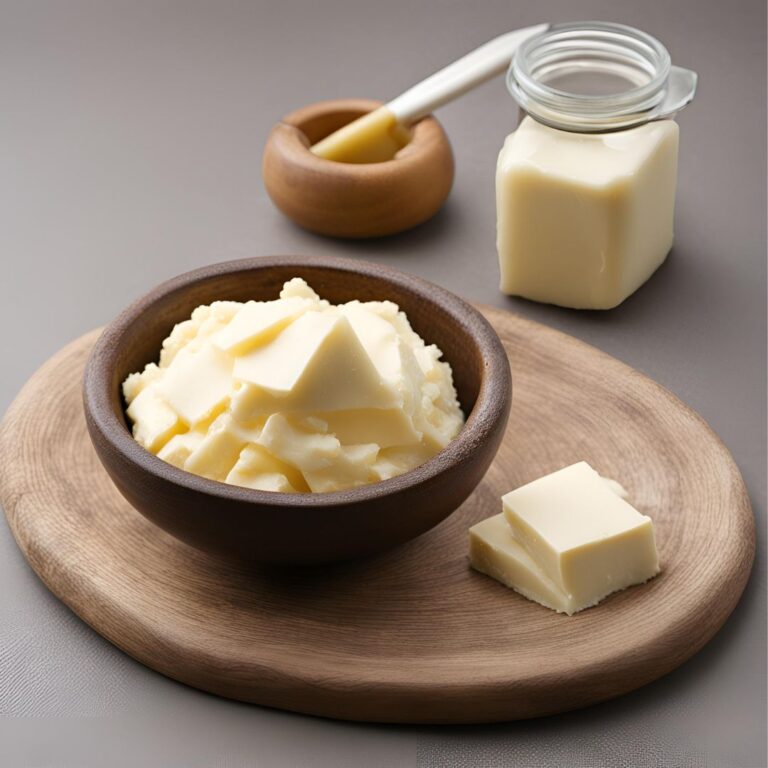
Board cream (a blend of mineral oil and beeswax) is an excellent alternative that provides both hydration and a surface seal. If you are going to invest in one product for your hinoki board, board cream is it.
How to apply:
- Make sure the board is completely dry
- Apply a generous amount of oil to all surfaces — both faces, all four edges, and the ends (end grain absorbs oil fastest)
- Use a clean cloth or paper towel to rub it in with the grain
- Let it sit for at least 2 hours — overnight is better
- Wipe off any excess oil that has not been absorbed
- Allow to dry completely before use
How often to oil:
New boards: oil three to four times in the first two weeks, with complete drying between each application. After that: once a month for regular use, or whenever the wood starts to look dry and lighter in color. A well-maintained hinoki board should always look slightly satin, not chalky or dull.
How to Clean a Hinoki Cutting Board Daily
Daily cleaning is where most boards are damaged. The rules:
Do:
- Wash immediately after use with warm water and mild dish soap
- Use a soft sponge or brush — no steel wool or abrasive scrubbers
- Rinse thoroughly to remove all soap
- Wipe dry immediately with a clean towel
- Stand upright or on its side to allow air circulation on both faces while drying
Never:
- Soak in water — even for a few minutes
- Put in the dishwasher — the combination of heat, prolonged water, and harsh detergent will destroy the board
- Leave flat with one side wet and one side dry — this creates uneven drying that causes warping
- Leave near a heat source like a stove or in direct sunlight — rapid drying causes cracking
The most common reason hinoki boards warp is uneven drying — water is absorbed into one face while the other remains dry. Always flip the board so both sides dry at the same rate.
How to Remove Stains and Odors
Hinoki has natural antibacterial properties, but it will stain over time, especially from garlic, onions, and strongly colored vegetables. The fixes:
For odors: Cut a lemon in half and rub the cut face across the board, then rinse and dry. The natural acidity neutralizes most food odors. The hinoki scent usually reasserts itself after the board dries.
For light stains: Sprinkle coarse salt on the stained area and scrub with half a lemon or a damp cloth. Rinse and dry immediately.
For deeper stains or dullness: Sand lightly with fine-grit sandpaper (400 to 600 grit), going with the grain. This removes the top layer of wood and exposes fresh material. After sanding, re-oil the entire board. This essentially resets the surface.
How to Store a Hinoki Cutting Board
Storage matters more than most people think:
- Store upright or on its side — flat storage on a counter can trap moisture underneath
- Away from the dishwasher — the steam and heat cycles will damage nearby wooden items
- Out of direct sunlight — UV light degrades wood over time
- Not in a sealed cabinet while still warm or damp — always ensure fully dry before storing in an enclosed space
When to Replace Your Hinoki Board
A well-cared-for hinoki board can last 10 to 20 years. You should consider replacement or resurfacing when:
- Deep grooves have accumulated and harbor bacteria despite cleaning
- The board has warped significantly and rocks on the counter
- Cracks have developed that cannot be resolved with sanding and oiling
We carry hinoki cutting boards in our shop — sourced from Japanese manufacturers who work with properly aged cypress for stability. If you are replacing an old board, look for boards made from mature hinoki (not plantation-grown fast wood) for better longevity and more fragrance.
Frequently Asked Questions
Can I use hinoki for raw meat?
Hinoki has natural antibacterial properties, but for food safety, it is better to use separate boards for raw meat and produce — the same best practice that applies to any cutting board material. If you use hinoki for meat, wash promptly and thoroughly with hot water and soap.
My hinoki board smells musty. What went wrong?
Musty smell indicates moisture was trapped without proper drying. Try scrubbing with coarse salt, rinsing, and allowing to dry completely upright in a well-ventilated area. If the smell persists, sand the board down to expose fresh wood and re-oil. Severe mold growth (visible discoloration throughout) may mean the board needs replacement.
How do I flatten a warped hinoki board?
Wet the concave (hollow) side slightly with a damp cloth, then place that side face-down on a flat surface with moderate weight on top. Allow to dry slowly over 24 to 48 hours. This sometimes corrects mild warping. Severe warping is generally permanent and indicates the board was damaged by uneven drying.
Is hinoki better than end-grain maple for Japanese knives?
Hinoki is much softer than maple and is genuinely gentler on knife edges — particularly important for thin, hard Japanese knives that chip on hard surfaces. For Japanese kitchen knives, hinoki or similar soft wood boards are a better pairing than hard Western-style boards.
Does the hinoki scent go away over time?
It fades with regular use, but does not fully disappear. The scent is most noticeable when the board is freshly wet or freshly sanded. Regular oiling helps maintain it. Many people find that after years of use, the board has a pleasant, subtle woody scent rather than the sharp fresh fragrance of new hinoki.