Vegan Dashi Options: Kombu, Shiitake, and Beyond
One of the most persistent myths about Japanese cooking is that you can’t achieve authentic depth and umami without bonito flakes. The truth is more interesting: some of the most umami-rich dashi in Japanese tradition comes entirely from plants. Kombu has been the backbone of Japanese stocks for over a thousand years, long predating the popularization of bonito-kombu awase dashi. If you cook plant-based, you have excellent options — and some of them are arguably more versatile than traditional katsuobushi dashi.
What Makes Dashi Umami Without Fish?
Umami comes from specific compounds: glutamate (present in kombu), inosinate (present in bonito and other fish), and guanylate (present in shiitake mushrooms). Traditional awase dashi combines kombu glutamate with bonito inosinate in what’s called a synergistic umami effect — the two compounds together create a perception of umami 7–8x more intense than either alone.
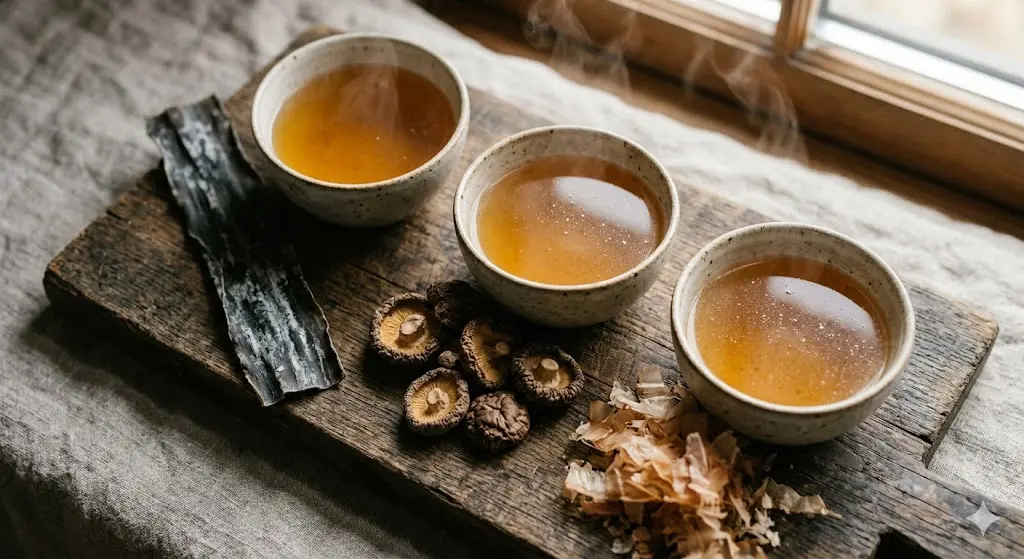
Vegan dashi works by combining glutamate-rich and guanylate-rich plant ingredients — primarily kombu and dried shiitake mushrooms. Research has confirmed that kombu + dried shiitake produces synergistic umami comparable in depth to the traditional awase combination. The flavor profile differs — less smoky, more earthy — but the depth of savory richness can be just as satisfying.
Kombu Dashi: The Foundation
Kombu (昆布) — dried kelp — is the simplest and most pure vegan dashi. It’s made by cold-soaking or gently simmering kelp in water, then removing it before serving. The resulting liquid is crystal-clear, lightly oceanic, and deeply savory with minimal effort.
Cold brew kombu dashi: Submerge 2–3 pieces of kombu (about 10g) in 4 cups cold water. Refrigerate overnight (8–12 hours). Remove kombu. Done. This method extracts maximum glutamate with minimal bitterness. The result is a delicate, clean dashi perfect for chawanmushi (savory egg custard), clear soups, and anything where you want umami without murkiness.
Hot kombu dashi: Place kombu in cold water and heat slowly to 140–155°F (60–70°C). Hold at temperature for 15–20 minutes. Remove kombu before water reaches a simmer. Slightly more intense flavor than cold brew, still clean. Don’t let kombu boil — it makes dashi bitter and slimy.
The white powder on dried kombu is mannitol — a natural sugar-alcohol that contributes to kombu’s sweet umami. Don’t rinse it off before using.
Shiitake Dashi: The Earthy Umami Layer
Dried shiitake mushrooms contain guanylate — one of the three core umami nucleotides and the compound most uniquely abundant in mushrooms. Dried shiitake dashi has a robust, earthy, slightly forest-like character that adds body and complexity to any stock.
Dried shiitake dashi: Soak 3–4 dried shiitake caps in 4 cups cold water for 4–8 hours (or overnight). Remove mushrooms (save them for cooking — they’re fully rehydrated and delicious in stir-fries, soups, etc.). The resulting liquid is deeply flavorful and amber-brown in color.
The dried vs. fresh shiitake distinction matters enormously: drying shiitake concentrates and transforms the guanylate content dramatically. Fresh shiitake do not produce comparable dashi — always use dried for stock-making.
Kombu-Shiitake Awase: The Vegan Powerhouse
Combining kombu and dried shiitake creates a vegan dashi with genuine depth through umami synergy — the glutamate-guanylate combination that creates layered, complex savory flavor:
- Soak 10g kombu + 3 dried shiitake mushrooms in 4 cups cold water for 4–6 hours
- Heat slowly to 150°F (65°C), holding for 10 minutes
- Remove kombu (continue heating if needed)
- Simmer mushrooms an additional 5 minutes, then remove
- Strain and use immediately
This is the vegan dashi to use for miso soup, noodle broths, braised vegetables, and any dish that calls for traditional dashi. The flavor difference compared to kombu alone is substantial.
Beyond the Basics: Other Vegan Umami Builders
Japanese tradition and modern plant-based cooking offer additional options:
Nori dashi: Simmer a few pieces of dried nori in water — releases guanylate and a briny oceanic quality. Delicate but interesting as a soup base or flavoring agent. Good nori works better than cheap nori for this application.
Niboshi (dried baby sardines) alternative — dried wakame: Seaweed in general contributes glutamate. Wakame and other seaweeds can supplement or replace kombu when kombu isn’t available.
Fermented options — miso, soy sauce, sake: These aren’t dashi per se but are legitimate umami-building additions for plant-based Japanese cooking. A small amount of shiro miso dissolved into kombu-shiitake dashi creates a deeply satisfying soup base.
Roasted kombu dashi: Briefly toasting kombu before steeping adds a slightly smoky, roasted character that bridges some of the sensory gap left by omitting katsuobushi. Pass kombu over a gas flame for 30 seconds or briefly toast in a dry pan.
Vegan Dashi Powder: The Convenience Option
Pre-made vegan dashi powder from kombu and shiitake is available and worth keeping on hand for quick weeknight cooking. Quality brands will list kombu extract and shiitake extract as primary ingredients. Check our dashi powder selection for kombu-shiitake vegan options.
The powder dissolves instantly in hot water — useful when you don’t have time to cold-brew kombu or rehydrate shiitake. The flavor is good (not identical to homemade, but functional) and far superior to bouillon cubes or generic vegetable stock for Japanese applications.
Using Vegan Dashi: Applications Guide
- Miso soup: Kombu-shiitake dashi works perfectly. The earthiness of shiitake pairs naturally with fermented miso.
- Noodle broths (soba, udon): Use a stronger concentration (1.5x standard recipe) and season more aggressively with soy sauce and mirin to achieve the depth traditional katsuobushi dashi provides.
- Chawanmushi: Pure cold-brew kombu dashi gives the clearest, most delicate result for this silky steamed egg dish.
- Braising: Kombu-shiitake dashi plus soy, mirin, and sake makes excellent braising liquid for tofu, vegetables, and plant-based proteins.
- Ochazuke (rice with
tea /broth): Light kombu dashi is the classic base.
Frequently Asked Questions
Can I make vegan dashi without kombu? Yes, though the base glutamate is reduced. Shiitake-only dashi works reasonably well; supplement with a small amount of soy sauce or miso to compensate for missing depth.
How does vegan dashi compare in flavor to traditional awase dashi? Honestly different, not objectively inferior. Vegan kombu-shiitake dashi is earthier and more rounded; traditional awase is smokier and more oceanic. Both can achieve excellent depth for Japanese cooking.
What is the best ratio of kombu to shiitake? A good starting point: 10g kombu to 15g dried shiitake per liter of water. Adjust based on preference — more shiitake for earthier depth, more kombu for cleaner umami.
Can I reuse kombu and shiitake after making dashi? Absolutely. The kombu can be sliced and used in rice dishes, pickled, or added to stir-fries. The rehydrated shiitake are fully functional — excellent in any savory cooking application.
Is vegan dashi appropriate for shojin ryori? Yes — shojin ryori is Buddhist temple cuisine that is entirely plant-based, and kombu-shiitake dashi is the traditional base. It’s not a compromise; it’s the authentic traditional form of plant-based Japanese stock.