Dashi vs Stock: Key Differences in Japanese Cooking
Dashi and Western-style stock occupy the same functional role in their respective culinary traditions — both are liquid flavor foundations for cooking. But they’re fundamentally different products built on different philosophies, different ingredients, and different techniques. Understanding the differences helps you use each correctly and explains why substituting stock for dashi (or vice versa) often produces disappointing results.
The Philosophy Behind Each
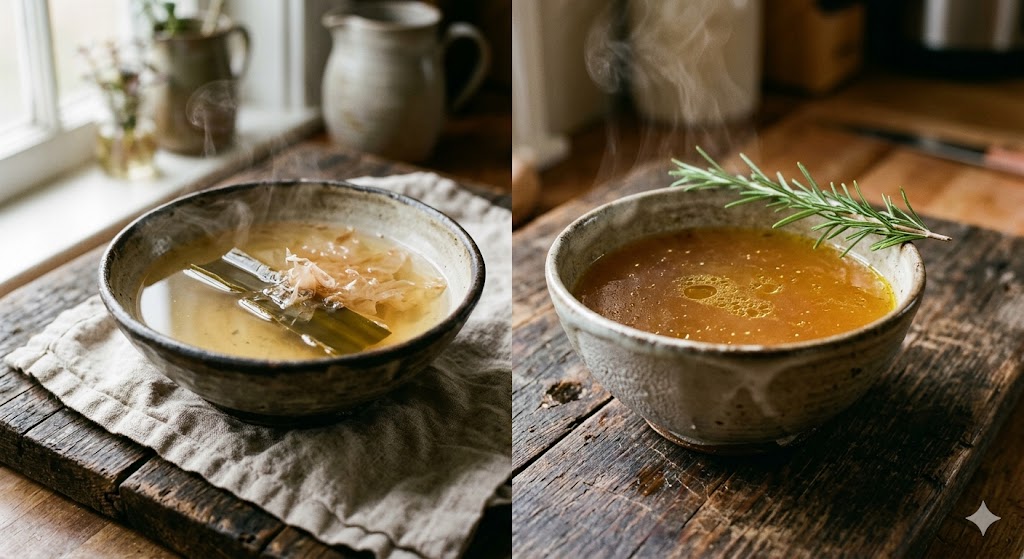
Western stock: Built from simmered bones, collagen, vegetables, and herbs over hours. The long cooking extracts gelatin, minerals, and fat from bones, creating body and richness. The result is complex, layered, and opaque. The stock is a supporting character that adds background depth to dishes.
Japanese dashi: Built from two or three ingredients steeped briefly in water — never simmered long. The goal is pure, clean umami extraction without cloudiness or heaviness. The result is clear, light, and immediately pleasant to drink alone. Dashi is a supporting character that adds umami depth without adding body or rich flavor that competes with the dish’s primary ingredients.
The Japanese aesthetic of dashi is subtlety — the stock should be invisible but unmistakably present when it’s removed.
Key Differences at a Glance
- Cooking time: Dashi: 15-30 minutes. Stock: 2-24 hours.
- Clarity: Dashi: crystal clear. Stock: cloudy to opaque.
- Body: Dashi: thin, no gelatin. Stock: medium to thick from collagen.
- Umami type: Dashi: glutamate + inosinate (synergistic). Stock: primarily inosinate from protein.
- Ingredients: Dashi: 2-3 dried ingredients. Stock: fresh bones + vegetables + herbs.
- Flavor profile: Dashi: clean, marine, subtle. Stock: rich, complex, meaty.
- Versatility: Dashi: essential for delicate Japanese dishes. Stock: better for hearty Western preparations.
The Umami Chemistry
Both produce umami, but through different mechanisms. Western chicken or beef stock contains primarily inosinate (5′-IMP) from animal protein. Dashi produces a combination of glutamate (from kombu) and inosinate (from bonito or fish). This combination creates umami synergy — glutamate and inosinate together produce 8x more perceived umami than either alone.
This synergy is why properly made awase dashi (kombu plus bonito) tastes so dramatically more umami-rich than the sum of its parts. No Western stock achieves this specific effect because it lacks the glutamate source (kombu or vegetables aren’t typically used in sufficient quantity in Western stocks to reach this threshold).
When Dashi Is Essential (Not Substitutable)
- Clear soups (suimono) — the clarity and delicacy of dashi is the dish; stock would make it murky and too rich
- Chawanmushi (egg custard) — the delicate egg sets around the subtle dashi; stock overpowers
- Noodle broths for delicate soba and udon — the clean dashi flavor allows the noodle’s own character to come through
- Seasoning vegetables (nimono) — vegetables simmered in dashi absorb it without becoming heavy
When Stock Can Substitute
- Miso soup (the miso masks the difference somewhat)
- Hearty stews where the dish already has strong flavor contributions
- Marinades and braising liquids where precise Japanese character isn’t the goal
Making Quick Dashi at Home
The misconception that dashi is difficult prevents many cooks from attempting it. Proper awase dashi takes 15-20 minutes:
- Place kombu in cold water (10g per liter). Heat slowly.
- Remove kombu just before simmering (60-70C).
- Add large handful of bonito flakes. Remove from heat.
- Steep 3 minutes.
- Strain.
That is the complete process. The speed is part of dashi’s design — it was developed for daily use in busy households. Browse our dashi ingredients: kombu here and katsuobushi here.
Frequently Asked Questions
Can I use store-bought chicken broth as a dashi substitute?
For casual cooking where authenticity is not the goal, yes with adjustment. Dilute store-bought broth with water (50/50), reduce any added salt, and consider adding a piece of kombu while warming it to introduce some glutamate. The result is not dashi but is better than straight broth for Japanese applications. For any dish where dashi’s character is central, make real dashi — it takes 15 minutes.
Why does Japanese food taste so different from Western food at high-end restaurants?
Partly technique, partly ingredients, partly dashi. The clean, precise umami of dashi allows other flavors in a dish to stand clearly without muddiness. High-end Japanese restaurants serve ingredients in their own clarity because the dashi supports without competing. Western haute cuisine achieves different complexity through reduction, butter mounting, and layering — both are sophisticated, but the Japanese approach prizes transparency.
Is dashi healthier than stock?
Different nutritional profile rather than healthier. Dashi has minimal calories, no fat, and delivers iodine from kombu plus B vitamins from bonito. Stock provides collagen, minerals from bones, and more protein. For joint health, bone broth wins. For thyroid support and low-calorie cooking, dashi is appropriate. Each serves different nutritional purposes.
What is shiro dashi and is it the same as dashi?
Shiro dashi is a prepared seasoning blend that combines dashi, light soy sauce, mirin, and sometimes salt. It’s dashi-based but is a complete seasoning rather than a plain stock. Shiro dashi is a convenient all-in-one ingredient for adding dashi flavor with seasoning. Use it in smaller quantities than plain dashi as it contains salt.
Can vegetarians make authentic dashi?
Yes. Cold-steeped kombu dashi produces authentic umami without any animal products. For additional depth, add dried shiitake mushrooms to the cold steep (1 dried shiitake per 400ml water, 12+ hours). The combination produces exceptional umami through glutamate (kombu) and guanylate (shiitake) synergy — a different but equally powerful umami combination to awase dashi.