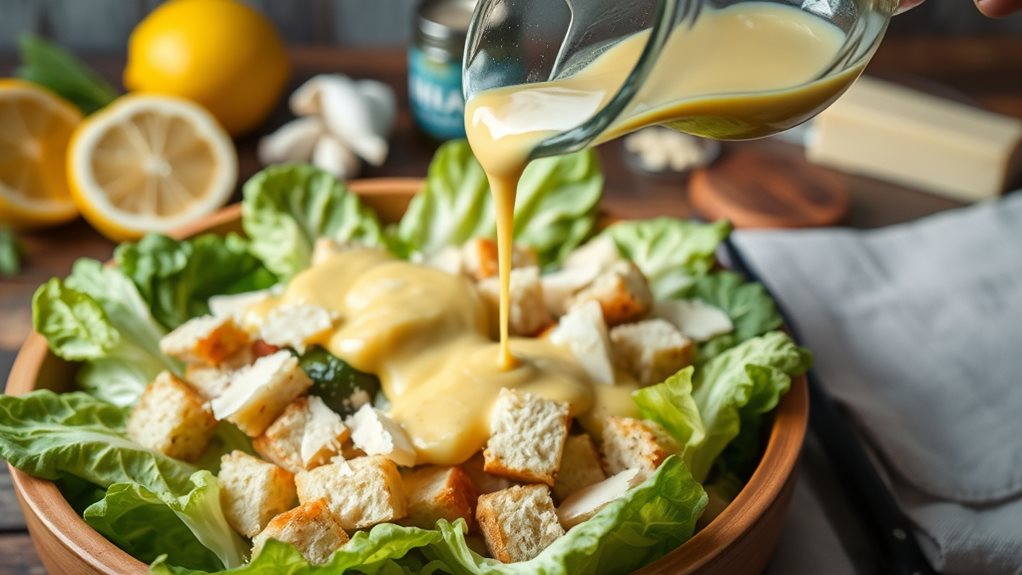
Best Caesar Dressing Recipe
For the best Caesar dressing, you’ll need anchovy fillets, fresh garlic, egg yolks, lemon juice, Dijon mustard, Parmesan cheese, and olive oil. Whisk together everything except the oil first, then slowly drizzle in the oil while whisking constantly to create that signature silky emulsion. Adjust with extra lemon juice or salt to taste. Let flavors marry for 30 minutes before serving. Your homemade version will blow store-bought options away with its vibrant, complex flavor profile.
The History Behind Classic Caesar Dressing
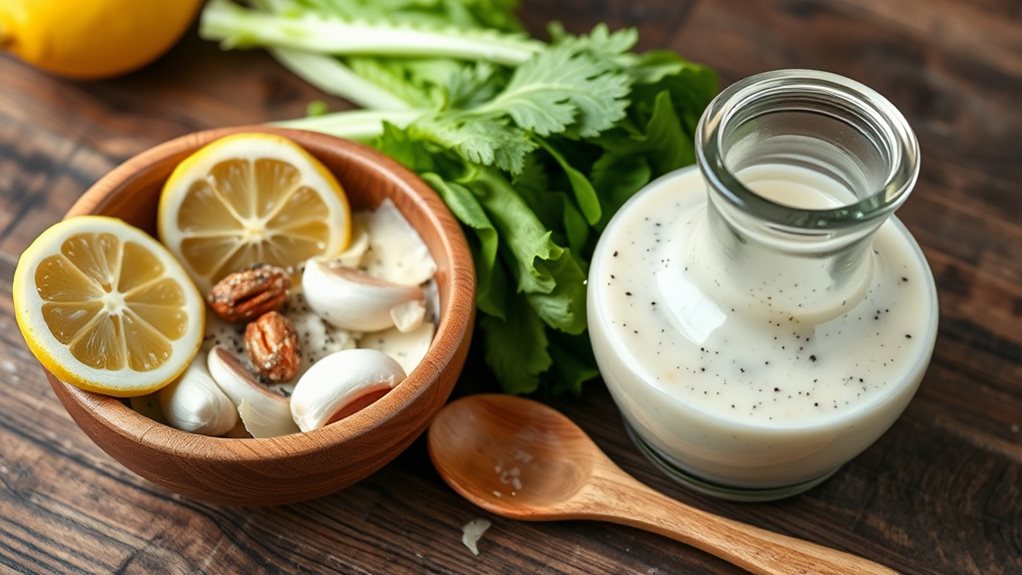
Though many assume Caesar salad originated in Italy, it was actually created in 1924 by an Italian-American restaurateur named Caesar Cardini in Tijuana, Mexico. Despite its modern inception, you’ll find the dressing has what some call “ancient Roman origins” through its use of ingredients like olive oil, garlic, and fish sauce—elements that have sustained Mediterranean cuisine for centuries.
You’re enjoying the results of culinary evolution when you taste a proper Caesar. Cardini’s original recipe didn’t contain anchovies but relied on Worcestershire sauce for that umami punch. The dressing was dramatically prepared tableside in upscale restaurants throughout the mid-20th century, lending it an air of sophistication.
Today’s versions typically include egg yolks, anchovies, Parmesan, and lemon juice—creating that creamy, tangy dressing you know and love.
Essential Ingredients for Authentic Caesar Flavor
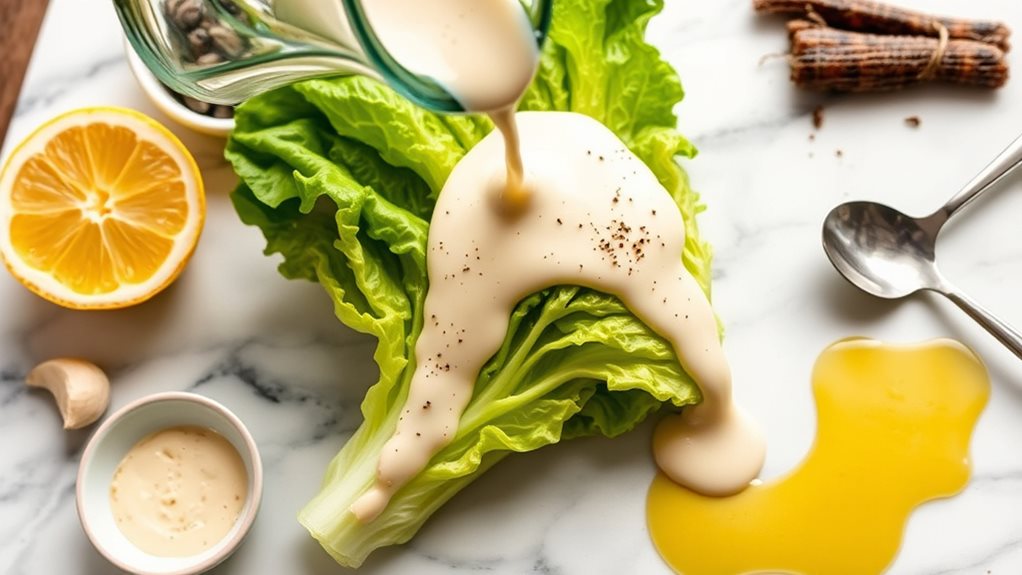
The perfect Caesar dressing hinges on a precise combination of ingredients that create its unmistakable flavor profile. You’ll need high-quality anchovy fillets, which provide that essential savory depth without overwhelming the palate. Fresh garlic—crushed, not minced—releases potent essential oil types that form the aromatic backbone of your dressing.
Don’t compromise on the Parmesan; aged varieties offer complex flavor profiles that simply can’t be matched by pre-grated options. Raw egg yolks (or pasteurized, if you’re concerned) deliver the silky emulsion that distinguishes great Caesar dressings from mediocre ones.
Finally, fresh lemon juice brings necessary acidity, while Dijon mustard acts as both flavor enhancer and emulsifier.
Master these core ingredients, and you’re well on your way to Caesar perfection!
Step-by-Step Caesar Dressing Preparation
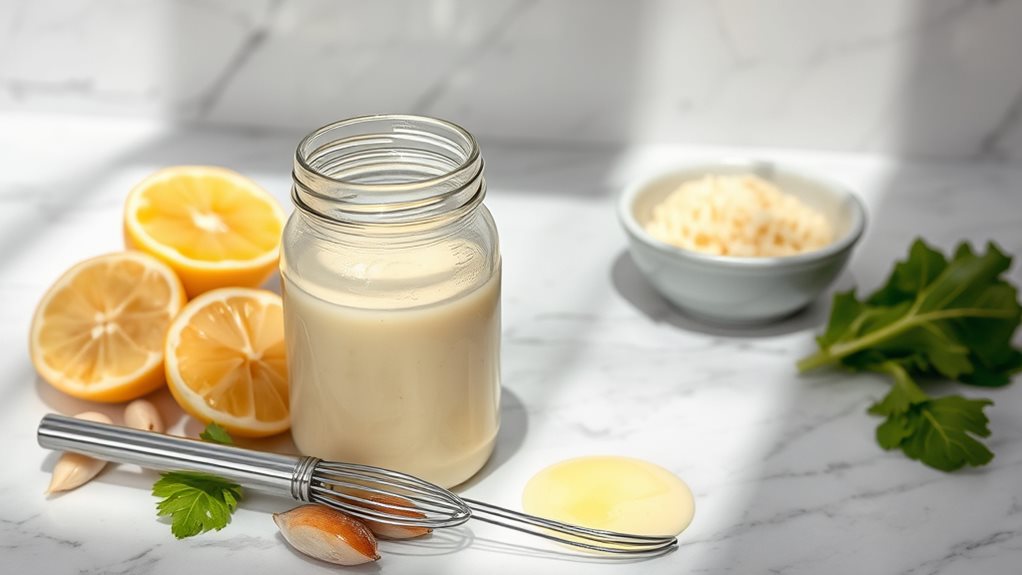
Crafting a flawless Caesar dressing requires methodical preparation, beginning with essential mise en place. Your homemade technique will yield a restaurant-quality result with minimal effort. First, room-temperature ingredients blend more easily, creating that signature creamy texture you’re aiming for.
- Emulsify gradually – Add oil in a slow, steady stream while whisking vigorously
- Balance flavors – Taste as you go, adjusting acid and salt components
- Control consistency – Use extra lemon juice to thin or more egg to thicken
- Perfect timing – Incorporate cheese last to maintain proper texture
- Troubleshoot wisely – If your dressing breaks, add a teaspoon of warm water and re-whisk
Customizing Your Caesar: Variations and Substitutions
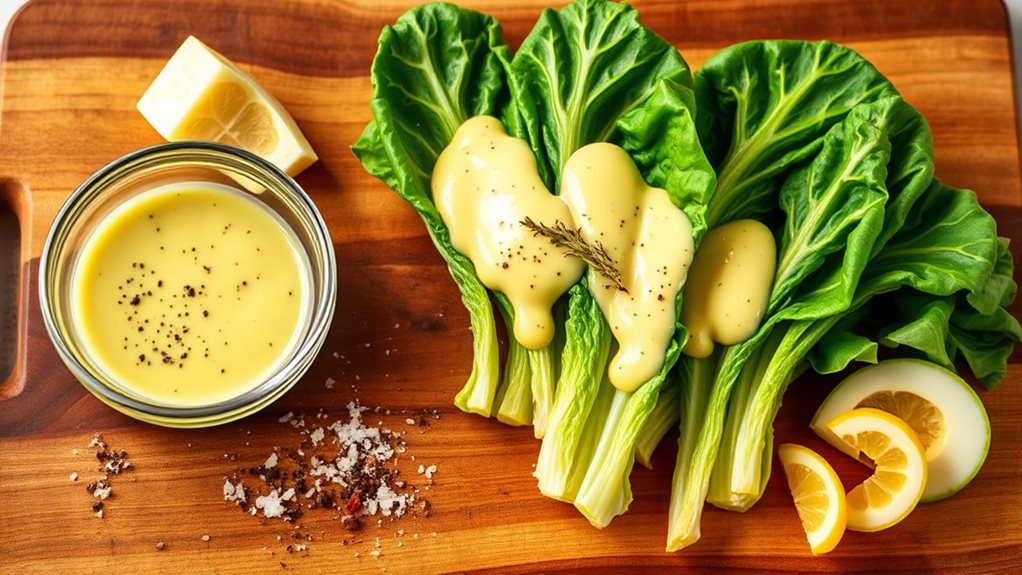
While classic Caesar dressing stands as a culinary icon, you can branch out with countless variations that respect tradition while accommodating dietary needs or flavor preferences.
For ingredient substitutions, try Greek

Storage Tips and Shelf Life
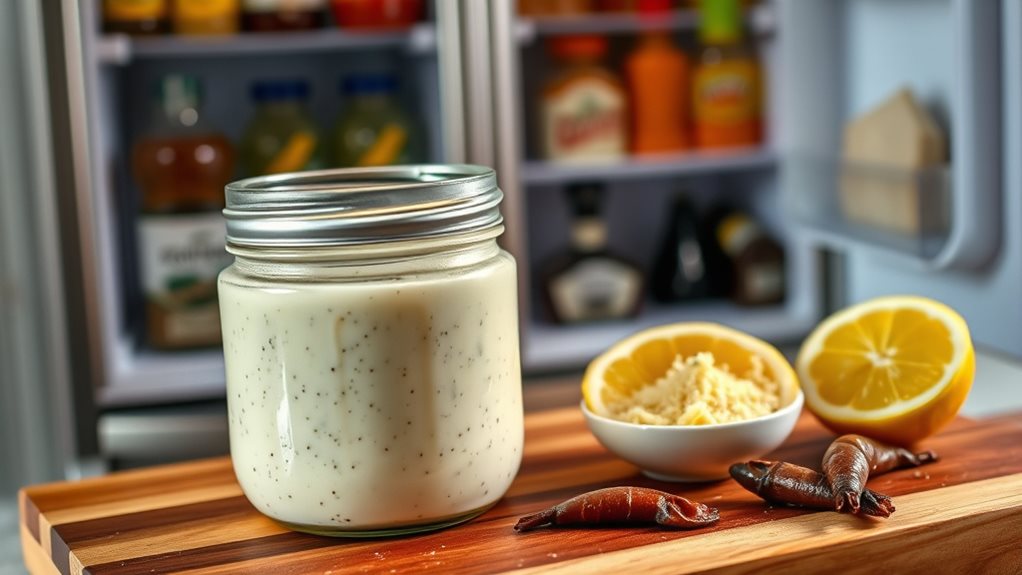
Properly storing your homemade Caesar dressing isn’t just about preservation—it’s about protecting that perfect balance of flavors you’ve worked so hard to create. Your delicious concoction deserves proper care to maintain its creamy texture and zesty punch.
Refrigerator storage: Always keep your dressing in an airtight container—mason jars work perfectly—and store it at the back of your fridge where it’s coldest (up to 7 days).
Freezer storage: While possible, freezing isn’t ideal as emulsions can separate upon thawing.
Container matters: Glass containers won’t absorb flavors like plastic ones might.
Temperature check: Let it sit at room temperature for 10 minutes before using if it’s too thick.
Freshness test: Trust your senses—if it smells off or looks separated, it’s time to make a fresh batch.
Perfect Pairings: Beyond the Classic Caesar Salad
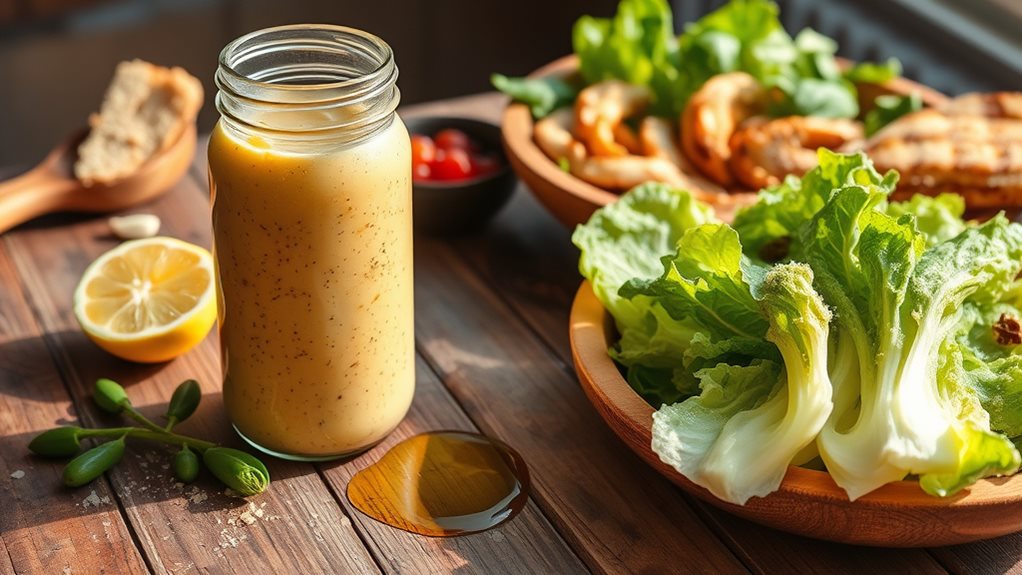
Most people limit their Caesar dressing to the traditional romaine-and-crouton combo, but this versatile condiment deserves a much broader culinary stage. Your homemade Caesar dressing can transform countless dishes with its creamy, umami-packed punch.
Try drizzling it over grilled vegetables like asparagus, zucchini, or bell peppers for a smoky-meets-tangy revelation. For innovative salad bases, swap romaine with hearty kale, peppery arugula, or even shaved Brussels sprouts – each offering different textures and flavor profiles.
Seasonal produce combinations work brilliantly too: summer’s tomatoes and corn, fall’s roasted squash, winter’s crisp apples and walnuts. You can even brush it onto chicken before roasting or use it as a zesty sandwich spread. The robust flavors cut through richness while enhancing subtle ingredients.
PrintBest Caesar Dressing Recipe
A creamy, tangy homemade Caesar dressing that’s packed with flavor from anchovies, fresh garlic, Parmesan, and lemon. This restaurant-quality dressing will elevate your salads and can be used in countless creative ways beyond the classic Caesar salad.
- Prep Time: 15 minutes
- Total Time: 45 minutes (includes 30 minutes resting time)
- Yield: About 1 cup of dressing 1x
- Category: Dressings, Condiments, Italian-American, No-Cook
- Cuisine: Italian-American
Ingredients
- Anchovy fillets, high-quality
- 2–3 cloves fresh garlic, crushed
- 2 egg yolks (pasteurized if preferred)
- 2 tablespoons fresh lemon juice
- 1 teaspoon Dijon mustard
- 1/2 cup grated aged Parmesan cheese
- 1/2 cup olive oil
- Salt and freshly ground black pepper, to taste
Instructions
- Bring all ingredients to room temperature for easier blending and better emulsion.
- In a mixing bowl, combine anchovy fillets and crushed garlic, mashing together to form a paste.
- Add egg yolks, lemon juice, and Dijon mustard to the bowl and whisk until well combined.
- While whisking vigorously, slowly drizzle in the olive oil in a thin stream to create a creamy emulsion.
- Once all oil is incorporated and dressing is smooth and thick, stir in the grated Parmesan cheese.
- Taste and adjust seasoning with additional lemon juice, salt, or pepper as needed.
- Let the dressing rest for 30 minutes before serving to allow flavors to marry.
Notes
- For a thinner consistency, add a little more lemon juice.
- For a thicker dressing, add more egg yolk.
- If your dressing breaks or separates, add a teaspoon of warm water and re-whisk.
- The original Caesar dressing by Caesar Cardini did not contain anchovies but used Worcestershire sauce instead. Feel free to substitute if preferred.
Storage Tips:
- Store in an airtight container (mason jars work perfectly) in the back of the refrigerator where it’s coldest.
- Dressing will keep for up to 7 days when properly refrigerated.
- Glass containers are recommended as they won’t absorb flavors like plastic ones.
- Let dressing sit at room temperature for 10 minutes before using if it becomes too thick in the refrigerator.
- Freezing is not recommended as emulsions can separate upon thawing.
Nutrition
- Calories: 120
- Fat: 12 g
- Carbohydrates: 1 g
- Protein: 2 g