Why Homemade Sashimi Looks Ragged (and the Slicing Fix)
Last updated: July 2026
If your slices look ragged, try a longer, calmer draw cut before changing the presentation. Use a well-maintained slicer, make fewer passes, and use only enough pressure to guide the blade.
- Use the longest practical slice rather than sawing back and forth.
- Draw the knife toward you in one controlled motion; let the length of the blade do the work.
- Wipe the blade between slices when residue starts to pull at the surface.
- Keep presentation goals separate from food-handling decisions; this guide addresses cutting technique only.
Why does a sashimi slice tear instead of looking clean?
Try reducing repeated passes. A longer slicer gives you more room for one continuous draw across a portion, which can make the visible face look more even.
For this technique, choose a slicer long enough for the portion you plan to cut and practice the same deliberate motion each time.
What does the correct cutting motion feel like?
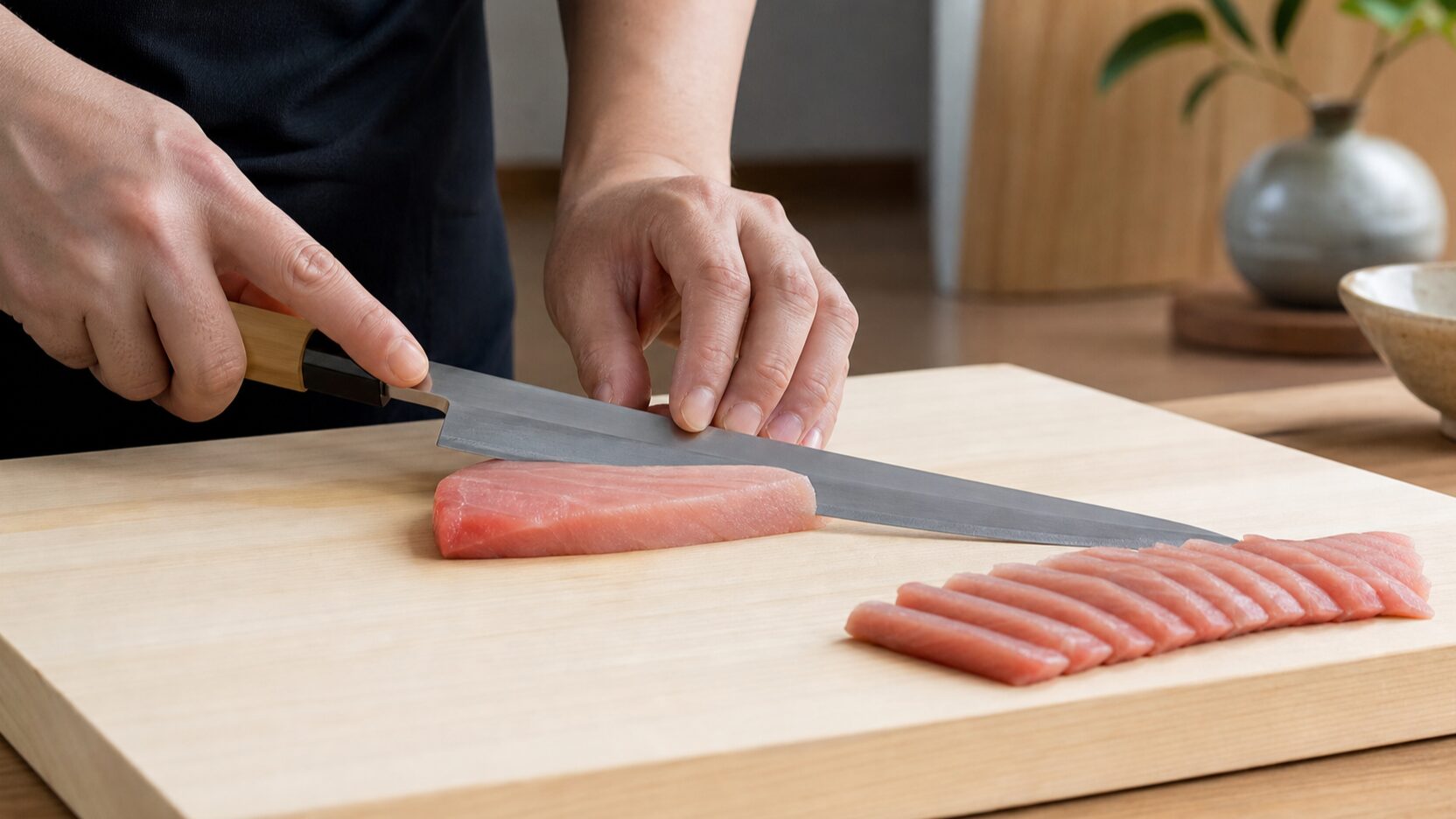
Think of the cut as a draw, not a chop. Place the heel of the knife near the far side of the portion, then pull the blade toward you in one steady pass while keeping the edge angled for the thickness you want.
- Square the portion so it is stable and easy to portion evenly.
- Set the blade at the far edge instead of dropping it vertically into the middle.
- Pull from heel to tip in one continuous motion.
- Lift the knife clear at the end of the pass rather than compressing the slice against the board.
- Wipe the blade before the next slice when the surface no longer looks clean.
Why does knife length matter for sashimi?
A longer blade gives you a longer uninterrupted cutting path. If a short knife makes you restart midway, compare the result with a single draw from a longer slicer.
| Cutting habit | What it tends to show on the slice | Technique adjustment |
|---|---|---|
| Repeated back-and-forth passes | Rough-looking cut face | Test a longer draw with fewer changes of direction. |
| Heavy downward pressure | Uneven-looking face | Use less pressure and let the edge travel. |
| Blade needs wiping | Drag during the next cut | Wipe between slices as needed. |
| Knife is short for the portion | Mid-cut restart marks | Try a slicer that can cross the portion in one motion. |
How can you make the slices look intentional?
Choose one thickness for a course, then repeat it. A slightly thicker slice that is consistent looks more deliberate than a plate of thin slices cut at several angles. Arrange the slices with a little overlap so the cut face is visible instead of hiding every piece in a pile.
For a home platter, restraint helps. Let the knife work carry the presentation rather than trying to compensate for uneven cutting with a crowded garnish.
What should you practice before serving guests?
Practice the motion on a soft, boneless ingredient used in your regular cooking, with the same long pull and light pressure. The purpose is not to imitate a professional performance; it is to feel where the blade travels and to notice whether you are sawing, pressing, or completing the pass cleanly.
FAQ
Can a chef’s knife make clean sashimi slices?
It can make serviceable slices. A longer slicer simply gives you more room to try one uninterrupted draw.
Should you push or pull a yanagiba?
For the classic sashimi motion, pull the blade toward you in one long pass. The goal is a clean path from heel to tip, not extra force.
Why wipe the knife between slices?
A clean blade is less likely to drag across the next cut face. Wiping also makes it easier to see whether the cutting motion itself needs adjustment.
Affiliate disclosure: The next guide contains affiliate links. If you buy through one, we may earn a commission at no extra cost to you.
Want a slicer built for the long draw? Compare options in Top 7 Yanagiba Knives for Home Sashimi.