Japanese Tea and Ramen Pairings by Broth Style
Ramen shops in Japan almost universally offer green
Why Tea Works With Ramen
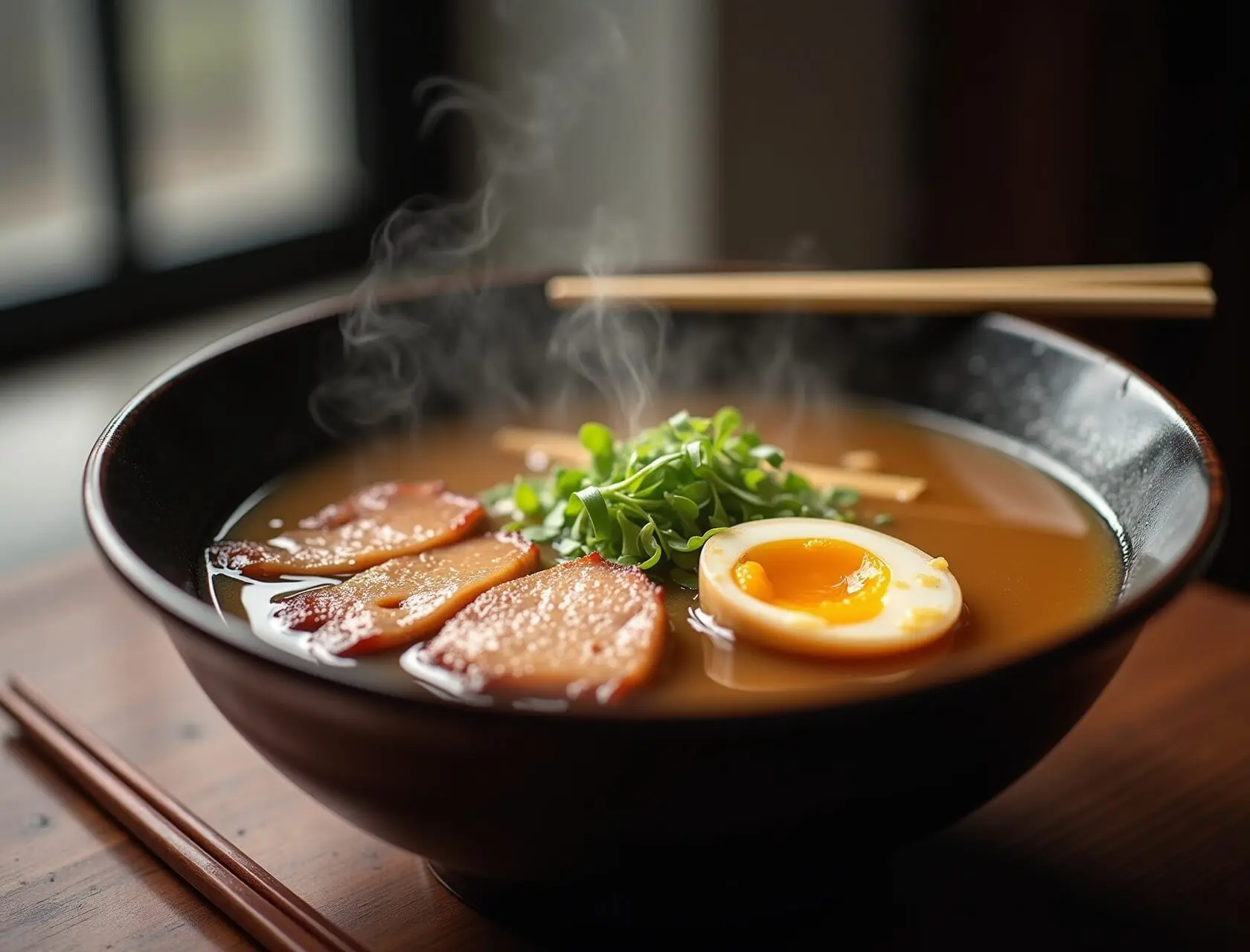
Ramen is rich. Even shoyu ramen (soy-sauce base) carries significant umami and some fat. Tonkotsu is extremely fatty — a good bowl has a visible oil layer on the surface. Without a palate cleanser, the richness accumulates and you stop tasting the complexity of the broth after the first few spoonfuls.
Green
Best Tea for Tonkotsu Ramen
Tonkotsu (pork bone broth) is the richest, most fat-intensive ramen style. It demands the most assertive
Brew at 80C (slightly hotter than usual) for maximum catechin extraction. The resulting cup is more astringent than a delicate
Best Tea for Shoyu (Soy Sauce) Ramen
Shoyu ramen is more balanced — chicken or dashi-based broth with soy sauce seasoning. The umami is pronounced but the fat content is lower. A quality sencha or kabusecha works well here. The shade-grown character of kabusecha adds an umami dimension that plays off the soy-seasoned broth rather than just cutting it.
For shoyu ramen, you can brew
Best Tea for Miso Ramen
Miso ramen has the most complex, earthy flavor profile of the major ramen styles. Genmaicha pairs beautifully — the toasted rice notes echo the fermented, earthy character of miso, and the lighter green
Brew genmaicha at 90C, slightly stronger than usual. The earthiness amplifies rather than competing, and the result is a meal that feels more cohesive than chopsticks-only ramen eating.
Best Tea for Shio (Salt) Ramen
Shio ramen is the most delicate style — clear broth, clean chicken or seafood base, minimal seasoning. This is where a high-quality sencha or spring kabusecha shines. The delicate
After the Bowl: Digestive Tea
The post-ramen phase is underrated. Ramen is a heavy meal. A cup of hojicha or bancha after finishing your bowl aids digestion and provides a comfortable close to the meal. The roasted character of hojicha also seems to cut through the post-ramen “full and greasy” feeling, providing a satisfying conclusion.
This is the one moment in the ramen-and-tea progression where hojicha beats green
Building a Ramen Tea Service at Home
When you make ramen at home:
- Set your
tea to brew 5 minutes before the noodles are ready - Keep the
tea warm but not boiling in a small covered vessel - Drink a small cup before eating to prepare your palate
- Sip between major transitions in the bowl (from noodles to chashu to egg)
- Finish with hojicha after the bowl
Frequently Asked Questions
Is green tea or water better between bites of ramen?
Green
What temperature should ramen tea be served at?
70-85C in the cup. Hot enough to be effective as a palate cleanser, cool enough to drink quickly between bites. Avoid letting it sit and cool — cold green
Can I make a ramen-tea pairing as good as in a Japanese restaurant at home?
Yes. The key is using quality loose-leaf
Does tea pair well with instant ramen?
It helps. Even instant ramen has significant fat from the oil sachet and seasoning. A cup of strong sencha alongside instant ramen dramatically improves the eating experience by cutting the artificial fat heaviness. The
What about cold ramen (hiyashi chuka) in summer?
Cold ramen with its sesame or soy-based cold sauce pairs well with cold-brewed sencha or kabusecha. The cold brew softens astringency while the catechins remain effective. Serve iced alongside the cold noodles for a summer meal that’s refreshing from bowl to cup.