What Is Kabusecha? Japan’s Shaded Green Tea Explained
I keep recommending kabusecha to people who find sencha too astringent but can’t justify the price of gyokuro. It consistently surprises them. Kabusecha delivers real complexity and sweetness without requiring the careful brewing ritual that gyokuro demands, and at a price that doesn’t require much deliberation before buying.
Here’s everything you need to know about this underrated shaded Japanese green
The Definition: What Does “Kabuse” Mean?
Kabuse (被せ) translates to “to cover” or “to shade.” Kabusecha literally means “covered
- Sencha — grown in full sunlight with no shading
- Gyokuro — shaded for 3–4 weeks with more intensive cover methods
- Matcha — made from tencha, which is shaded like gyokuro but processed differently
Kabusecha sits precisely between sencha and gyokuro in the spectrum of shading intensity, and its flavor profile reflects that position.
How Kabusecha Is Grown
Tea plants respond to light reduction by shifting their chemistry. With less photosynthesis occurring, catechin development slows while amino acid production — particularly L-theanine — continues. Chlorophyll content increases as the plant responds to the reduced light environment by producing more of the compound that captures available light.
The physical shading for kabusecha uses woven fabric covers (kabuse) draped over the rows of
The result is leaves that are darker green, higher in chlorophyll, higher in L-theanine, and lower in catechins than unshaded sencha from the same location.
What Kabusecha Tastes Like
The shading effect is immediately apparent in the cup. Kabusecha is:
- Sweeter than equivalent sencha — the L-theanine contributes a characteristic sweetness distinct from simple sugar
- More umami-forward — amino acid concentration creates a savory, almost broth-like depth
- Less astringent — reduced catechins mean less of the mouth-drying sensation that can be polarizing in strong sencha
- Creamier in texture — the higher amino acid content gives the liquor more body
- Still clearly “green
tea “ — unlike hojicha or genmaicha, it retains the fresh, vegetal character of thetea leaf
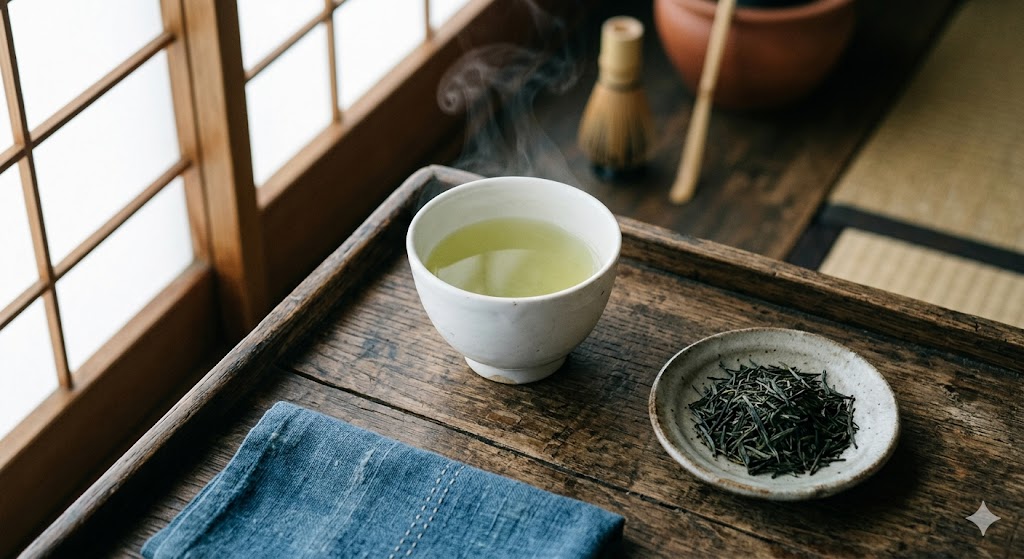
The balance of sweetness, umami, and clean green character in a well-made kabusecha is genuinely impressive. Our kabusecha represents this profile well — it brews a vivid green with a smooth, lingering sweetness.
Kabusecha vs Gyokuro: When to Choose Which
Gyokuro is the shaded
For everyday elevated drinking, kabusecha is the more practical choice. For a special
How to Brew Kabusecha
The key is keeping temperature lower than for standard sencha:
- Water temperature: 70–75°C
- Leaf amount: 5–6g per 150ml
- Steep time: 60 seconds
- Re-steeps: 2–3 times (second infusion is often outstanding)
Lower temperatures favor the extraction of the sweet amino acids and inhibit over-extraction of the remaining catechins. Don’t rush this by using hotter water — you’ll get a more bitter, more astringent cup that misses what makes kabusecha special.
A kyusu teapot with fine mesh strainer gives the best results. If using a mug infuser, the same temperature and time apply.
Where Kabusecha Is Produced
Kabusecha is produced throughout Japan’s
Ise (Mie Prefecture): Known as Ise-cha, this region has a long tradition of shaded
Yamato (Nara Prefecture): Nara is less well-known for
Other regions including parts of Shizuoka and Kyushu also produce kabusecha, typically when they apply partial shading to otherwise standard sencha production.
Is Kabusecha Available Outside Japan?
Yes — increasingly so. As specialty Japanese
Frequently Asked Questions
Is kabusecha good for beginners?
Yes — its lower astringency and sweeter profile make it more approachable than standard sencha. It’s a great way to experience what shade growing does to Japanese
Does kabusecha have more caffeine than sencha?
Slightly more — shading marginally increases caffeine content in the leaf. The difference is not dramatic; it’s in the same general range as sencha at roughly 30–45mg per cup.
Can I cold brew kabusecha?
Yes, and it produces particularly excellent results. The amino acid richness of shaded teas comes through beautifully in cold extraction, producing a sweet, smooth iced
How is kabusecha different from fukamushi kabusecha?
Fukamushi (deep steam) refers to the processing method — a longer steaming time after harvest that breaks down the leaf structure and produces a denser, more powder-like appearance and a fuller, more rounded flavor. Kabuse refers to the shading cultivation method. Fukamushi kabusecha combines both — shaded cultivation and deep steaming — and produces a particularly rich, full-bodied cup.
What’s the shelf life of kabusecha?
Like all Japanese green teas, kabusecha should be consumed within 6 months of production for best flavor, and within 2 weeks to 1 month of opening. Store sealed in an opaque, airtight container away from light, heat, and moisture. Because of its higher amino acid content, it may oxidize slightly faster than standard sencha.