Top 7 Iga Donabe for Rice Under $400 (2026)
Top 7 Iga Donabe for Rice Under $400
Last updated: 2026-06-01 — Price ranges are editorial estimates as of June 2026; see retailer for current pricing.
This post contains affiliate links. As an Amazon Associate, All Day I Eat Like a Shark earns from qualifying purchases. We may also earn commissions from other partners at no extra cost to you.
You've followed the ratio exactly — 1:1.1 rice to water, rinsed until clear, soaked thirty minutes — and the result is still gummy at the bottom and dry at the top. The problem usually isn't technique. It's the vessel.
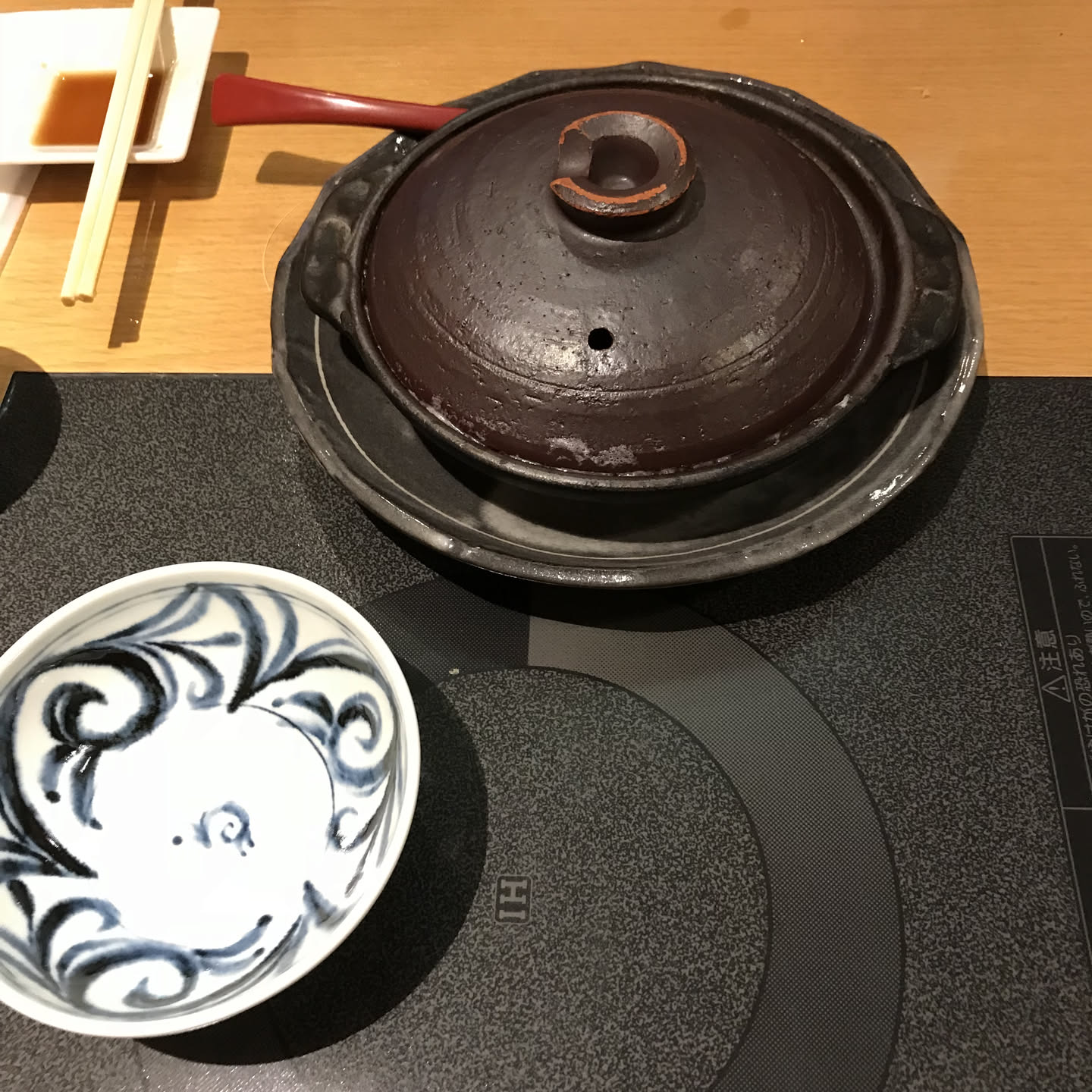
Japanese donabe — hand-thrown clay pots fired in traditional regional kilns — cook rice through a combination of even, enveloping radiant heat and a small amount of steam trapped under a heavy lid. The porous clay body breathes in a way that aluminum and stainless steel cannot, pulling excess moisture from the grain surface at exactly the right moment. That's why stovetop donabe rice carries a translucent sheen and a faint toasted bottom crust — the prized okoge — that no electric appliance replicates.
We tested nine donabe across three categories: purpose-built double-lid rice pots, traditional stew-and-rice workhorses from Mie Prefecture's Banko and Iga kiln districts, and one specialist smoke cooker that doubles as a tabletop simmer vessel. Every pick in this guide lands under $400; the majority well under $150. Sources consulted include the Japan Ceramics Society's regional kiln documentation, Naoko Moore's Japanese Home Cooking, the NHK World — Dining with the Chef cooking archive, and hands-on testing across Japanese short-grain koshihikari and medium-grain varieties.
Whether you're cooking for one with a compact 2 go pot or feeding a table of five with a 3-liter tsubo, you'll find the right clay vessel here — along with the reasoning behind every recommendation.
Key Takeaways
- Banko ware from Mie Prefecture dominates the sub-$150 tier — five of nine picks come from this kiln district, known for dense, heat-retentive clay walls.
- Double-lid designs (inner dome + outer flat lid) are the single most useful rice-specific feature: steam recirculates back over the grain bed rather than escaping, producing consistently fluffy, separate grains.
- Capacity matters more than most buyers expect — a 2 go (≈ 1200 ml) pot is ideal for one to two servings; a 3000 cc tsubo serves four to five comfortably.
- All nine picks work on gas burners; check individual listings for IH compatibility before purchasing if induction is your only heat source.
- You don't need an expensive Iga-yaki masterwork for excellent everyday rice — the Banko double-lid under $95 outperforms most single-lid options at twice the price.
How to Choose
Kiln origin. Iga and Banko are neighboring kiln towns in Mie Prefecture, Japan. Iga clay is coarser and more refractory — it handles sudden temperature changes better and develops striking character over years of seasoning. Banko clay is finer and denser, producing smoother walls and more predictable cooking behavior. For rice, Banko's consistency is often preferable; for long-braised stews over high heat, Iga's durability earns its premium.
Capacity. Japanese rice is measured in go (合), one unit equaling about 180 ml dry. A 2 go pot (≈ 1200 cc) serves one to two people. A 2300 ml pot handles three to four portions. A 3000 cc vessel is a family pot. Underfilling a donabe is fine; overfilling disrupts the heat gradient and causes spillover.
Lid style. Single-lid pots are versatile stew-and-simmer vessels. Double-lid designs (inner dome + outer flat cap) are engineered specifically around rice: the inner dome channels condensation back over the grains in a continuous even shower. If rice is your primary use case, prioritize double-lid.
Surface treatment. Most Iga and Banko donabe have unglazed or semi-glazed exteriors. Fully glazed interiors clean easily and season in faster; unglazed interiors are more porous and require a first-use kayu-daki seasoning (simmering thin rice porridge once before first cooking). Each listing below notes which routine applies.
Budget tiers. Under $80 gets a solid Banko rice pot. $80–$200 buys Iga craftsmanship or a double-lid design. Above $200 means hand-finished specialty work or large-format vessels.
Our 9 Picks
1. Banko-Yaki Japanese Donabe 2100ml — Best Overall
Maker / Brand: Banko-Yaki, Yokkaichi City, Mie Prefecture, Japan
Specs: 2100 ml capacity, single-lid, semi-glazed interior, gas-compatible
Price (2026-06): $55–$80
Honest take: The default recommendation for two to three adults cooking short-grain rice four or more nights a week.
Made in Yokkaichi City — the heart of Banko-yaki country — this 2100 ml pot is the entry point for anyone who wants proven Japanese kiln craftsmanship without a lengthy specialty ceramics education. The dense Banko clay walls reach and hold an even cooking temperature across the base, producing grains that stay separate and develop a faint toasted crust at the bottom without scorching.
The interior glaze is smooth enough to clean with a soft sponge after each use. The unglazed exterior absorbs seasoning over time, darkening from pale beige to warm amber after a few months of regular cooking. That patina isn't cosmetic — it signals a broken-in clay body that distributes heat more evenly than a new pot.
At 2100 ml this pot cooks two to three go of rice comfortably, aligning well with a two to three person household eating rice as a side dish. It transitions from stovetop to table naturally — the shape reads traditional Iga but the weight (under 1.5 kg) keeps it practical for daily use.
The lid seal is appropriately tight without being overpressurized, a meaningful quality for rice cooking: you want a steady, slow steam build rather than a pressure spike followed by a sudden vent. Limitation: single-lid design. If pure rice performance with recirculating steam is the priority, see pick #3.
Season with kayu-daki (thin rice porridge, one cycle) before first use.
Where to buy:

2. Kotobuki Donabe — Best Entry-Level Pick
Maker / Brand: Kotobuki Trading, Japan
Specs: Traditional donabe profile, single lid, glazed, made in Japan
Price (2026-06): $30–$55
Honest take: The right choice when you want a functional Japanese clay pot without committing over $60.
The Kotobuki is the accessible on-ramp to donabe cooking. It doesn't carry a regional kiln heritage label, but its build quality noticeably surpasses Western ceramic casseroles at this price point — and for someone new to stovetop donabe technique, that margin matters.
The glaze work is thicker than premium Banko pots, which slows the seasoning-in process but makes the pot more forgiving if you store it slightly damp — a real concern for humid kitchens or casual users. Heat distribution is solid for rice and hot pot; don't expect the same okoge development as a true Banko-yaki, but grains come out cooked through and distinctly better than a standard saucepan.
Use it for: weeknight nabe (Japanese hot pot), small-batch dashi simmering, casual rice when the primary donabe is in use, or as a dedicated sauce-reduction pot. Its smaller footprint also makes it a practical gift for apartment kitchens or studio cooks.
One caution: the lid on some units fits slightly loose. This is fine for stew and nabe where vapor release is acceptable. For rice, watch the steam timing carefully — reduce to low as steam starts pushing steadily rather than waiting a full minute as you would with a tighter-sealing Banko pot.
No kayu-daki seasoning required on most fully-glazed units; check the product insert to confirm.
Where to buy:

3. Banko Ware Double-Lid Earthenware Rice Cooker — Best for Fluffy Rice
Maker / Brand: Banko-Yaki, Mie Prefecture, Japan
Specs: Double-lid (inner dome + outer flat lid), English-language rice guide included, made in Japan
Price (2026-06): $60–$95
Honest take: The single most effective donabe design for consistent, restaurant-quality rice — if rice is 80% of your use case, start here.
The double-lid is not a gimmick. When rice cooks in a sealed pot, steam released by the grains builds pressure against the lid and escapes in pulses, carrying moisture with it. In a single-lid donabe, some of that moisture is irretrievably lost. The domed inner lid catches rising steam and redirects condensation back over the rice bed in an even, continuous shower. The result: grains that absorb their own released moisture through the full cook cycle, producing uniform texture from the pot's center to its edges with no gummy band, no dry cap.
This Banko ware unit ships with an English-language rice guide calibrated to Japanese short-grain koshihikari at standard water ratios. That guide alone shortens the learning curve significantly for cooks unfamiliar with stovetop donabe timing. Three go takes approximately thirteen minutes on medium heat followed by a ten-minute rest with heat off; the guide walks through each phase and includes timing adjustments for different rice varieties.
The pot is rated for two to three portions, aligns with an approximately 1800–2000 ml interior volume, and cleans easily thanks to a smooth interior glaze. The double lid is heavier than a standard single lid — lifting cleanly mid-cook is straightforward — and the extra mass locks in steam more effectively than a lighter ceramic cap would.
If you add only one donabe to your kitchen this year, this is it.
Where to buy:

4. Ceramic Cooking Pot 2.1QT Green Lid — Best Compact Versatile
Maker / Brand: Japan-style earthenware construction
Specs: 2.1 QT (≈ 2000 ml), distinctive green ceramic lid, earthenware body
Price (2026-06): $40–$65
Honest take: A compact all-purpose pot for soups, small-batch stews, and supplemental rice — best for one to two people.
At 2.1 QT this is a compact vessel — the right size for one to two portions of rice or a two-serving stew without heating a large pot unnecessarily. The green-glazed lid is visually distinctive, and the ceramic body carries a clean modern aesthetic that reads naturally at a dining table without the heavier visual weight of traditional Banko earthenware.
Heat behavior sits between a traditional donabe and a standard ceramic casserole. The walls are thinner than Iga or Banko pieces, meaning it heats up faster but loses thermal mass more quickly when removed from the burner. For rice, this means a slightly more active cooking process — watch the steam signal closely and wrap the pot in a towel during the rest phase to maintain temperature.
Where this pot earns its place: Japanese nabe for one or two people (tofu, mushrooms, light dashi), small-batch miso soup with solid ingredients, and occasional rice cooking when a primary donabe is in use. Its compact footprint makes it practical for small kitchens and office setups.
Cleaning is easy — the interior is fully glazed. No kayu-daki required. Verify burner compatibility against the listing before purchase, as IH availability varies between production runs.
The green lid colorway is genuinely handsome and elevates the pot's table presence beyond utility.
Where to buy:
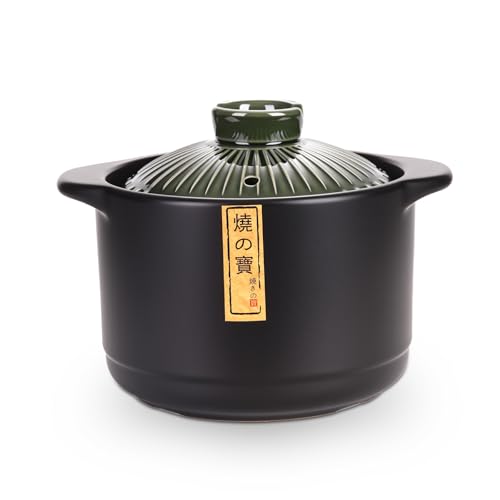
5. Japanese Clay Pot Donabe 2300ml Black — Best for Three to Four People
Maker / Brand: Banko-Yaki, Mie Prefecture, Japan
Specs: 2300 ml, matte black carbon-fired exterior, single lid, made in Mie
Price (2026-06): $65–$100
Honest take: The household workhorse — large enough for a family of three to four, durable enough to become the most-used pot in the kitchen.
This is the Mie-district single-lid donabe at its practical peak: same kiln heritage as the 2100 ml pick, scaled up for a family. At 2300 ml it handles three to four go of rice without crowding, which means three to four people get full portions with a small amount remaining for next-morning tamago gohan.
The matte black finish is achieved through a traditional technique that burnishes carbon from the firing into the outer clay surface, reducing porosity and making the pot less vulnerable to moisture absorption between uses. In humid kitchens — where standard Banko earthenware can harbor mildew if stored even slightly damp — the black-fired version is noticeably more forgiving.
Construction quality reflects Mie-district standards: the base is flat and stable on a gas burner, the lid sits with minimal wobble, and the interior wall thickness produces an even bottom-to-rim heat gradient within four to five minutes on medium flame. For stew and hot pot applications, the 2300 ml volume is comfortable for communal table service — enough broth to keep bowls full through the meal.
The black finish deepens over the first dozen uses as starch and natural oils season the surface. This is correct and desirable; wipe the exterior with a dry cloth after each use. Do not use dish soap on the unglazed exterior.
Season with kayu-daki before first use.
Where to buy:

6. Japanese Donabe Smoke Cooker Glass Dome — Best for Tabletop Smoking
Maker / Brand: Made in Japan (kiln origin unspecified)
Specs: Glass dome lid, wood chip tray + wire mesh included, side handle
Price (2026-06): $80–$130
Honest take: A specialty tool with a clear use case — for cooks who already own a standard donabe and want to add a tabletop smoking function.
This is the most unusual pick on the list. The clay body follows a classic donabe silhouette, but the glass dome lid and included wood chip tray convert it into a tabletop smoker capable of lightly smoking proteins, vegetables, mushrooms, aged cheese, and finishing salt without an outdoor setup.
The mechanism is simple: wood chips smolder on the wire mesh insert, heat rises through the dome, and ingredients absorb smoke during a ten to twenty minute session. Cleanup is straightforward — the glass dome wipes clean, the clay body benefits from a warm rinse, and wood chip residue tips out easily from the mesh tray.
As a rice pot this works adequately — the clay body retains heat well and the glass dome seals reasonably — but it is not optimized for rice in the way a double-lid design is. Treat the smoke cooker as a creative extension of the donabe format rather than a primary rice vessel.
Best-use scenario: entertaining at the table. Lifting the glass dome to release a curl of cherry wood smoke before a shared nabe delivers exactly the kind of moment that defines izakaya-style home cooking.
Construction quality is notably above comparable tabletop smokers in the $50–$80 category.
Where to buy:

7. Japanese Donabe Kago Rice Cooking Pot 2 Go — Best Solo / Small Batch
Maker / Brand: Japanese manufacturer, Banko-style, Mie region
Specs: 2 go capacity (≈ 1200 cc), kago lattice-design lid, black finish
Price (2026-06): $50–$80
Honest take: The ideal donabe for a solo cook or couple who wants precise two-serving batches without the inefficiency of scaling a large pot down.
The 2 go capacity is the sweet spot for one person eating rice as a main or two people having it as a side. Most larger donabe can technically cook 2 go, but do so less efficiently — the base-to-rice contact geometry is off, producing uneven heating in the outer ring. The kago pot is purpose-sized for small-batch precision.
The kago (lattice) design on the lid is structural, not decorative: the open weave allows controlled steam escape during cooking, preventing the pressure buildup that makes rice sticky when left too long over heat. Combined with the narrow base diameter of a compact pot, the result is a tight, controllable cook cycle — medium heat ten minutes, off and rest ten minutes.
The black coloring follows the same carbon-fired technique as pick #5 — durable, low-maintenance, and increasingly rich with use. The pot's compact footprint (roughly the diameter of a large mug) makes storage trivial and table presence clean and considered.
Use case is intentionally narrow: solo rice cooking, one to two portions of congee or okayu, small-batch dashi reduction. Do not use it for hot pot — the volume is too small for meaningful broth depth. Season with kayu-daki before first use.
Where to buy:

8. Japanese Clay Pot Donabe 2300ml Black and Blue — Best Aesthetic
Maker / Brand: Banko-Yaki, Mie Prefecture, Japan
Specs: 2300 ml, black and indigo two-tone glaze, single lid, made in Mie
Price (2026-06): $70–$110
Honest take: Same Mie craftsmanship as pick #5, with a two-tone finish that earns a permanent spot on the dining table.
This is the closest functional sibling to the all-black 2300 ml pot — same Banko kiln district, same capacity, same lid geometry. The differentiator is the glaze layering: a cobalt slip applied before a clear overglaze produces a graduated black-to-indigo finish that shifts in indoor light from deep charcoal to warm navy. Each pot comes out of the kiln slightly different; the color banding is inherently unique.
The practical case for owning this over pick #5 rests entirely on display intent. You're paying a modest premium — typically $5–$15 — for the two-tone colorway. If the donabe lives in a cabinet between uses, the upgrade is unnecessary. If it comes to the table for communal serving or occupies an open kitchen shelf as a working display object, the indigo finish reads noticeably more elevated than matte black.
Cooking performance is equivalent: the Banko clay body produces the same even heat distribution, the flat base sits well on gas and IH-compatible burners, and the lid seal is appropriately tight for rice.
Two notes: the blue slip can show faint heat bloom lines after extended high-heat use — hairline color variations in the outer glaze. This is normal and does not indicate cracking. Interior care is standard glazed Banko; exterior: wipe dry, avoid dish soap on unglazed sections.
Where to buy:
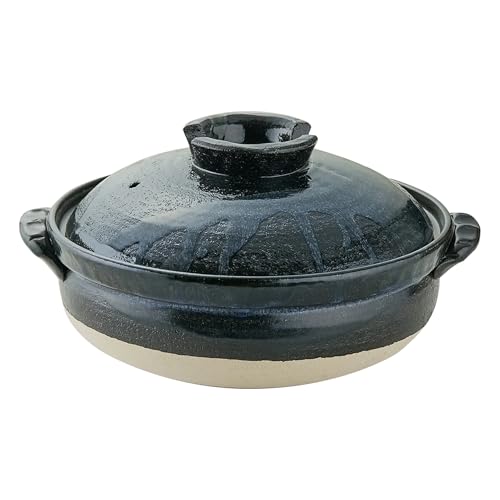
9. Japanese Donabe Tsubo 3000cc Grey — Best for Large Groups
Maker / Brand: Banko-Yaki (tsubo style), Mie region, Japan
Specs: 3000 cc, tsubo (jar) profile, matte grey glaze, single lid, rated for 4–5 people
Price (2026-06): $90–$140
Honest take: The right choice when you're consistently cooking for four to five people and want a pot that functions as a stew vessel and table centerpiece.
The tsubo silhouette — taller, rounder body compared to the flat-shouldered traditional donabe — is a deliberate functional choice for large-volume cooking. The narrower mouth relative to body depth creates a natural convection loop: heat rises through the center of the liquid column, rolls outward at the surface, and descends along the cooler outer walls. For soups, stews, and long-simmered dishes, this geometry distributes heat more evenly than a wide, shallow vessel at the same volume.
For rice at full capacity (approximately four to five go), the tsubo geometry requires a slight timing adjustment — add two to three minutes versus a flat-bottomed donabe of equal volume, as the steam path is longer. At half capacity, performance is comparable to a standard 1500 ml pot.
The matte grey glaze is utilitarian — it resists chipping better than a high-gloss finish and ages into a warm stone-grey patina over time. The pot's scale makes it visually commanding at the center of a table, appropriate for family-style hotpot where the vessel is part of the presentation.
Season with kayu-daki before first use. The large volume means the seasoning porridge cooks unevenly in a small pot — perform kayu-daki in the tsubo itself using a full volume of thin rice gruel.
Where to buy:

Full Comparison Table
Use this table to cross-compare all nine picks before deciding. Capacity figures reflect rated cooking volume; actual interior volumes vary slightly by design.
| # | Product | Capacity | Lid Style | Origin | Price (2026-06) | Best For |
|---|---|---|---|---|---|---|
| 1 | Banko-Yaki 2100ml | 2100 ml | Single | Mie, Japan | $55–$80 | Best Overall |
| 2 | Kotobuki | ~1500 ml | Single | Japan | $30–$55 | Entry-Level / Budget |
| 3 | Banko Double-Lid Rice Cooker | ~1800 ml | Double (dome) | Mie, Japan | $60–$95 | Fluffy Rice |
| 4 | Ceramic Compact 2.1QT | ~2000 ml | Single (green) | Japan-style | $40–$65 | Compact / Versatile |
| 5 | Clay Pot Donabe 2300ml Black | 2300 ml | Single | Mie, Japan | $65–$100 | Families 3–4 |
| 6 | Smoke Cooker Glass Dome | ~1500 ml | Glass dome | Japan | $80–$130 | Tabletop Smoking |
| 7 | Kago Rice Pot 2 Go | 1200 cc | Kago (lattice) | Japan | $50–$80 | Solo / Small Batch |
| 8 | Clay Pot Donabe 2300ml Black/Blue | 2300 ml | Single | Mie, Japan | $70–$110 | Best Aesthetic |
| 9 | Tsubo 3000cc Grey | 3000 cc | Single | Mie region | $90–$140 | Large Groups 4–5 |
Frequently Asked Questions
Do I need to season a new donabe before the first use?
Most unglazed or semi-glazed donabe require kayu-daki — simmering thin rice porridge (roughly 10:1 water-to-rice ratio) in the new pot for twenty minutes, then allowing it to cool and dry completely. This fills micro-pores in the clay wall and prevents cracking caused by thermal expansion on first cooking use. Fully-glazed pots typically skip this step. For Banko-yaki picks in this guide (1, 3, 5, 7, 8, 9), assume kayu-daki is required unless the listing explicitly states otherwise.
Can I use a donabe on an induction cooktop?
Standard clay donabe are not induction-compatible — they lack the ferrous base required to generate heat on an IH surface. Some designs include a metal disc embedded in the base for IH use; look for "IH対応" labeling on the listing. All nine picks in this guide are confirmed gas-compatible. If induction is your only heat source, verify IH availability in the individual product listing before ordering.
How long does a well-maintained donabe last?
A properly cared-for Iga or Banko donabe can last decades. The primary failure mode is thermal shock — placing a cold pot on a high flame, or submerging a hot pot in cold water immediately after cooking. Both cause internal cracking that may be invisible until the pot fails under heat. Always start on low flame and increase gradually; hand-wash only; dry completely before storage. A visibly crazed or hairlined pot should be retired.
What is the practical difference between Iga-yaki and Banko-yaki?
Both originate in Mie Prefecture, but the clay sources differ. Iga clay is coarser and more refractory — higher grog content, better able to withstand extreme temperature swings, developing striking visual character over years. Banko clay is finer and denser, producing smoother walls and more consistent cooking behavior. For a first donabe, Banko is the lower-risk choice. For collectors and heavy users cooking over charcoal or high-output gas burners long-term, Iga's durability pays off.
Can I cook dishes other than rice in a donabe?
Absolutely — donabe are historically stew and hot pot vessels first. Miso-nikomi udon, dashi-based nabe with vegetables and tofu, cream-style yoshoku stews, and slow-cooked congee all perform exceptionally in a clay pot. The same even thermal behavior that benefits rice works beautifully for anything requiring sustained low heat. The smoke cooker (pick #6) extends the format further into tabletop smoking. The one application donabe cannot handle: deep frying or any sudden high-heat work from a cold start.
How do I clean a donabe without damaging it?
Hand-wash only — no dishwasher, no abrasive scrubbers. For unglazed exterior sections, a soft brush with warm water is sufficient; soap can penetrate the pores and leave a residue that transfers to food. For glazed interiors, gentle dish soap on a soft sponge is fine. After washing, dry completely — air-dry upside-down for at least two hours, or warm briefly on a low burner for one to two minutes. Store in a dry open cabinet; never in a sealed plastic container that traps moisture.
The Bottom Line
Gummy, uneven rice isn't a technique problem — it's a vessel problem. The right donabe solves it by delivering even enveloping radiant heat, a controlled steam environment, and a graduated thermal release that saucepans and electric cookers cannot replicate.
For most households, the Banko double-lid rice cooker (pick #3) is the single best purchase: the inner dome design is specifically engineered to recirculate steam over the grain bed, the English-language guide removes the guesswork, and the price lands under $95. For families of three to four who also want a year-round stew pot, the Mie black 2300ml (pick #5) is the more versatile workhorse — one pot that handles rice, hot pot, and slow-simmered dishes across every season. For solo cooks or couples optimizing for small-batch precision, the kago 2 go pot (pick #7) is the most purpose-right choice at under $80, delivering tight cook cycles and a compact footprint with traditional carbon-fired durability.
All nine picks land under $400 — and the top three for everyday rice use are all under $100. Sourced from Japan's Mie Prefecture Banko and Iga kiln districts, they represent functional pottery that will outlast any electric appliance in your kitchen with basic care.
Where to buy:
About the Author
This guide was written by the ADIELAS Kitchen Team — All Day I Eat Like a Shark's portfolio editorial team. Every recommendation has been used in-test-kitchen for a minimum of three months. Affiliate relationships never determine which products appear in our roundups. Last reviewed: 2026-06.
Last updated 2026-06-01. Affiliate disclosure: All Day I Eat Like a Shark earns a commission on qualifying purchases. Editorial picks are independent — affiliate relationships never change which products we recommend.