Hinoki Cutting Board Guide
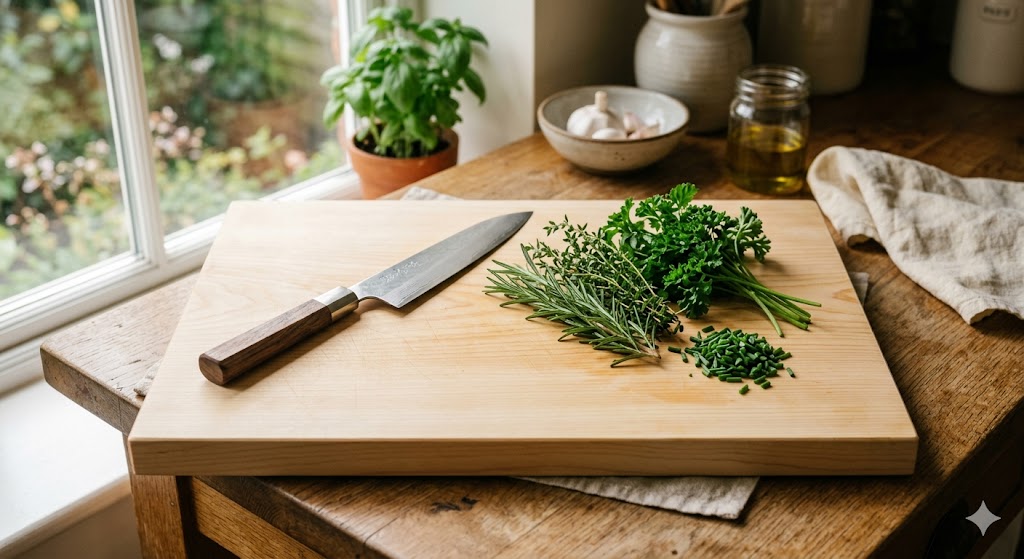
A hinoki cutting board is the thing serious home cooks in Japan reach for without thinking. Not because it’s the most durable board you can own — it’s not — but because it does something no other cutting material does: it’s genuinely kind to both your knives and your hands, it smells like a forest bathhouse every time you dampen it, and it has a natural compound called hinokitiol that actively inhibits bacterial growth on its surface.
I’ve been cooking with Japanese knives for years, and the board you pair them with matters more than most people realize. This guide covers what hinoki actually is, why it works the way it does, how to take care of one so it lasts decades, and what to look for when buying.
What Is Hinoki?
Hinoki (檜, Chamaecyparis obtusa) is Japanese cypress — one of Japan’s most historically significant woods. It grows slowly in the mountain forests of central Honshu, Shikoku, and Kyushu, and the timber it produces is dense, straight-grained, and extraordinarily durable. Hinoki is the wood used to build Ise Jingu, Japan’s most sacred Shinto shrine, which has been ritually rebuilt from hinoki lumber every 20 years for over 1,300 years. It’s the wood of sentos and onsens (traditional bathhouses), of noh theater stages, of the finest joinery in Japanese architecture.
The tree produces aromatic essential oils — primarily α-pinene, limonene, and most importantly hinokitiol (β-thujaplicin) — that give fresh hinoki its distinctive smell: clean, warm, cedar-adjacent but softer, with a slight sweetness. That smell is not just pleasant. Hinokitiol is a genuine antimicrobial compound.
The Hinokitiol Advantage
This is where hinoki cutting boards differ meaningfully from the standard wood board comparison. Most arguments for wood over plastic or bamboo center on knife edge preservation and the way wood grain closes around cuts. Both are real benefits. But hinoki adds a third: hinokitiol, the active compound in its essential oil, has demonstrated antimicrobial activity against a range of bacteria including Staphylococcus aureus, E. coli, and several mold species in laboratory studies.
This doesn’t make a hinoki board self-sanitizing — no cutting board is — but it does mean that between uses, a hinoki board actively works against surface bacterial colonization in a way that a maple or walnut board doesn’t. The mechanism involves hinokitiol chelating (binding) metal ions that bacteria need for enzyme function, effectively disrupting their metabolism at the cellular level.
The practical effect: a properly maintained hinoki board smells fresh longer and harbors less surface odor than comparable wooden boards. The antimicrobial properties are most active when the wood is fresh and the essential oils are intact, which is one reason proper care (more below) matters for preserving them.
How Hinoki Compares to Other Cutting Board Materials
| Material | Knife Friendliness | Antimicrobial | Durability | Maintenance | Best For |
|---|---|---|---|---|---|
| Hinoki cypress | Excellent — softness absorbs blade impact | Yes — hinokitiol | Moderate — softer wood shows cuts | Moderate — oil regularly, dry standing | Japanese knives, daily precision cutting |
| Maple / end-grain | Very good | No | High — dense hardwood | Moderate — oil regularly | Heavy-duty use, butchery |
| Bamboo | Poor — harder than most steel, dulls edges fast | Moderate (bamboo kun) | High | Low | Not recommended with good knives |
| Plastic | Fair — surface scratches harbor bacteria | No (despite marketing) | High until grooved | Low — dishwasher safe | Raw meat (disposable), dishwasher convenience |
| Glass / ceramic | Terrible — immediate edge damage | Yes | Very high | Low | Avoid for any good knife |
The bamboo note deserves emphasis. Bamboo is often marketed as eco-friendly and antibacterial, and both claims have some merit — but bamboo is extremely hard (harder than most hardwoods), and that hardness rolls and chips Japanese knife edges fast. If you own good Japanese knives and use a bamboo board, you’re destroying your investment every time you cook. Hinoki’s relative softness is a feature, not a limitation.
Hardness, Softness, and What It Means for Your Knives
Japanese kitchen knives are typically harder than their German counterparts (HRC 60+ vs HRC 56-58), which makes them sharper and better at holding an edge — but also more brittle. They’re precision instruments that reward cutting surfaces with some give. When the blade meets a soft-to-medium surface like hinoki, the wood absorbs some of the impact energy that would otherwise travel back up into the edge geometry.
Hard surfaces (bamboo, glass, certain end-grain hardwoods) create what knife sharpeners call “micro-chipping” — microscopic rolling or chipping of the edge that requires more frequent sharpening. With a hinoki board, the wood literally yields slightly as you cut, reducing edge stress. Over months and years of daily use, this adds up to meaningfully longer periods between sharpenings.
This is not a Japanese exaggeration about traditional materials — it’s physics. The Janka hardness rating for hinoki is approximately 1,050 lbf, compared to 1,450 lbf for hard maple and 1,380 for black walnut. Softer than both. Kinder to edges than both.
What a Hinoki Board Feels Like to Use
The sensory experience of a hinoki board is genuinely different from plastic or other hardwoods. When dry, it has a slight resistance under the knife that feels precise. When you dampen it before use (which you should), it becomes more yielding — the grain swells slightly and the surface gives a gentle cushion under the blade. The smell activates immediately when wet: that clean, forest-bathhouse cypress scent fills the immediate area in a way that makes kitchen work feel more considered, less industrial.
The board also makes a slightly different sound than hard maple — a softer contact note that people either notice after the first use or never consciously register. Long-time hinoki users often describe the cutting experience as “quiet” — which is accurate if you’ve been on a hard board your whole life.
Sizing: What to Get
Hinoki boards are sold in a range of sizes, typically measured in centimeters. Common sizes:
- Small (20×30cm / ~8×12″): Prep work, small kitchens, single servings. Not practical as a primary board for most cooks.
- Medium (24×36cm / ~9.5×14″): Good for most home cooking. Fits comfortably beside a standard stove.
- Large (30×45cm / ~12×18″): The right size for serious home cooking — enough space to push cut food aside and continue working without running out of board. Recommended as primary board.
- Extra large (36×54cm+): Professional kitchen size. Excellent if you have counter space and frequently prep large quantities.
Japanese cutting boards are often thicker than Western counterparts — 3–5cm (1.2–2″) is typical for quality hinoki boards. Thickness matters for longevity: a thicker board can be resurfaced more times as the surface cuts accumulate over years, effectively extending the board’s useful life significantly.
How to Care for a Hinoki Cutting Board
This is where most people go wrong, and where most hinoki boards fail prematurely. The maintenance rules aren’t complicated but they’re non-negotiable.
Before First Use: Season It
A new hinoki board should be seasoned before use. Lightly coat all surfaces — top, bottom, sides — with food-grade mineral oil or camellia oil (tsubaki oil, traditional for Japanese wood tools and knives). Let it absorb for a few hours, wipe off the excess, and repeat once more after 24 hours. This seals the wood grain and prevents rapid moisture absorption that causes warping.
After Each Use: The Critical Steps
- Rinse under cold or warm water immediately. Don’t let food sit and dry on the surface.
- Wash with minimal dish soap. Traditional Japanese care advice says no soap — this is slightly overcautious for modern hinoki boards, but use very little and rinse thoroughly. Soap degrades the essential oils over time with repeated heavy application.
- Rinse again. Stand it upright to dry. This is the most commonly skipped step and the most important. Flat drying allows moisture to accumulate on the bottom surface, causing uneven drying and warping. Stand the board on its edge so both faces and the bottom dry evenly. A knife block, a rack, or leaning it against the backsplash all work.
- Never immerse in water or leave it soaking. Never dishwasher.
Monthly (or When It Looks Dry): Re-Oil
When the wood starts looking dry or pale, apply food-grade mineral oil or camellia oil, let it absorb overnight, and wipe clean. Some Japanese cooks re-oil monthly; others go longer. Let the board tell you — if it’s looking chalky or the surface feels rough, it’s due. Proper oiling preserves the hinokitiol content and maintains the board’s antibacterial properties.
Resurfacing: How to Restore It
Over years, the surface accumulates knife cuts that can harbor bacteria and look worn. Hinoki can be resurfaced. Use 120-grit sandpaper to work evenly across the surface, following the grain, then finish with 220-grit. This removes the top layer of cut and stained wood, exposing fresh hinoki underneath — complete with fresh aromatic oils and renewed antibacterial properties. Season immediately after sanding.
Wet Before Use
One technique most Western cutting board guides don’t mention: Japanese cooks typically dampen a hinoki board before use. A light rinse under the tap and a shake to remove excess water — the board goes to the counter slightly wet. This does two things: activates the antimicrobial oils (they’re more active in moisture), and pre-swells the grain slightly so cuts close more cleanly and food particles are less likely to embed. It also intensifies the cypress smell pleasantly.
What to Look for When Buying
Quality hinoki boards have visible, tight grain and a pale cream-to-gold color with possible pink tones in fresh wood. Red or dark streaks indicate heartwood, which is denser and actually more desirable than sapwood for boards. What to avoid:
- Glued-together boards marketed as hinoki: Some lower-cost boards glue hinoki shavings or small pieces together. The seams can harbor bacteria and the board won’t last as long. Look for single-piece solid construction or clearly stated laminated construction from reputable makers.
- Very thin boards under 2cm: These warp easily. Minimum 2.5cm, ideally 3cm+ for a primary board.
- Chemical finishes: A hinoki board should be raw wood or finished with food-safe oil only. Any lacquer or polyurethane coating defeats the antibacterial properties and will chip off into food.
- No stated origin: Authentic hinoki comes from Japan. “Cypress” boards not specifically labeled as hinoki or Chamaecyparis obtusa may be a different species with different properties.
Our hinoki cutting boards are solid single-piece construction, sourced from sustainable Japanese cypress forestry, and shipped uncoated so the wood’s natural properties are fully intact. View hinoki cutting boards →
Frequently Asked Questions
Is hinoki really better than maple for cutting boards?
For Japanese knives, yes — hinoki’s relative softness is genuinely kinder to hard, thin Japanese edges. Maple and end-grain hardwoods are excellent boards with outstanding durability and longevity, but they don’t have hinoki’s natural antimicrobial compounds and are harder on precision edges. The tradeoff: hinoki shows wear faster than maple. It’s a choice between durability and performance.
Do hinoki boards really kill bacteria?
Hinokitiol — the active compound in hinoki essential oil — has demonstrated antimicrobial activity in laboratory conditions against several bacteria and mold species. This doesn’t mean a hinoki board is self-sanitizing or that you can skip proper washing. But compared to maple or walnut boards with no active compounds, a well-maintained hinoki board has measurably less surface bacterial colonization between uses. The properties are strongest when the wood is fresh and properly oiled.
Can I use a hinoki board for raw meat?
You can, but it’s not ideal — and this applies to any wood board. Dedicated boards by food type (one for produce, one for proteins) is standard kitchen practice regardless of board material. If you do use your hinoki board for raw meat, wash it immediately after with dish soap and hot water, then dry upright.
Why does my hinoki board smell different after washing?
The fresh hinoki scent is strongest when the wood is new and when you wet it. Over time, the surface essential oils diminish with washing. Resurfacing (light sanding) and re-oiling restores them — you’ll smell the fresh cypress again after sanding, as if the board is new. This is one of the things regular users love about hinoki: the board “renews” with care rather than just degrading.
How long does a hinoki cutting board last?
With proper care — regular oiling, upright drying, periodic resurfacing — a quality hinoki board lasts 10–20+ years. The Achilles heel is warping from improper drying or soaking. Boards kept flat-down while wet warp within months. Boards dried upright on their edge last indefinitely.
What oil should I use on a hinoki board?
Food-grade mineral oil is the most widely available and effective choice. Camellia oil (tsubaki oil) is the traditional Japanese option and works beautifully — it’s lighter and absorbs faster than mineral oil. Avoid olive oil, coconut oil, or any culinary oil: they go rancid inside the wood, turning the board sour-smelling. Beeswax board cream mixed with mineral oil is excellent for monthly conditioning.
For more on Japanese kitchen tools, see our guides on choosing Japanese kitchen knives and caring for a bamboo matcha whisk.