Japanese Ramen at Home: How to Build a Real Broth Without Spending All Day
The intimidating thing about making ramen at home is the assumption that the broth takes all day. Some ramen broth does — tonkotsu requires 12+ hours of high-heat simmering to turn pork bones opaque and milky. But most of the flavors that make a ramen bowl feel complete can be achieved in 1–2 hours with the right approach to the components.
Understanding how ramen is actually constructed — as separate components assembled at service — is the key to making it manageable at home.
The Four Components of Any Ramen Bowl
Every ramen bowl has Every ramen bowl has five distinct elements that are prepared separately and combined at serving:
- Broth (soup base) — the liquid, usually chicken, pork, or fish-based
- Tare (seasoning concentrate) — the salt/umami intensifier stirred into the broth at service
- Aroma Oil (fat) — drizzled over the bowl for richness, flavor, and to keep the soup hot longer
- Noodles — cooked separately and added to the bowl
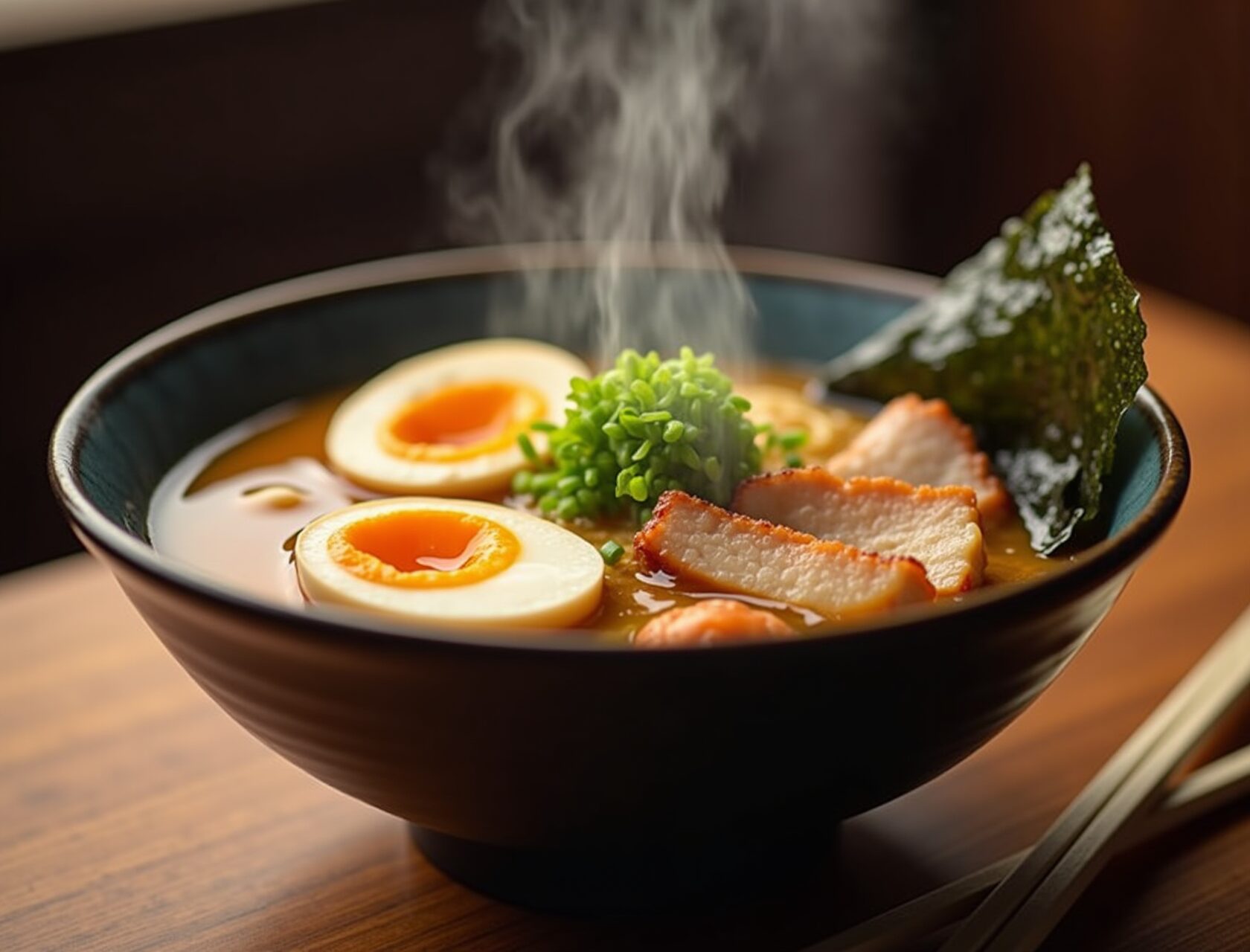
- Toppings (gu) — chashu pork, eggs, nori, corn, bamboo shoots, etc.
This modular structure means you can make each component ahead, refrigerate or freeze, and assemble bowls quickly on any given evening.
The Quick Chicken Shoyu Broth
This is the home cook’s practical version — ready in about an hour, genuinely good.
Ingredients for 4 servings:
- 1.5 kg chicken backs and carcasses (or wings)
- 2 liters cold water
- 10g kombu
- 1 leek (white and light green parts)
- 3 slices fresh ginger
- 3 cloves garlic
Place chicken in pot, cover with cold water, bring to a boil. Drain and rinse the chicken — this removes impurities. Return to pot with fresh cold water and all other ingredients. Bring to a simmer over medium heat. Skim foam. Cook at a gentle simmer for 45–60 minutes. Strain through a fine mesh strainer. You now have a clean, clear chicken broth that’s the foundation of shoyu ramen.
This is not tonkotsu — it won’t be opaque or milky. It will be clear and golden with good chicken flavor and light body. Season it to ramen caliber with your tare (below).
Making Shoyu Tare
Tare is the secret to why ramen shop broth tastes different from home broth. It’s a concentrated seasoning sauce that gets added to each individual bowl at serving — typically 2–3 tablespoons per bowl — rather than salting the broth itself. This keeps the broth neutral and allows the same base broth to become different styles (more or less intense, sweet or savory) depending on the tare.
Simple shoyu tare:
- 100ml soy sauce
- 50ml mirin
- 50ml sake
- 20g kombu
- 10g katsuobushi
Combine in a small saucepan, bring to a very gentle simmer for 2 minutes. Remove from heat, steep for 20 minutes, strain. Store refrigerated for up to 2 weeks. This tare has depth, umami, and balanced seasoning that lifts the broth completely.
Chashu Pork (Optional but Worth It)
Chashu is typically braised or roasted pork belly or shoulder — the defining ramen topping. Roll a 400g piece of pork belly tightly, tie with kitchen twine. Sear in a little oil until golden on all sides. Transfer to a small pot with 100ml each of soy sauce, sake, and mirin plus 2 tablespoons sugar. Add enough water to nearly cover. Braise on low heat for 1.5–2 hours. Cool in the braising liquid, refrigerate overnight, slice thin. The braising liquid becomes your chashu sauce for serving.
Marinated Eggs (Ajitsuke Tamago)
Soft-boil eggs exactly 6.5 minutes from cold water to boil. Ice bath immediately. Peel. Marinate in a mix of 100ml soy sauce, 100ml mirin, 100ml water for 4–24 hours. The yolk will be jammy and orange-gold. Slice in half when serving.
Assembling the Bowl
- Heat broth to near boiling
- Add 2–3 tablespoons of tare to the bowl first
- Cook noodles in a separate pot according to package directions — drain thoroughly
- Pour hot broth over the tare in the bowl
- Add noodles
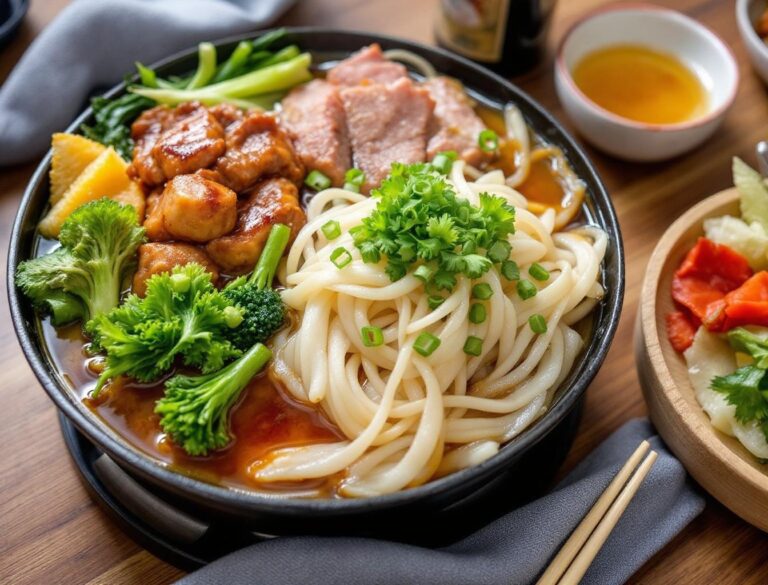
- Top with chashu, marinated egg, nori, sliced green onions, sesame seeds, and any other toppings
- Optional: add a small amount of sesame oil or chili oil as a finishing touch
The tare at the bottom mixing with the hot broth poured over it creates more even flavor distribution than adding seasoning at the end. This is the professional ramen shop technique applied at home.
Noodle Selection
Fresh ramen noodles are sold in the refrigerator section of Japanese and Asian grocery stores. Sun Noodle is the gold standard in North America. Dried ramen noodles are a reasonable substitute. The key characteristic is the alkaline (kansui) in the noodle — it gives ramen noodles their spring and slight yellow tint. Don’t substitute regular wheat noodles; the texture is completely different.
Pairing
Ramen is a complete meal. Hojicha makes an excellent after-ramen drink — the roasted warmth provides a natural close to a rich bowl of noodles.
Frequently Asked Questions
How long does homemade ramen broth last?
Chicken broth keeps refrigerated for 4–5 days or frozen for 6 to 12 months. The tare keeps refrigerated for 2 weeks. Chashu keeps refrigerated for 5 days in braising liquid.
Can I make tonkotsu at home?
Yes, but it requires a full day of commitment — 12+ hours of vigorous boiling to extract the collagen and fat from pork bones that creates the cloudy white broth. It’s achievable but different in scale from the 1-hour shoyu approach described here.
What’s the best instant ramen to upgrade at home?
Nissin Demae Ramen and Nongshim Shin Ramyun are both worth upgrading with homemade broth and toppings. Replace the seasoning packet with homemade tare and add real chashu, soft-boiled eggs, and fresh vegetables — the noodles are good and the whole bowl is transformed.
Do I need special equipment for making ramen?
A large pot for broth, a separate pot for noodles, and bowls that hold heat (thick ceramic is better than thin porcelain). Pre-warmed bowls by filling with hot water before serving make a meaningful difference in how long ramen stays hot at the table.