Water Temperature for Tea: The Complete Japanese Tea Guide
I have ruined more Japanese teas with the wrong water temperature than any other mistake. Sencha brewed with boiling water goes astringent and grassy in a bad way. Gyokuro at 80°C loses half its umami depth before you even taste it. Water temperature is the single most controllable and impactful variable in Japanese
This is the complete reference. Whether you have a temperature-controlled kettle or just a regular pot, here is exactly what to target for every major Japanese
Why Temperature Matters in Japanese Tea
Green
L-theanine and amino acids (the sweet, umami compounds): Begin dissolving at around 40°C and extract well at 50 to 70°C. These are responsible for the pleasant sweetness and mouthfeel in high-quality Japanese greens.
Catechins (the bitter, astringent compounds): Dissolve most readily at higher temperatures — extraction accelerates significantly above 80°C. These are responsible for astringency and bitterness.
Volatile aromatics: Highly temperature-dependent. Some release best at lower temperatures; others require higher heat. This is why the same
The practical implication: low-temperature brewing maximizes sweetness and minimizes bitterness. High-temperature brewing maximizes a bold, assertive flavor with more astringency. For most Japanese green teas — especially premium ones — lower temperatures produce a more desirable cup.
Water Temperature Guide for Every Japanese Tea
Gyokuro (50 to 60°C): The lowest temperature of any common Japanese
Kabusecha (54 to 60°C): Shade-grown like gyokuro but for a shorter period, producing similar but less extreme sweetness. Target 60 to 65°C for maximum sweetness, up to 70°C for a bolder cup. More forgiving than gyokuro.
Shincha (first flush sencha) (65 to 75°C): New harvest teas are higher in L-theanine before sun exposure converts it to catechins. Brewing at the lower end of this range captures the characteristic sweetness of fresh-harvest
Fukamushi sencha (deep-steamed) (70 to 80°C): The extended steaming process has already reduced some of the harsher catechins, making fukamushi more forgiving of higher temperatures. 75°C is the sweet spot for most fukamushi — enough heat to draw out flavor, not so much that bitterness dominates.
Asamushi sencha (lightly steamed) (70 to 75°C): The intact leaf structure means more precise temperature control is needed. Stick to 70 to 75°C and shorter steeping times. Going above 80°C with quality asamushi wastes the
Bancha (80 to 90°C): Everyday bancha is made from larger, more mature leaves with lower L-theanine and different catechin profiles. It handles higher temperatures well. Some bancha styles (particularly rough summer bancha) are brewed with near-boiling water intentionally for a robust, tannic cup that pairs well with meals.
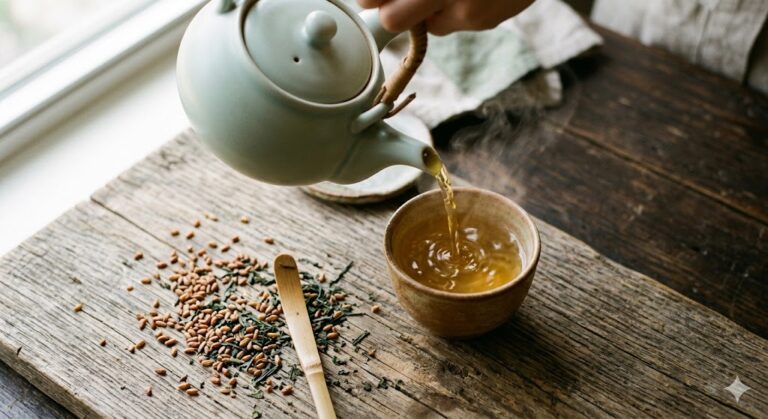
Genmaicha (80 to 90°C): The toasted rice in genmaicha releases its nutty flavors best at higher temperatures. The
Hojicha (90 to 100°C): Roasted
Kukicha (70 to 80°C): Made from stems and twigs, kukicha has a milder, nuttier flavor than leaf teas. Slightly higher temperatures than standard sencha work well because the stem material extracts differently than leaf. 75°C is a reliable starting point.
Matcha (70 to 80°C): Whisked directly into water rather than steeped. The standard is 70 to 80°C. Hotter water can make matcha taste flat or develop off-notes. Cooler water may not fully dissolve and incorporate the powder. For ceremonial grade matcha, some practitioners use as low as 60°C for maximum sweetness.
How to Hit Target Temperatures Without a Temperature Kettle
A temperature-controlled electric kettle is worth the investment if you take Japanese
Boiling water cooling chart (approximate):
- Boiling water (100°C) poured into an empty kettle and left to stand: 95°C after 1 minute, 90°C after 2 minutes, 85°C after 3 minutes
- Boiling water transferred to a cool ceramic pitcher: drops to approximately 90°C immediately, then continues cooling
- Boiling water transferred once to another vessel and left 3 to 4 minutes: approximately 70 to 80°C
The traditional Japanese method (yuzamashi): pour boiling water from the kettle into your ceramic teapot or a spouted pitcher, let it cool for the appropriate time, then pour into the kyusu. The thick walls of ceramic absorb some heat and the transfer itself drops temperature. This is still how many Japanese
Over time, you will develop a sense for temperature by holding your hand near the steam — not foolproof, but surprisingly accurate with practice. 70°C feels comfortable to hold briefly; 80°C makes you pull your hand back; boiling registers as aggressive steam from across the room.
Does Water Quality Affect Temperature Sensitivity?
Yes. Hard water with high mineral content can mask some of the differences that temperature makes, because the minerals interact with
If you are using tap water with heavy chlorine treatment, boiling helps, but the minerals remain. For gyokuro in particular, filtered or soft water makes a dramatic difference in clarity of flavor — and the temperature sensitivity becomes even more pronounced, for better and worse.
Temperature Control Equipment Worth Considering
If you are serious about Japanese
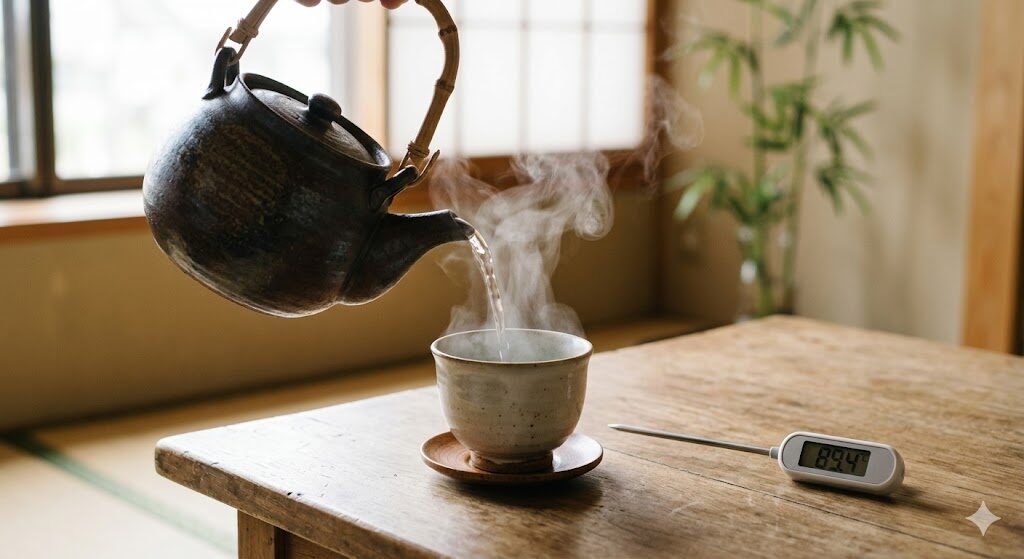
- Temperature-controlled electric kettle: Allows you to set exact targets. Most models go to 60 to 100°C in 5-degree increments. This is the most impactful gear upgrade after buying a good kyusu.
- Instant-read thermometer: Much cheaper alternative. Dip into water to confirm temperature before pouring. Works well.
- Yuzamashi pitcher: Traditional ceramic cooling pitcher that helps manage temperature transfer. A nice-to-have, not essential.
Frequently Asked Questions
What happens if I brew sencha with boiling water?
Boiling water extracts catechins aggressively, producing a cup that is significantly more astringent and bitter than intended. The
Can I use the same temperature for all Japanese green teas?
You can use 75°C as a reasonable compromise for most Japanese greens except gyokuro and hojicha. But the full character of gyokuro requires 50 to 60°C, and hojicha needs 95 to 100°C for the roasted notes to come through. Learning the two-temperature system (low for premium shaded teas, high for roasted and everyday teas) covers 95% of situations.
Does cooler water mean longer steeping times?
Yes — lower temperatures extract more slowly, so steeping times are typically longer for lower-temperature teas. Gyokuro at 50°C might steep for 2 to 3 minutes; sencha at 75°C for 60 to 90 seconds; hojicha at 95°C for 30 seconds. The combination of temperature and time together determines extraction.
Is it possible to brew Japanese tea too cold?
Cold brew is deliberately made at refrigerator temperatures (4°C), and it works beautifully for certain teas by extracting only the sweet amino acids while leaving most catechins behind. So very cold water is fine — it is a different brewing method rather than a mistake.
What temperature is best for matcha lattes?
Make the matcha paste with a small amount of water at 70 to 75°C, then add your hot or iced milk separately. Do not mix matcha directly with near-boiling milk — the proteins in milk combined with high heat can create off-flavors. Whisking the matcha in warm water first ensures smooth incorporation.