
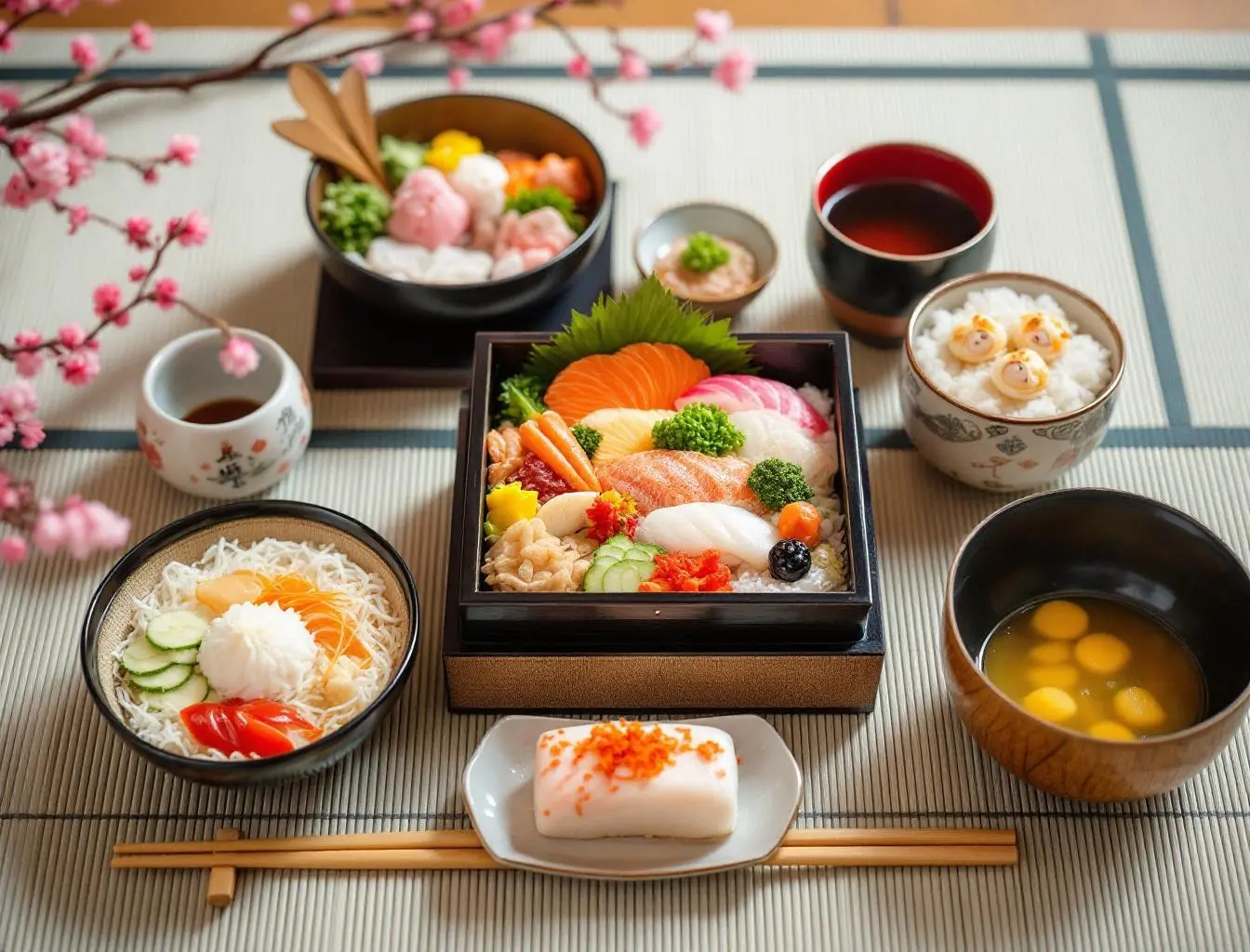
Traditional Hinamatsuri Foods: A Complete Guide to Japanese Girls’ Day Cuisine
March 3 marks one of Japan’s most colorful food traditions. Hinamatsuri (雛祭り, hina matsuri), also called Girls’ Day or the Doll Festival, is a celebration of daughters’ health and happiness — and every dish served has meaning.
While most English-language guides mention a few of the foods in passing, they rarely explain why each dish matters or the regional variations that make Hinamatsuri food so interesting. This guide covers all of it.
What is Hinamatsuri?
Hinamatsuri (雛祭り) falls on March 3 every year. Families with daughters display elaborate tiered platforms (雛壇, hina-dan) of ornamental dolls dressed in Heian-period court attire. The dolls represent the Emperor, Empress, attendants, and musicians.
The celebration dates to the Heian period (794-1185), when it began as a purification ritual. People would transfer their impurities to paper dolls and float them downriver — a practice called 流し雛 (nagashi-bina) that some communities still observe today.
The food served at Hinamatsuri is not random. Each dish carries specific symbolism tied to wishes for a girl’s future: health, fertility, a good marriage, longevity, and happiness.
The Essential Hinamatsuri Foods
1. Chirashi-zushi (ちらし寿司) — Scattered Sushi
Chirashi-zushi is the centerpiece of the Hinamatsuri table. This colorful bowl of sushi rice topped with an array of ingredients is the dish most associated with Girls’ Day.
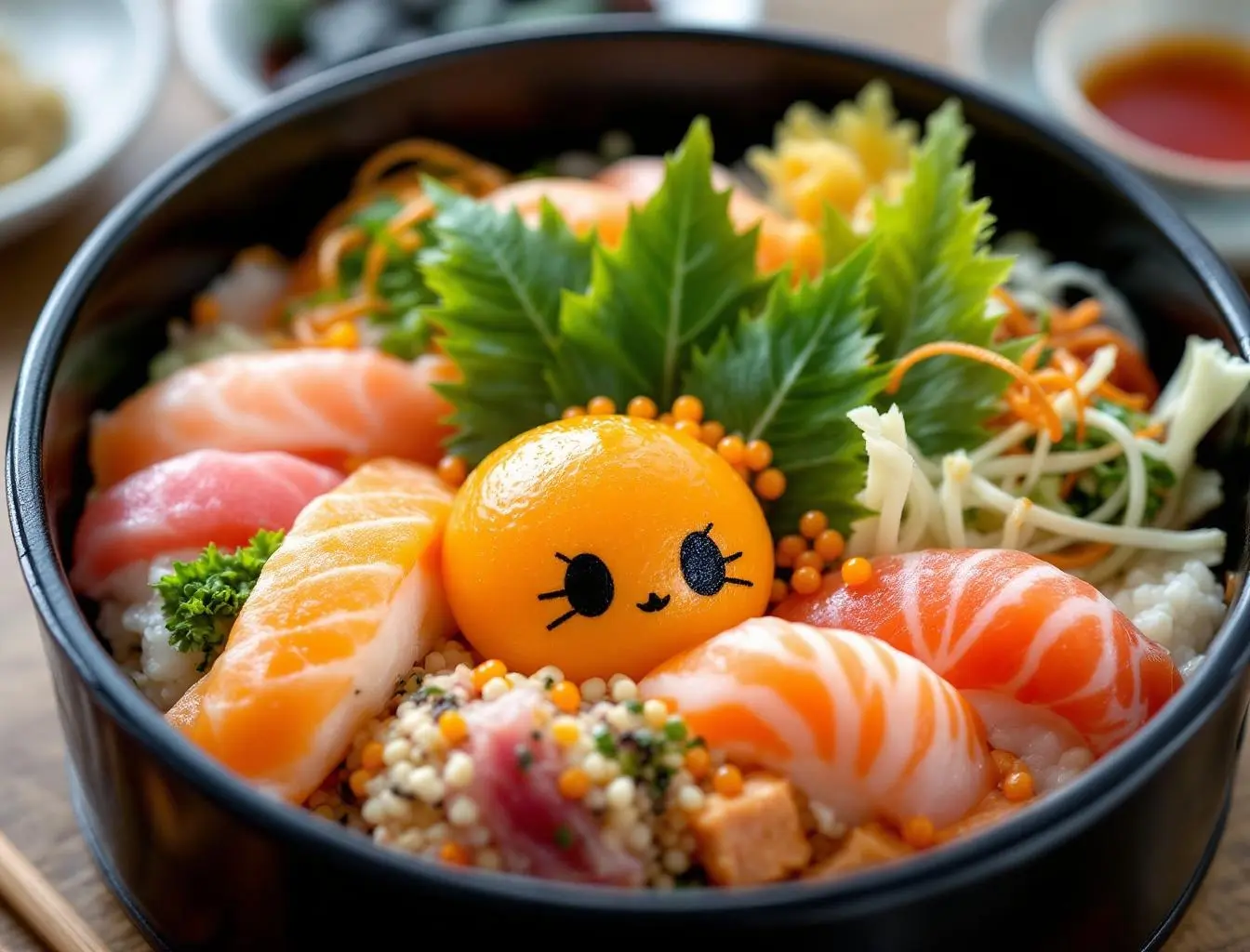
Why it’s served: The vibrant toppings represent a wish for a bright, prosperous future. Each topping carries its own meaning:
- Shrimp (海老, ebi): The curved shape represents longevity — living until your back bends like a shrimp
- Lotus root (蓮根, renkon): The holes symbolize the ability to see clearly into the future
- Beans (豆, mame): A play on words — まめ (mame) also means “hardworking” and “healthy”
- Kinshi tamago (錦糸卵): Golden shredded egg represents wealth and prosperity
- Ikura (いくら): Salmon roe symbolizes fertility and many children
- Sakura denbu (桜田麩): Pink fish floss that adds the festival’s signature pink color
Kanto vs. Kansai: In Tokyo (Kanto), chirashi-zushi tends to feature raw fish toppings. In Osaka and Kyoto (Kansai), the style leans more toward cooked ingredients mixed into the rice (五目寿司, gomoku-zushi), with the decorative toppings arranged on top.
How to make it: Start with sushi rice seasoned with rice vinegar, sugar, and salt. Mix in diced shiitake, carrots, and renkon that have been simmered in dashi, soy sauce, and mirin. Top with kinshi tamago, shrimp, ikura, and sakura denbu. Garnish with shiso leaves, snow peas, or edible flowers.
2. Hamaguri no Osuimono (蛤のお吸い物) — Clam Clear Soup
This delicate clear soup with whole clams is perhaps the most symbolically important Hinamatsuri dish.
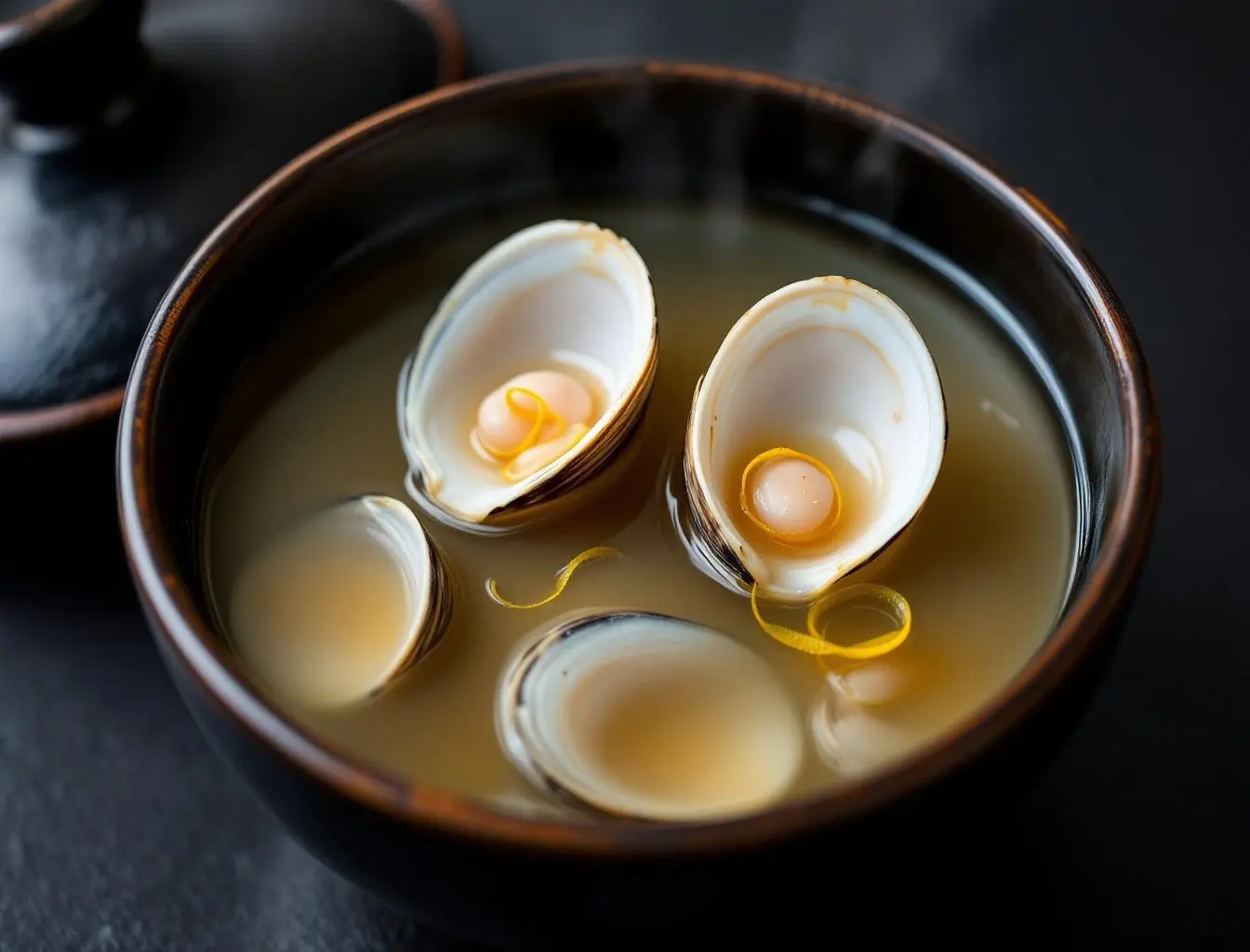
Why it’s served: Hamaguri (蛤, clam) shells are bivalves — each pair fits together perfectly and will not match with any other shell. This represents a wish for a faithful, harmonious marriage. Finding a partner whose shell matches yours perfectly is the metaphor.
This symbolism is so specific that hamaguri clams were historically used in a Heian-period matching game called 貝合わせ (kai-awase), where players tried to match painted half-shells.
The soup itself: The broth is a simple dashi-based osuimono (clear soup) flavored lightly with salt and a few drops of soy sauce. The clams are the star — typically two per bowl, with their shells partially open. Garnishes include a sprig of mitsuba (三つ葉, Japanese wild parsley) and a thin strip of yuzu peel.
Tip: Buy clams the day before and soak them in salted water (3% salt solution) overnight in the refrigerator to purge any sand.
3. Hishi Mochi (菱餅) — Diamond-Shaped Rice Cakes
These tri-colored diamond (rhombus) shaped mochi are displayed on the hina-dan and eaten during the celebration.
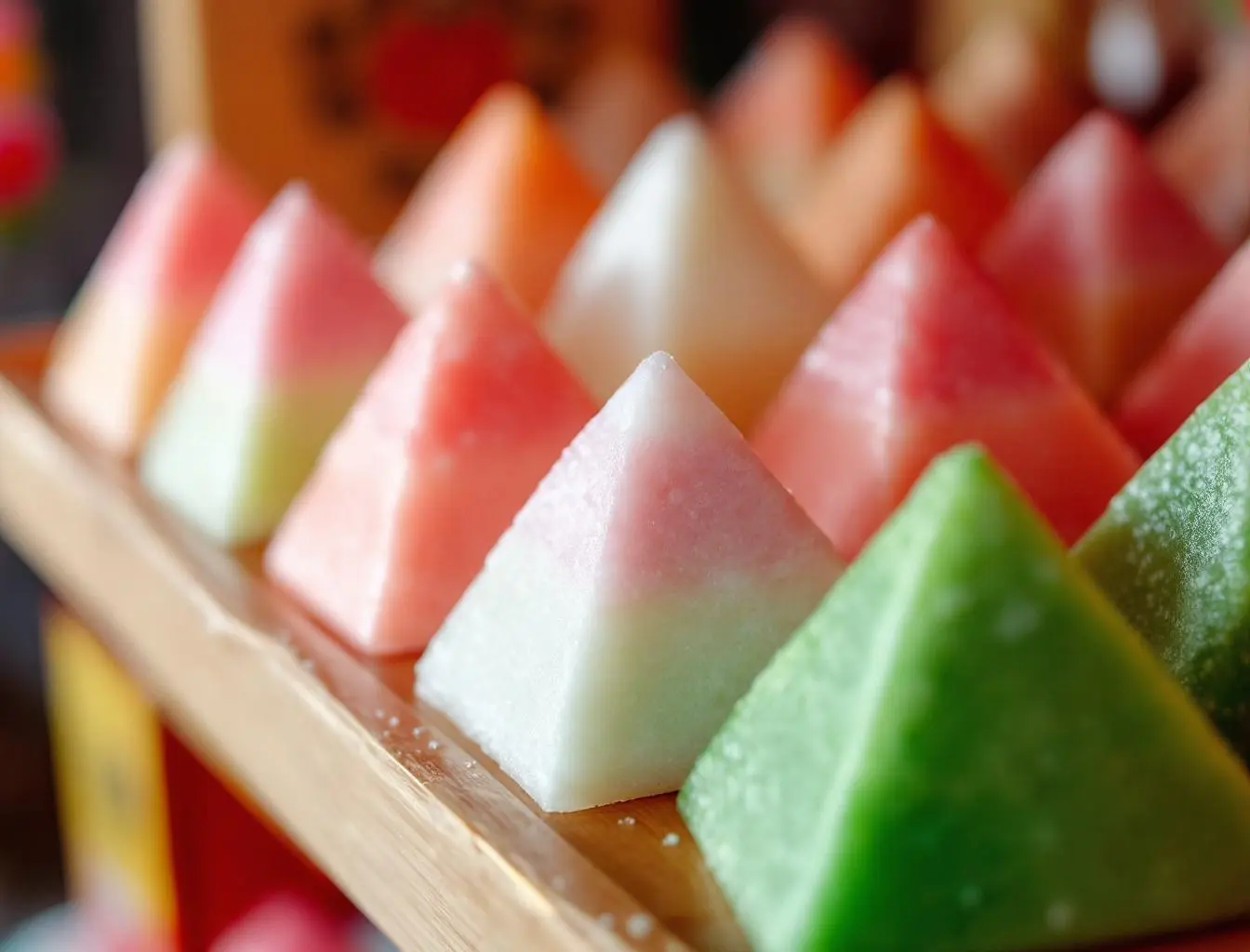
The three colors and their meanings:
- Pink (top layer): Represents peach blossoms (桃の花, momo no hana) and the warding off of evil spirits. Flavored with cape jasmine berries (栨子, kuchinashi) or shiso.
- White (middle layer): Represents snow and purity. Sometimes flavored with water chestnut (菱の実, hishi no mi) — which is also where the diamond shape comes from.
- Green (bottom layer): Represents new growth and the earth in spring. Flavored with yomogi (蒿, Japanese mugwort).
Reading the layers: Together they paint a picture: green grass pushing through white snow, with pink peach blossoms overhead. It’s a compressed image of early spring — and a wish for nature’s vitality to pass to the daughter.
Modern versions: Many families now buy commercially made hishi mochi, but traditional wagashi shops still make them fresh. Some bakeries create hishi mochi-inspired cakes in the same three colors.
4. Hina Arare (雛あられ) — Festival Rice Crackers
These small, colorful puffed rice crackers are the snack of Hinamatsuri, often displayed in small lacquered dishes on or near the hina-dan.
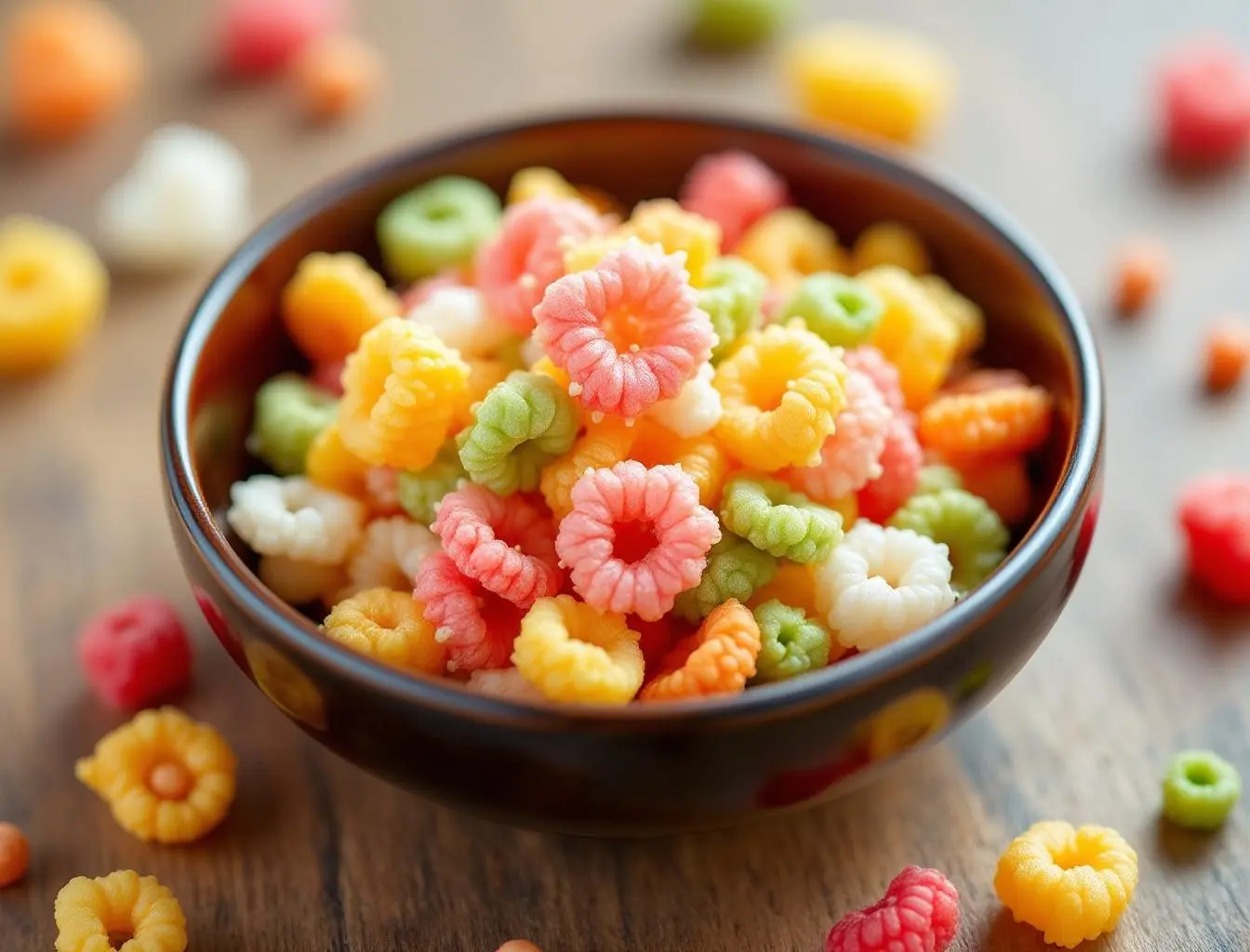
Why they’re served: The four colors — pink, green, yellow, and white — represent the four seasons. Eating all four colors is believed to bring year-round good health.
Kanto vs. Kansai (again):
- Kanto style: Sweet, puffy rice crackers similar to small popcorn-shaped arare, coated in sugar. Light and airy.
- Kansai style: Savory, soy-sauce flavored, round, crunchy rice crackers. Closer to traditional senbei in taste.
This is one of the most dramatic regional differences in Japanese festival food. If you buy hina arare in Tokyo and then in Osaka, you’ll get two completely different products.
5. Sakura Mochi (桜餅) — Cherry Blossom Rice Cakes
While sakura mochi is associated with spring generally, it appears prominently at Hinamatsuri as one of the pink-themed sweets.
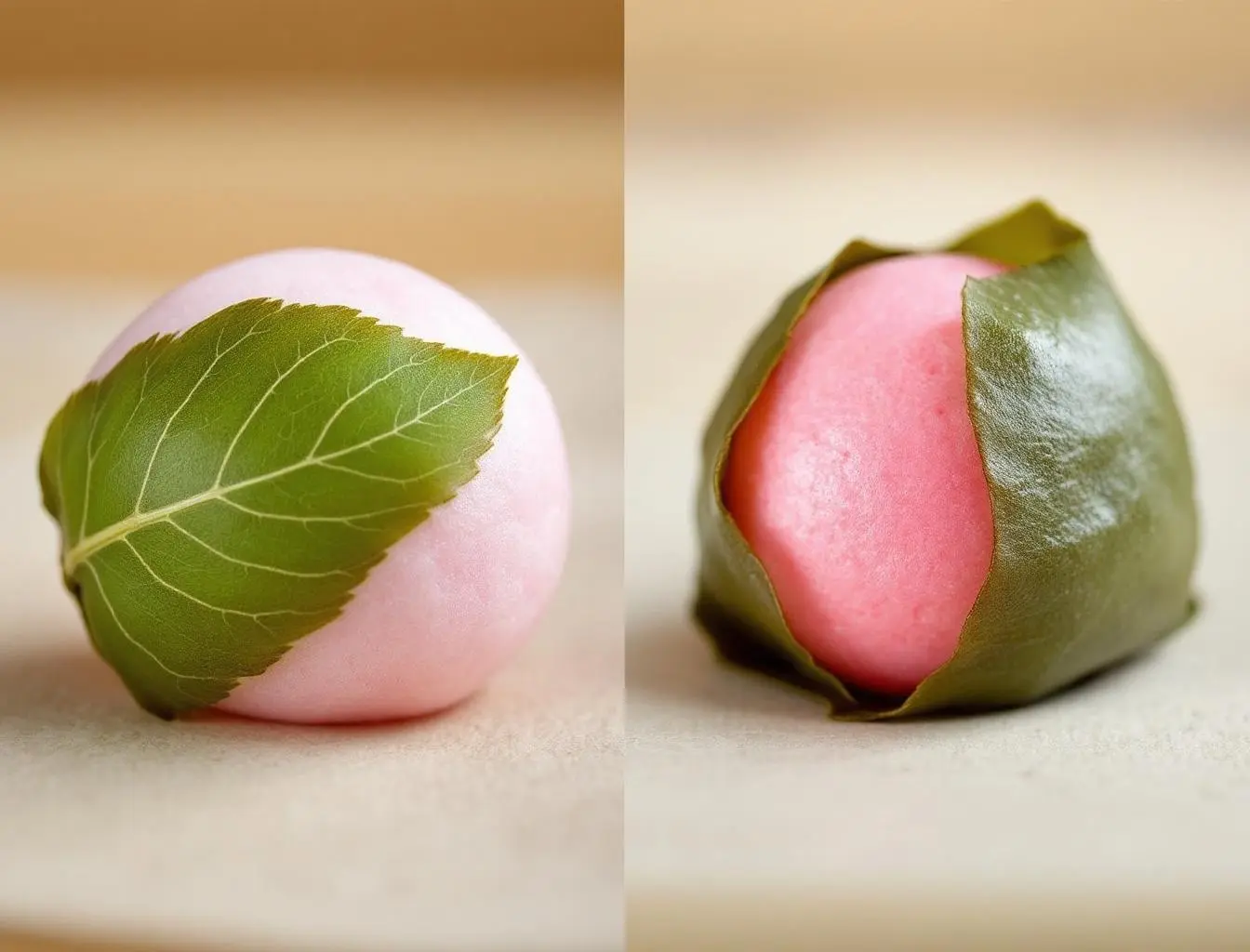
Two completely different styles exist:
- Chomeiji style (長命寺, Kanto): A thin, crepe-like wrapper made from wheat flour, dyed pink, wrapped around anko (red bean paste). Named after the temple in Tokyo where it was reportedly invented in 1717.
- Domyoji style (道明寺, Kansai): A ball of coarsely ground glutinous rice (道明寺粉, domyoji-ko), dyed pink, encasing anko. Chewier, more textured.
Both are wrapped in a salt-pickled cherry leaf (桜葉, sakura-ba). The leaf is edible — its salty-sweet contrast with the sweet mochi is intentional.
The eternal debate: “Do you eat the leaf?” Most Japanese people do, but it’s perfectly fine not to. The saltiness of the leaf balances the sweetness of the anko.
6. Shirozake (白酒) and Amazake (甘酒)
Shirozake (白酒) is a traditional sweet white sake made by fermenting steamed glutinous rice with shochu and rice koji. It’s milky white and mildly alcoholic (about 9%). Historically, this was the drink of Hinamatsuri.
Amazake (甘酒) is the modern family-friendly alternative — a thick, sweet, non-alcoholic (or very low alcohol) fermented rice drink. It has the same white, festive appearance without the alcohol content, making it suitable for children.
Both represent purity and the warding off of evil — white being a purifying color in Japanese tradition.
Why the switch happened: As Hinamatsuri became more focused on young girls, serving a 9% ABV drink became less appropriate. Most families now serve amazake, though some adults still enjoy shirozake.
Other Hinamatsuri Dishes and Treats
Temari-zushi (手毬寿司) — Ball-Shaped Sushi
Small, round sushi balls that are easier for children to eat than regular nigiri. Often made in pink, yellow, and green colors to match the Hinamatsuri palette. These are increasingly popular as a photogenic alternative or addition to chirashi-zushi.
Ushiojiru (潮汁) — Tide Soup
A simpler alternative to the clam clear soup, made with lighter seasoning. Some regions serve this instead of hamaguri no osuimono, using different shellfish depending on what’s local.
Hina Candy (ひなキャンディー)
Small, colorful hard candies sold in bags decorated with hina doll imagery. A convenience-store and dagashi-ya (駄菓子屋, old-fashioned candy shop) staple during the season.
Ichigo Daifuku (苺大福)
While not exclusive to Hinamatsuri, strawberry daifuku is in peak season in March and frequently appears at Girls’ Day celebrations. The pink of the strawberry visible through the white mochi fits the festival’s aesthetic perfectly.
Setting the Hinamatsuri Table
The traditional Hinamatsuri table brings together the colors and symbolism of the festival:
- Chirashi-zushi in the center, served in a lacquer box or special dish
- Hamaguri no osuimono in lidded lacquer bowls
- Hishi mochi displayed on the hina-dan
- Hina arare in small dishes
- Sakura mochi as dessert
- Amazake served in small cups
Many families add seasonal fruits, strawberries, and other pink and green foods to reinforce the spring color palette.

Where to Buy Hinamatsuri Foods
In Japan: Depachika (デパ地下, department store basement food halls) go all-out for Hinamatsuri. Wagashi shops start selling hishi mochi and sakura mochi from mid-February. Convenience stores stock hina arare and amazake throughout February and early March.
Outside Japan: Japanese grocery stores (Mitsuwa, Nijiya, H-Mart) typically carry hina arare, amazake, and sakura mochi ingredients in February-March. For chirashi-zushi, most ingredients are available year-round at Japanese grocers. Sakura denbu may require ordering online.
Make it yourself: The most rewarding approach. Chirashi-zushi and hamaguri soup are straightforward to make at home. Sakura mochi requires a bit more technique but is achievable with a good recipe.
Frequently Asked Questions
What is the main food of Hinamatsuri?
Chirashi-zushi (ちらし寿司, scattered sushi) is considered the main dish of Hinamatsuri. It’s a bowl of seasoned sushi rice topped with colorful ingredients, each carrying symbolism for the girl’s future prosperity and health.
Why are clams eaten on Hinamatsuri?
Hamaguri (蛤) clam shells are bivalves where each pair fits together perfectly and won’t match with any other shell. This symbolizes a wish for a faithful, harmonious marriage — finding a partner who is a perfect match.
What do the three colors of hishi mochi represent?
The pink layer represents peach blossoms and warding off evil. The white layer represents snow and purity. The green layer represents new spring growth. Together they depict early spring: green grass beneath white snow, with pink peach blossoms above.
Is Hinamatsuri only for girls?
Traditionally, yes. Hinamatsuri (March 3) celebrates daughters, while Tango no Sekku (端午の節句, May 5, now Children’s Day) was historically the boys’ festival. In modern Japan, May 5 has become a celebration for all children, but Hinamatsuri remains focused on girls.
Can boys eat Hinamatsuri food?
Of course. The foods are enjoyed by the whole family. The celebration centers on daughters, but everyone at the table eats.
What is the difference between Kanto and Kansai Hinamatsuri food?
The biggest differences are in chirashi-zushi (raw toppings in Kanto vs. cooked/mixed style in Kansai), hina arare (sweet and puffy in Kanto vs. savory and crunchy in Kansai), and sakura mochi (thin crepe-style Chomeiji in Kanto vs. chewy Domyoji in Kansai).


Konnichiwa! (Hello!) I'm Pat Tokuyama, a Japanese tofu cookbook author, who travels for music, food, and adventure. If you like Japanese tea, checkout some of the newestorganic japanese tea, matcha bowls and noren and more!
** Curious about the Plant Based Japanese Cooking Club? ** Learn more here!
When should I prepare Hinamatsuri food?
Most dishes can be prepared the day of or the day before. Clams should be soaked overnight. If making sakura mochi from scratch, the cherry leaves need to be purchased in advance. Hina arare is typically bought, not homemade.


