Irresistible Coffee Jelly Japanese Style with Cream
Authentic Japanese Coffee Jelly (Kohi Zeri) Recipe with Cream
Ah, **coffee jelly**—or **Kohi Zeri (コーヒーぜり)** as we lovingly call it in Japan. For many, the idea of coffee in jelly form might sound a little unusual at first. But for me, and countless others across Japan, it evokes a sense of nostalgic comfort, a refreshing escape, and a perfectly balanced treat. I remember my grandmother making this for us on hot summer afternoons, the jiggly squares glistening in tall glasses, topped with a swirl of rich cream. It was simple, elegant, and utterly delicious.
This isn’t just any coffee jelly; this is **Japanese style**. What makes it so special? It’s the delicate balance of bitterness from a good, strong coffee, the subtle sweetness, and most importantly, that signature **purupuru (ぷるぷる)** texture—a gentle, melt-in-your-mouth jiggle that’s less firm than Western jellies. It’s a dessert that truly embodies the Japanese aesthetic of refined simplicity.
Join me as we dive into the delightful world of **Kohi Zeri**, a beloved **Japanese dessert** that’s surprisingly easy to make at home.
PrintCoffee Jelly with Cream

- Prep Time: 10 minutes
- Total Time: 6 hours 10 minutes
- Yield: 4 people 1x
- Category: Dessert
- Cuisine: Japanese
Ingredients
- 1 packet unflavored gelatin
- 2 Tablespoons warm water
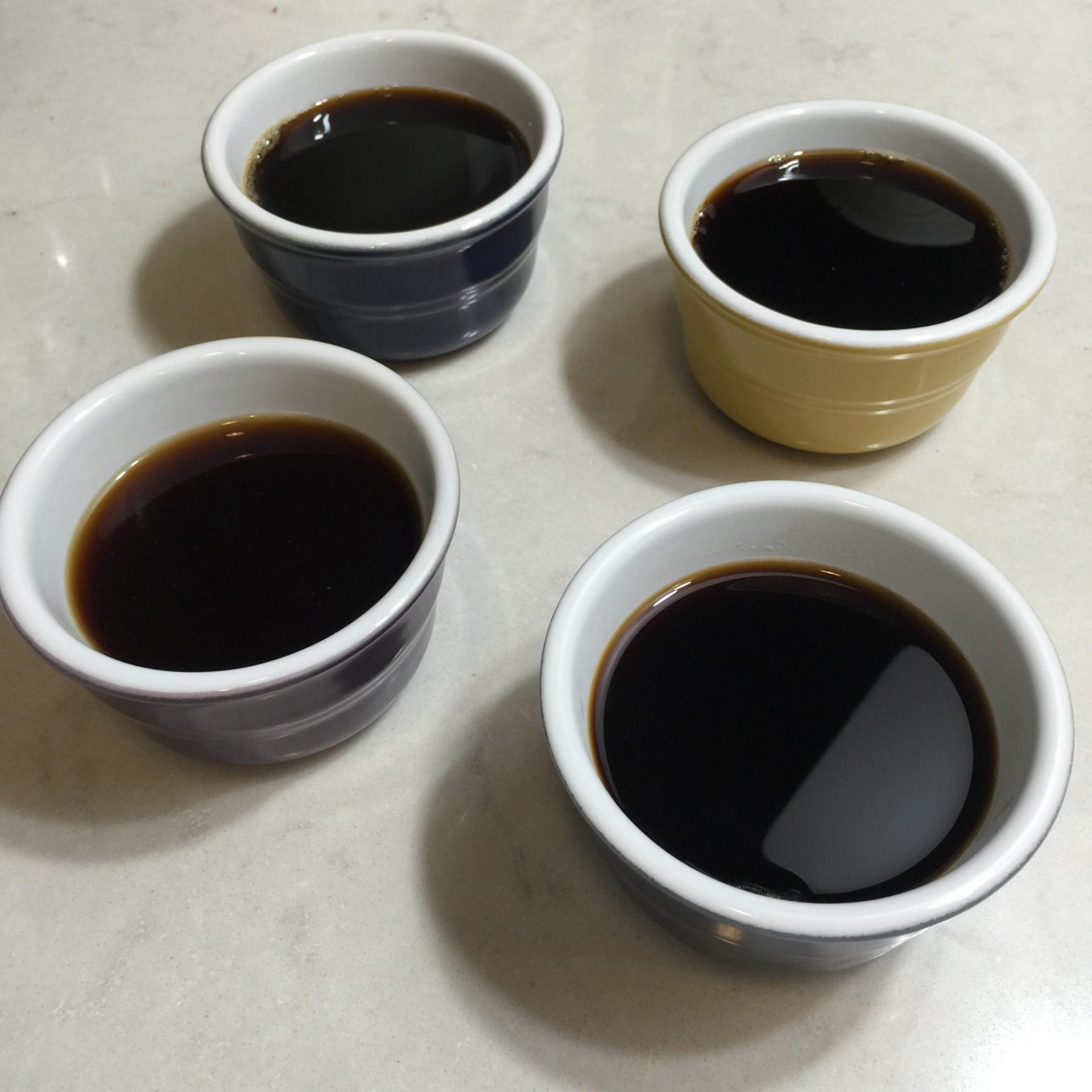
- 2 cups freshly brewed coffee or (or 3-4 tsp instant coffee and 2 C hot water)
- 2 Tablespoons sugar (or to taste)
- heavy cream (half n half, whipped cream, condensed milk or ice cream)
Instructions
- Soften gelatin in 2T warm water in bowl. Stir with a fork so it’s evenly mixed. (Do not use boiling hot water or you might get clumps!!)

- Add hot coffee, stirring until gelatin dissolves.
- Add sugar, stir until dissolves.
- Pour 1/2 cup of mixture into 4 dessert glasses and chill until set.


What is Japanese Coffee Jelly (Kohi Zeri)?
At its heart, **Japanese coffee jelly** is a **cold dessert** made from sweetened coffee solidified with gelatin. But to truly appreciate it, you need to understand its cultural roots and unique characteristics. It’s a staple in **Japanese cafe culture**, a common sight in **convenience stores (コンビニ – konbini)**, and a refreshing homemade treat.
A Brief History of Coffee Jelly in Japan
While gelatin-based desserts have existed for centuries, **coffee jelly** as we know it gained popularity in Japan during the **Taisho era (大正時代)** (1912-1926) and early **Showa era (昭和時代)** (1926-1989). This period saw a significant Western influence on Japanese cuisine and lifestyle. Coffee, once a luxury, became more accessible, and the concept of coffee as a dessert quickly caught on, particularly in the burgeoning **kissaten (喫茶店)**, traditional Japanese coffee shops.
These kissaten were more than just places to drink coffee; they were cultural hubs where people could relax, read, and enjoy Western-inspired treats. **Coffee jelly** fit perfectly into this new culinary landscape, offering a sophisticated yet refreshing option. Over time, it transitioned from specialty cafes to mainstream popularity, becoming a common item in supermarkets and even family restaurants (**ファミレス – famiresu**).
The Unique Appeal of Japanese Coffee Jelly
What sets **Japanese coffee jelly** apart? It’s primarily its texture and balanced flavor profile.
* **The Purupuru Texture:** Unlike some firmer jellies, **Kohi Zeri** is known for its soft, slightly jiggly, and delicate texture. This “purupuru” quality is highly prized in Japanese desserts and contributes to its refreshing mouthfeel. It melts gently on the tongue, releasing the coffee flavor.
* **Balance of Bitterness and Sweetness:** A good **Kohi Zeri** strikes a perfect balance. The inherent bitterness of the coffee is mellowed by a subtle sweetness, creating a harmonious flavor that isn’t cloying.
* **Versatility:** It can be enjoyed on its own, with a simple topping of **cream**, or incorporated into more elaborate desserts like parfaits. It’s equally at home as a light after-dinner treat or a cooling snack on a hot day.

Why You’ll Love This Authentic Coffee Jelly Recipe
This recipe brings the authentic taste and texture of **Kohi Zeri** right to your kitchen. Here’s why it’s a must-try:
* **Effortlessly Refreshing:** It’s the ultimate **cold dessert** for warm weather or any time you crave a light, invigorating treat.
* **Simple to Make:** With just a few basic ingredients and straightforward steps, even novice cooks can achieve perfect results. It’s a fantastic **no-bake dessert**.
* **Customizable:** Easily adjust the sweetness, coffee strength, and toppings to suit your personal preference.
* **Authentic Japanese Flavor:** This recipe captures the essence of **traditional Japanese coffee jelly**, ensuring a truly delightful experience.
Essential Ingredients for Perfect Coffee Jelly
The beauty of **Kohi Zeri** lies in its simplicity, but choosing the right ingredients makes all the difference in achieving that authentic taste and texture.
Choosing the Right Coffee
The coffee is the star of the show, so don’t skimp on quality!
* **Dark Roast Coffee:** For the most authentic and robust flavor, I highly recommend using a **dark roast coffee**. The deeper, richer notes stand up well to the sweetness and gelatin. Think of the kind of coffee you’d enjoy black.
* **Espresso:** If you have an espresso machine, a strong shot of **espresso** diluted with hot water can provide an intense coffee flavor.
* **Instant Coffee:** Yes, you can absolutely use **instant coffee**! This is a common and convenient option in Japan, especially for home cooks. Just make sure it’s a good quality instant coffee. Many Japanese brands like **UCC** or **Key Coffee** offer excellent instant options that work wonderfully for **Kohi Zeri**. The key is to make it a bit stronger than you would for drinking to ensure the coffee flavor isn’t lost.
Gelatin vs. Agar-Agar
This is where the texture magic happens!
* **Gelatin:** This recipe primarily uses unflavored gelatin powder, which gives the **coffee jelly** its characteristic delicate, “purupuru” jiggle. Gelatin is derived from animal collagen.
* **Agar-Agar:** For a **vegan coffee jelly** option, **agar-agar** is your best friend. It’s a plant-based gelling agent derived from seaweed. Agar-agar creates a firmer, slightly more brittle texture than gelatin, but it’s still delicious and a popular choice in Japanese desserts. If substituting, remember that agar-agar sets faster and requires different ratios than gelatin, so follow specific agar-agar instructions.
Sweeteners
The sweetness level is a matter of personal preference.
* **Granulated Sugar:** Standard granulated sugar is perfectly fine.
* **Brown Sugar:** For a deeper, more caramel-like note, you can experiment with brown sugar.
* **Maple Syrup or Honey:** These can also be used for a different flavor profile, though they might subtly alter the coffee taste.
The Cream Topping
The cream topping is arguably as iconic as the jelly itself, providing a luscious counterpoint to the coffee’s slight bitterness.
* **Heavy Cream (生クリーム – nama kurīmu):** This is the traditional choice. Lightly sweetened and whipped, it adds a rich, velvety texture and a beautiful visual contrast.
* **Condensed Milk (練乳 – rennyū):** A very popular option in Japan, especially for those who prefer a sweeter, denser topping. It melts beautifully over the cold jelly.
* **Milk or Half-and-Half:** For a lighter option, a splash of cold milk or half-and-half works wonderfully.
* **Ice Cream:** A scoop of vanilla or coffee ice cream can turn your **Kohi Zeri** into an indulgent treat.

Tips for the Best Japanese Coffee Jelly
Achieving that perfect **purupuru texture** and balanced flavor is key. Here are my expert tips:
Achieving the Perfect Texture
* **Gelatin Ratio is Crucial:** Too much gelatin, and your jelly will be rubbery; too little, and it won’t set. Stick to the recipe’s recommended amount for that delicate Japanese jiggle.
* **Dissolving Gelatin Properly:** Always “bloom” your gelatin first by sprinkling it over cold water and letting it sit for a few minutes. Then, dissolve it completely in hot liquid, stirring until no granules remain. Avoid boiling the gelatin mixture, as this can weaken its gelling power.
* **Cooling Time:** Patience is a virtue! Allow ample time for the **coffee jelly** to chill and set completely, ideally several hours or overnight. Rushing this step will result in a soft, unset jelly.
Preventing Bitterness
* **Coffee Choice:** While a dark roast is recommended, avoid overly bitter or burnt-tasting coffee. A good quality, freshly brewed coffee will yield the best results.
* **Sugar Balance:** Adjust the sugar to your liking. If your coffee is particularly strong or bitter, you might want to add a little more sugar. Taste the coffee mixture before adding gelatin to ensure it’s to your preference.
Customizing Your Coffee Jelly
* **Flavor Additions:** A tiny splash of vanilla extract or a coffee liqueur (like Kahlúa) can add an extra layer of flavor.
* **Different Molds:** While often served in individual glasses, you can also pour the mixture into a shallow dish, let it set, and then cut it into cubes or diamond shapes for a different presentation.

Serving Suggestions & Variations
**Kohi Zeri** is incredibly versatile. Here are some of my favorite ways to enjoy and adapt it:
Classic Coffee Jelly with Cream
This is the quintessential way to enjoy **Kohi Zeri**. Serve chilled squares or cubes of **coffee jelly** in a clear glass or bowl, topped with a generous dollop of lightly sweetened **whipped heavy cream** or a drizzle of **condensed milk**. The visual contrast and the interplay of textures and temperatures are simply divine.
Coffee Jelly Parfait
Elevate your **coffee jelly** into a stunning parfait! Layer cubes of **Kohi Zeri** with:
* **Vanilla or Coffee Ice Cream**
* **Whipped Cream**
* **Fresh Fruits** (like sliced bananas or berries)
* **Granola or Crushed Cookies** for crunch
* A drizzle of **chocolate syrup** or **caramel sauce**
This creates a delightful medley of flavors and textures, perfect for a special occasion.
Coffee Jelly Drink
Turn your **Kohi Zeri** into a refreshing beverage!
* Cut the set **coffee jelly** into small, irregular pieces.
* Place them in a tall glass.
* Pour cold **milk**, **condensed milk**, or a mixture of both over the jelly.
* Add a touch of **simple syrup** or **maple syrup** if desired.
* Stir gently and enjoy with a wide straw or a spoon. This is a popular **Japanese coffee** drink, especially in summer.
Vegan Coffee Jelly
To make a **vegan coffee jelly**, simply substitute gelatin with **agar-agar**. Remember to adjust the quantities and preparation method according to the agar-agar package instructions, as it behaves differently than gelatin. Typically, you’ll need less agar-agar powder than gelatin, and it needs to be boiled to fully dissolve and activate its gelling properties.
Storage and Make-Ahead Instructions
**Coffee jelly** is an excellent **make-ahead dessert**, perfect for parties or when you want a quick treat on hand.
* **Storage:** Once set, **coffee jelly** should be stored in an airtight container in the refrigerator. If you’ve already topped it with cream, it’s best to store the jelly and cream separately and assemble just before serving to prevent the cream from weeping or deflating.
* **Shelf Life:** Properly stored, **coffee jelly** will last for 3-4 days in the refrigerator. The texture might slightly change over time, becoming a little softer, but it will still be delicious.
* **Freezing:** I do not recommend freezing **coffee jelly**, as the gelatin will break down and the texture will become watery and unappetizing upon thawing.
Frequently Asked Questions (FAQs) about Coffee Jelly
Here are some common questions about making and enjoying **Japanese coffee jelly**:
Can I use instant coffee?
Absolutely! **Instant coffee** is a convenient and widely used option for **Kohi Zeri** in Japan. Just make sure to brew it a bit stronger than you would for drinking to ensure the coffee flavor shines through.
Why isn’t my jelly setting?
There are a few common reasons:
* **Not enough gelatin:** Double-check your measurements.
* **Gelatin not fully dissolved:** Ensure you stir thoroughly in hot liquid until no granules remain.
* **Gelatin was boiled:** Boiling gelatin can weaken its gelling power.
* **Too much liquid:** Adhere to the recipe’s liquid-to-gelatin ratio.
* **Not enough chilling time:** Give it at least 4-6 hours, or preferably overnight, in the refrigerator.
How long does coffee jelly last?
When stored in an airtight container in the refrigerator, **coffee jelly** will last for 3-4 days.
Can I make it sugar-free?
Yes, you can! Simply omit the sugar or use a sugar substitute of your choice. Taste the coffee mixture before adding gelatin to ensure it meets your desired sweetness level.

Konnichiwa! (Hello!) I'm Pat Tokuyama, a Japanese tofu cookbook author, who travels for music, food, and adventure. If you like Japanese tea, checkout some of the newestorganic japanese tea, matcha bowls and noren and more!
** Curious about the Plant Based Japanese Cooking Club? ** Learn more here!
What’s the difference between gelatin and agar-agar?
**Gelatin** is an animal-derived protein that creates a soft, jiggly, melt-in-your-mouth texture. **Agar-agar** is a plant-based gelling agent (from seaweed) that results in a firmer, slightly more brittle jelly. Agar-agar is suitable for **vegan coffee jelly**. They also have different preparation requirements and gelling strengths, so they are not directly interchangeable in equal amounts.
More Authentic Japanese Dessert Recipes from Alldayieat.com
If you’ve enjoyed making this **authentic Japanese coffee jelly**, you’ll love exploring more of our **Japanese dessert** recipes. From delicate mochi to rich matcha treats, Alldayieat.com is your go-to source for bringing the flavors of Japan into your home.
* [Link to Matcha Espresso Recipe]
* [Link to Japanese Food Supplies]
* [Link to another Japanese dessert recipe on your blog]
I hope this comprehensive guide inspires you to create your own delicious **Kohi Zeri**. It’s more than just a dessert; it’s a taste of Japanese culture, a refreshing escape, and a delightful experience for your senses. Enjoy!