Black Sesame Ice Cream: Authentic Japanese Kurogoma Ice Cream Recipe
Black sesame ice cream (kurogoma aisu) is one of Japan’s most distinctive frozen desserts. The deeply nutty, slightly smoky flavor of roasted black sesame seeds creates an ice cream unlike anything you’ll find in a typical Western ice cream shop. This Japanese-style custard base recipe delivers rich, authentic flavor in every scoop.

Growing up, black sesame ice cream was always my go-to choice at Japanese ice cream shops. While friends would pick matcha or vanilla, I was drawn to the striking gray-black color and the complex, almost earthy sweetness of kurogoma. When I started making ice cream at home, this was one of the first flavors I tackled.
What Makes Black Sesame Ice Cream Special?
If you’ve never tried black sesame ice cream, it’s hard to describe just how unique it is. The flavor is unlike anything else — nutty, toasty, slightly smoky with a natural sweetness that doesn’t need much added sugar to shine.
In Japan, black sesame ice cream is everywhere. You’ll find it at ice cream parlors, convenience stores (those Häagen-Dazs Japan seasonal flavors are legendary), and traditional dessert shops. It’s one of those flavors that Japanese people grow up eating, alongside matcha and azuki bean.
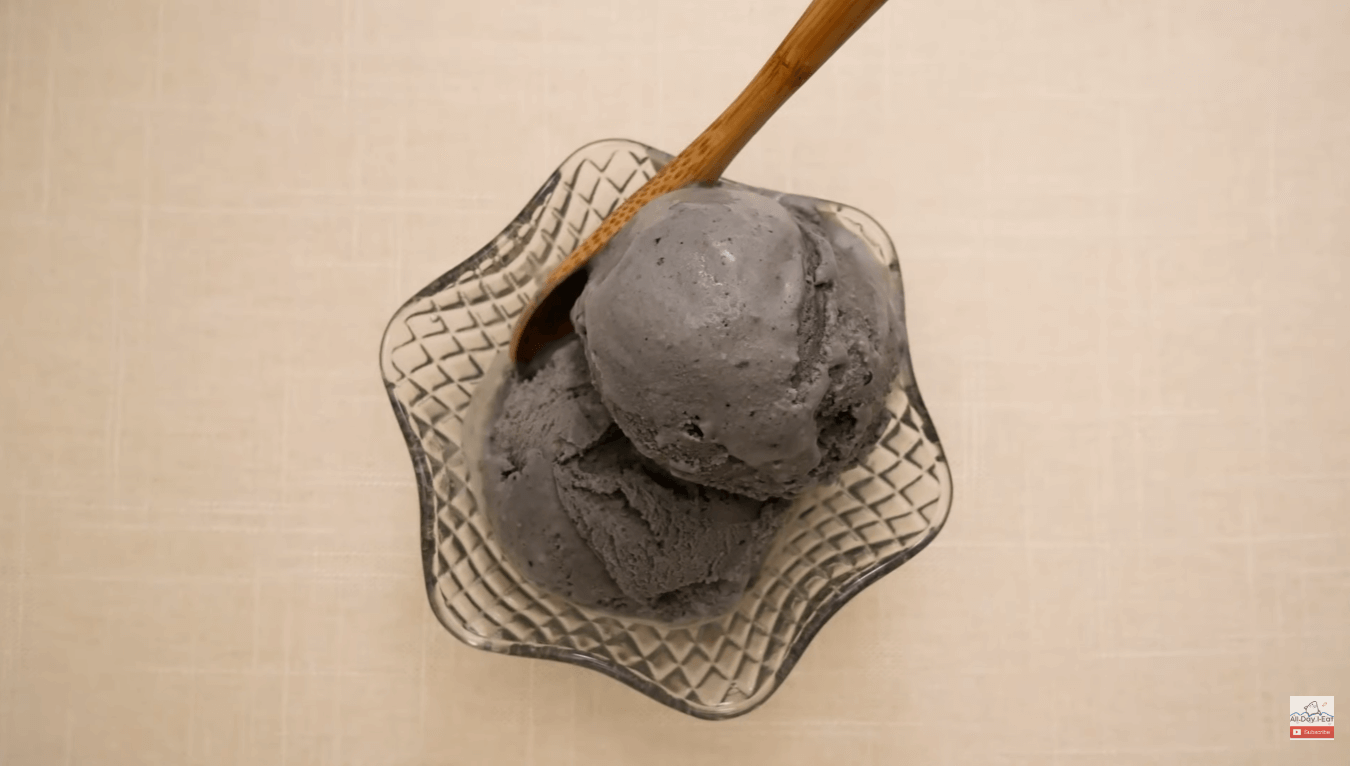
The dramatic dark gray-black color comes entirely from the black sesame seeds themselves — no food coloring needed. It’s one of the most visually striking ice cream flavors you can make at home, and it always gets a reaction when you serve it to guests.
A custard base made with eggs, cream, and milk gives this ice cream the richness it needs to complement the bold sesame flavor. The fat in the custard carries the nutty, toasty notes beautifully and gives you that dense, smooth texture that’s characteristic of Japanese-style ice cream.

Black Sesame Seeds vs. White Sesame Seeds
This is a question I get a lot: can you use white sesame seeds instead? The short answer is no — not if you want authentic black sesame ice cream.
- Black sesame (kurogoma 黒ごま): Stronger, more robust flavor with an almost smoky quality. The seeds are unhulled, which means more fiber and minerals. The hull contains the black pigment and additional antioxidant compounds.
- White sesame (shirogoma 白ごま): Milder and sweeter with a cleaner sesame taste. More commonly used for sesame oil production and as a garnish. Hulled, so smoother in texture when ground.
Black sesame is richer in calcium, iron, and antioxidants compared to its white counterpart. It also contains unique compounds — sesamol and sesamin — that researchers have studied for potential health benefits.
For ice cream, black sesame’s bolder, more complex flavor is essential. White sesame would be far too subtle — the flavor would disappear once frozen and mixed into a rich custard base. You’d end up with something that tastes vaguely nutty rather than distinctively sesame.

Understanding the Ingredients
Every ingredient in this recipe plays a specific role. Here’s what you need to know:
Black sesame paste (nerigoma 練りごま): This is the star of the show. Japanese nerigoma is made purely from ground roasted black sesame seeds — nothing else added. It has a thick, peanut butter-like consistency and an intensely nutty aroma. If you can’t find paste, you can make your own by grinding toasted black sesame seeds in a food processor until smooth (this takes patience — about 10 to 15 minutes of processing). But store-bought nerigoma gives you a smoother result.
Heavy cream and whole milk: These create the rich, creamy custard base. The higher fat content of heavy cream is important — it carries flavor compounds better and gives the ice cream its smooth, scoopable texture. Don’t try to substitute with low-fat versions or the ice cream will be icy and thin.
Egg yolks: The yolks emulsify the base, binding the fat and water together for a smooth, cohesive mixture. They also give the ice cream that dense, custard-like texture that’s characteristic of Japanese-style ice cream. The lecithin in egg yolks acts as a natural stabilizer.
Sugar: Beyond sweetness, sugar lowers the freezing point of the mixture, which keeps the ice cream softer and more scoopable at freezer temperature. It also balances the natural bitterness that black sesame can have. Don’t reduce the sugar too much or the ice cream will taste flat and freeze rock-hard.
Vanilla: Just a small amount to round out the flavor profile without competing with the sesame. Think of it as a supporting actor — it fills in the gaps and makes the overall flavor more complex.
Tips for Making the Best Black Sesame Ice Cream
After making this recipe dozens of times, here’s what I’ve learned:
- Toast the sesame seeds before grinding — even if you’re using pre-toasted seeds, a quick pass in a dry skillet deepens the flavor significantly. You’ll smell the difference immediately.
- Use nerigoma (sesame paste) for the smoothest texture — it incorporates into the custard base much more evenly than ground seeds alone. The result is silky rather than grainy.
- Don’t skimp on the sesame — flavors mute when frozen, so you need more sesame than you think. The base should taste almost aggressively sesame-forward before churning.
- Chill the custard base overnight — this is called aging the base, and it makes a noticeable difference. The fat globules stabilize and the flavors meld, giving you a creamier result.
- Strain the custard base through a fine mesh sieve — this catches any bits of cooked egg or sesame seed hull, giving you a perfectly silky texture.
- Let the finished ice cream soften 5 to 10 minutes before scooping — homemade ice cream is denser than store-bought (no air whipped in by commercial machines), so it needs a few minutes at room temperature to reach ideal scooping consistency.

Equipment You’ll Need
You don’t need a lot of specialized equipment, but a few things make the process much smoother:
- Ice cream maker — I use the Breville Smart Scoop, which has been worth every penny. A standard bowl-style ice cream maker (like the Cuisinart ICE-21) works great too — just remember to freeze the bowl at least 24 hours ahead.
- Medium saucepan — for heating the custard base. Heavy-bottomed is better for even heat distribution.
- Fine mesh sieve — essential for straining out any lumps and ensuring a silky texture.
- Mixing bowl set over an ice bath — to cool down the custard quickly after cooking, which stops the cooking process and gets you to the fridge faster.
- Whisk — for tempering the eggs and mixing the custard.
- Suribachi (すり鉢) or food processor — for grinding sesame seeds if you’re making your own paste. A suribachi is the traditional Japanese grinding bowl — it produces a wonderfully textured paste. A food processor is faster but works just as well.

Serving Suggestions
Black sesame ice cream is versatile enough to serve many ways. Here are my favorites:
- On its own — the flavor is complex enough to stand alone. Sometimes simple is best.
- With mochi — the chewy, sticky texture of mochi against the creamy ice cream is one of the best textural contrasts in Japanese desserts.
- Alongside kinako ice cream — serve both for a Japanese ice cream duo that covers the full spectrum of nutty, toasty flavors.
- Drizzled with kuromitsu (black sugar syrup) — the deep molasses-like sweetness of kuromitsu pairs beautifully with the earthy sesame.
- Served with castella cake or matcha cookies — the honey sweetness of castella or the green tea bitterness of matcha cookies both complement black sesame perfectly.
- Dusted with kinako powder — adds an extra layer of nuttiness from roasted soybean flour. A classic Japanese flavor combination.
- In a monaka wafer shell — for a Japanese-style ice cream sandwich. You can find monaka shells at Japanese grocery stores.
- With fresh fruit — strawberries and black sesame are a surprisingly good match. The bright acidity of the berries cuts through the richness.
Variations
Once you’ve mastered the base recipe, try these twists:
- Black sesame matcha ripple: Swirl a matcha paste (matcha powder mixed with a little warm water) through the ice cream during the last minute of churning. The green and black swirl looks stunning and the flavors complement each other beautifully.
- Toasted sesame crunch: Fold in whole toasted white sesame seeds after churning for pops of crunch throughout.
- No-churn version: No ice cream maker? Fold the black sesame paste mixture into whipped cream and sweetened condensed milk, then freeze. The texture won’t be as smooth as churned, but the flavor is still excellent.
- Black sesame affogato: Pour a shot of hot hojicha over a scoop of black sesame ice cream. The roasted tea and roasted sesame flavors are a match made in heaven.
How to Store Black Sesame Ice Cream
Proper storage makes a big difference with homemade ice cream:
- Keeps up to 2 weeks in the freezer in an airtight container. After that, the texture starts to degrade and ice crystals form.
- Press plastic wrap directly against the surface before putting the lid on — this prevents freezer burn and the formation of ice crystals on top.
- Let soften 5 to 10 minutes at room temperature before serving. Homemade ice cream freezes harder than commercial varieties.
- Don’t refreeze once melted — the emulsion breaks down and you’ll end up with a grainy, icy texture. Only scoop what you’ll eat.
Nutritional Benefits of Black Sesame
While this is still ice cream (let’s be real), the black sesame does bring some genuine nutritional benefits to the table:
- Excellent source of calcium — gram for gram, black sesame seeds contain more calcium than many dairy products. The unhulled seeds retain the calcium-rich outer layer.
- Rich in iron, copper, and manganese — important minerals that many people don’t get enough of, especially from plant sources.
- Contains unique antioxidants — sesamin and sesamol are compounds found specifically in sesame seeds that have shown anti-inflammatory properties in research.
- Good source of healthy fats — primarily unsaturated fats that are beneficial for heart health.
- High in fiber — compared to white sesame, black sesame retains its hull, which contains significant dietary fiber.
- Traditional medicinal use — in both traditional Chinese medicine and Japanese folk remedies, black sesame has long been considered beneficial for hair health, skin vitality, and overall longevity. While modern research is still catching up, the nutritional profile supports many of these traditional claims.
Where to Buy Black Sesame Paste
Finding the right black sesame paste makes or breaks this recipe. Here’s where to look:
- Japanese grocery stores — Mitsuwa, Nijiya, and H Mart all carry kurogoma nerigoma. Look in the condiment aisle near the sesame oil and other sesame products.
- Online — search for “kurogoma nerigoma” specifically. Brands like Kuki and Maruhon are reliable choices. Important: avoid tahini, which is made from hulled white sesame seeds and has a completely different flavor profile.
- Make your own — toast 1 cup of black sesame seeds in a dry skillet until fragrant, then grind in a food processor for 10 to 15 minutes until a paste forms. You’ll need to scrape down the sides several times. Add a tiny drizzle of neutral oil if it’s not coming together.
- Store-bought paste saves time and generally produces a smoother ice cream, but homemade has a fresh-roasted flavor that’s hard to beat.
Black Sesame Ice Cream Recipe Video
Here’s a short video showing how to make this black sesame ice cream at home:
Subscribe to my YouTube channel for the latest Japanese cooking videos!
PrintBlack sesame ice cream (Japanese style ice cream)
- Prep Time: 15 minutes
- Cook Time: 10 minutes
- Total Time: 25 minutes
- Yield: 1 quart 1x
- Category: Dessert
- Cuisine: Japanese
Ingredients
- 1 1/2 cups whole milk
- 1 1/2 cups cream
- 3 egg yolks
- 1/2 cup sugar
- 1-2 Tbsp black sesame seeds (toasted and ground)
- 3-4 Tbsp nerigoma (black sesame paste)
- 1 tsp vanilla extract (madagascar)
Instructions
- Combine milk, egg yolks and sugar in a medium sauce pan on medium heat.
- Using an immersion blender, or a hand mixer, whisk the mixture until you get it nice and creamy
- Add 3 tbsp. nerigoma into the pot. Optional: 1-2 tbsp. ground and toasted black sesame seeds
- Whisk the pot until the paste is dissolved and completely incorporated into the mixture.
- When the temperature reaches 160 degrees, transfer the contents of the pot into a bowl, and place it on the ice bath to cool the mixture down.
- Add in 1 ½ cups of heavy whipping cream. At this point, you can taste it for sweetness, and add sugar or honey to taste. Stir occasionally to cool it quicker.
- Once the mixture has cooled transfer to your ice cream machine.
- Add a teaspoon of vanilla into the mixture and churn.
- Transfer to an ice cream container and put in the freezer to fully harden.
Black Sesame Ice Cream FAQ
What does black sesame ice cream taste like?
Rich, nutty, slightly smoky with a natural sweetness. Imagine a more complex, toasty version of peanut butter ice cream, but with an earthy, almost coffee-like depth. The flavor is bold but not overwhelming — it hits you with nuttiness first, then finishes with a subtle sweetness.
Is black sesame ice cream the same as tahini ice cream?
No, and this is a common misconception. Tahini is made from hulled white sesame seeds and has a milder, more bitter flavor. Black sesame paste (kurogoma nerigoma) is made from unhulled black sesame seeds and has a bolder, nuttier, more complex taste. They’re related ingredients but produce very different ice creams.
Can I make black sesame ice cream without an ice cream maker?
Yes! Use the no-churn method: fold the black sesame paste mixture into whipped cream and sweetened condensed milk, then freeze for at least 6 hours. The texture won’t be as smooth as churned ice cream, but the flavor is still excellent. It’s a great entry point if you don’t want to invest in equipment yet.
Is black sesame ice cream healthy?
Compared to many ice cream flavors, it does have nutritional benefits from the sesame seeds — calcium, iron, healthy fats, and antioxidants. But it’s still ice cream made with cream, sugar, and eggs. Enjoy it as a treat, and appreciate that it’s a treat with some nutritional upside.
Where can I find black sesame paste for ice cream?
Japanese grocery stores carry kurogoma nerigoma — look for it at Mitsuwa, Nijiya, or H Mart. Online, look for brands like Kuki or Maruhon. You can also make your own by grinding toasted black sesame seeds in a food processor until smooth, which takes about 10 to 15 minutes of patience.
Can I use black sesame seeds instead of paste?
You can, but the texture will be grainier. For the smoothest ice cream, paste is strongly recommended. If you decide to use seeds, grind them as fine as possible in a food processor or suribachi, and strain the custard base through a fine mesh sieve to catch any remaining bits.

Konnichiwa! (Hello!) I'm Pat Tokuyama, a Japanese tofu cookbook author, who travels for music, food, and adventure. If you like Japanese tea, checkout some of the newestorganic japanese tea, matcha bowls and noren and more!
** Curious about the Plant Based Japanese Cooking Club? ** Learn more here!
How does black sesame ice cream compare to matcha ice cream?
They’re very different flavor profiles that happen to both be iconic Japanese ice cream flavors. Matcha is vegetal and slightly bitter with a grassy freshness. Black sesame is earthy, nutty, and toasty. They pair beautifully together — serving a scoop of each side by side is one of my favorite ways to end a Japanese meal.
If you’d like help making Japanese food at home, consider checking out one of my online cooking programs here.
Other Japanese ice cream recipes you might enjoy: