Kyusu Teapot Buying Guide: Understanding Styles, Handles, and Filtration
A kyusu (急須) is a Japanese teapot designed for small-batch brewing and multiple re-steeps — typically 100ml to 360ml, compared to the 1-liter Western teapot. The design reflects a fundamentally different approach to
This guide covers what distinguishes Japanese clay teapots by region and material, how to choose based on handle style and filtration, and how to use and maintain one so it performs properly for years.
The Two Regional Styles: Banko vs. Tokoname
Most high-quality Japanese clay kyusu come from one of two ceramic traditions. They use different clays, fire differently, and produce measurably different results in the cup.
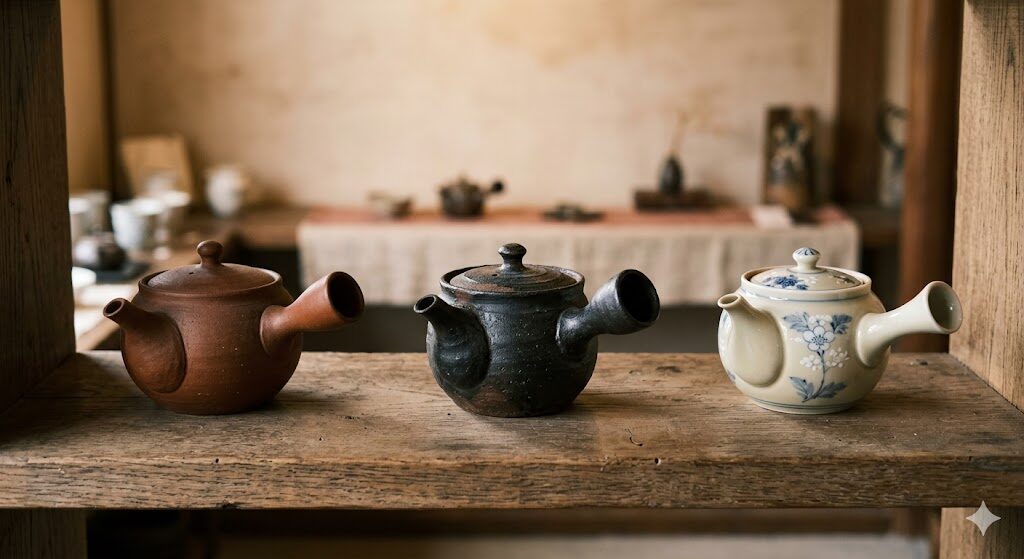
Banko-yaki (萬古焼) — Mie Prefecture
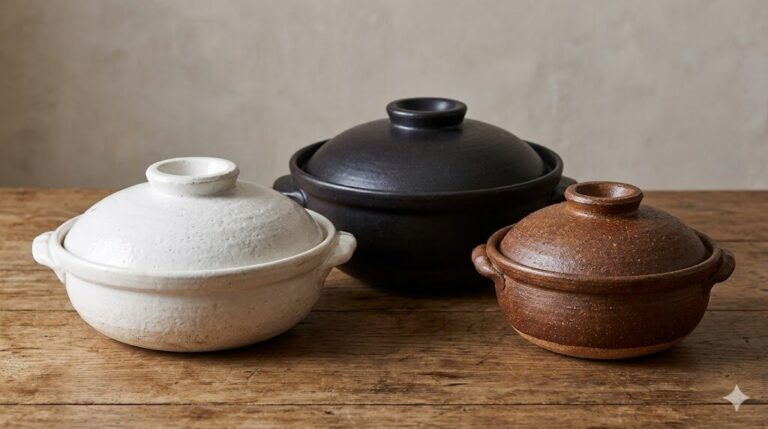
Banko-yaki comes from Yokkaichi in Mie Prefecture. The clay is iron-rich purple or yellow — distinctive in color and texture — and known for exceptional heat retention and durability. Banko pots are often fired through reduction (low-oxygen atmosphere), which affects both color and flavor outcome: reduction firing reduces the oxidation state of iron in the clay, which some brewers believe contributes to suppressing bitterness and acidity.
The practical effect: Banko kyusu tend to enhance umami — the savory fifth taste that distinguishes high-quality Japanese green teas from flat or one-dimensional brews. If your primary teas are gyokuro, kabusecha, or high-grade sencha where umami is the centerpiece of the flavor profile, Banko is the clay worth seeking.
Tokoname-yaki (常滑焼) — Aichi Prefecture
Tokoname is one of Japan’s six ancient kiln traditions, with pottery history going back over 900 years. The clay is red shudei — a high-iron-content red clay that fires to a warm terracotta color. Tokoname pots are made via oxidation or reduction firing, producing either red or darker burnished finishes.
The functional characteristic that makes Tokoname clay valuable for
| Feature | Banko-yaki (Mie) | Tokoname-yaki (Aichi) |
|---|---|---|
| Clay type | Iron-rich purple or yellow | Red shudei (high-iron red clay) |
| Primary benefit | Enhances umami; heat retention | Neutralizes tannins; smooths astringency |
| Firing | Reduction (low-oxygen) | Oxidation (red) or reduction (black) |
| Best for | Gyokuro, kabusecha, high-grade sencha | Everyday sencha, asamushi, most green teas |
| Interior | Unglazed; develops patina over time | Unglazed; absorbs |
Both clays are unglazed on the interior — and this is intentional. An unglazed clay surface is porous, absorbing
Handle Styles: What Each Design Is Actually For
The handle configuration changes how you hold the pot, how you pour, and which teas the pot is suited for. This isn’t aesthetic — different handle styles emerged from different brewing situations.
Yokode (横手) — Side-Handle
The handle is positioned at a 90-degree angle from the spout. This is the defining form of the Japanese kyusu and accounts for the vast majority of what you’ll find. You hold the pot with one hand, with your thumb securing the lid to prevent it from slipping when you tilt to pour. The single-handed grip allows precise control over pour angle and speed — which matters when you’re trying to deliver the last drop without residue.
Yokode is the right default choice for anyone starting with Japanese clay teapots and brewing standard green teas (sencha, genmaicha, hojicha).
Ushirode (後手) — Back-Handle
The handle is behind the spout, like a Western teapot. This design is useful for larger servings — a back handle is more stable for heavier pots — and is commonly used with hojicha or bancha, teas that are often brewed in larger quantities. If you’re regularly brewing for multiple people or using larger pot volumes, ushirode is the practical form.
Uwade (上手) — Top-Handle
An arched handle goes over the top of the pot, like a basket. The key functional advantage: the arched handle stays cooler than the pot body, making it comfortable for teas brewed at higher temperatures. Uwade pots are practical for hojicha or other teas where you use near-boiling water (95–100°C).
Hohin and Shiboridashi — Handleless
These are small, handleless vessels designed specifically for gyokuro and other high-grade, low-temperature teas. Because gyokuro brews at 50–60°C — significantly cooler than boiling — the pot body itself never gets hot enough to be uncomfortable to hold with cupped hands. The handleless design is intentional: it keeps the
Hohin and shiboridashi are for dedicated gyokuro brewing. If you primarily drink gyokuro, this form is worth having specifically for it — but it’s too specialized for general-purpose use.
Filtration Systems: What Actually Matters
The filter at the base of the spout determines how cleanly the
Do-ake (Direct Holes)
Simple holes drilled directly into the clay at the spout entrance. Functional for teas with large, intact leaves (asamushi sencha) but can clog with broken or fine-particle teas like fukamushi or matcha. Older and more rustic kyusu tend to use this style.
Debeso (Half-Spherical Filter)
A dome-shaped protrusion with holes, positioned at the interior spout entrance. This reduces clogging compared to flat do-ake — the three-dimensional shape keeps the openings clear as leaves press against it — but can slow the pour slightly. Better than do-ake for medium-leaf teas.
Sasame / Ceramesh — The Modern Standard
A wide, flat ceramic mesh disc with very fine holes, fitted across the entire interior of the spout entrance. This is the filter system you’ll find on most quality contemporary kyusu and is the best general-purpose option. Sasame handles both intact asamushi leaves and the broken, fine particles of fukamushi (deep-steamed sencha) without clogging. If you brew fukamushi — which produces fine particles that clog simpler filters — sasame is the filter you need.
Stainless Steel Mesh
Either built into the spout or as a removable basket insert. Easy to clean (dishwasher-safe if removable), and effective at catching small particles. The downside over time: stainless can eventually impart a faint metallic note, particularly in very alkaline water. For most practical purposes this is a minor concern — stainless mesh kyusu are convenient and functional. Just avoid letting them sit wet for extended periods.
How to Prepare a New Clay Kyusu
An unglazed clay teapot needs to be seasoned before first use. This isn’t complicated, but skipping it can introduce dusty or raw clay notes into the first few brews.
- Rinse the pot with warm water — inside and out
- Fill with water heated to 60–80°C (do not use boiling water)
- Let sit for 30–60 minutes
- Empty and allow to air dry completely with the lid off
Two things not to do: Do not add
Some guides recommend boiling the kyusu in a pot of water for its first seasoning. The Banko and Tokoname brief instruction (60–80°C water, not boiling) is the safer approach — extreme temperature changes can stress the clay, particularly for thinner modern pots.
Brewing Technique: Two Rules That Matter Most
The Alternating Pour
When serving multiple cups, don’t fill one cup completely and then move to the next. Instead, pour a small amount into each cup, then go back and continue until all cups are filled. Move back and forth until the pot is empty.
Why: the first pour out of the kyusu is lighter; the later pour is more concentrated as the leaves have had time to release. If you fill one cup completely, that person gets weak
Drain Every Last Drop
After pouring, tip the kyusu further and hold it until no more liquid comes out. Then set it down with the lid slightly ajar to allow steam to escape.
Why: if you leave water in the pot with the leaves, extraction continues. By the time you’re ready for the second steep, the leaves have been sitting in hot water for several minutes and will produce a bitter, over-extracted second infusion. Complete drainage stops extraction immediately and preserves the leaves for a clean second steep.
A quality kyusu designed with this principle in mind will drain to the last drop without needing to be shaken — the spout angle, lid fit, and internal volume are calibrated for it. When evaluating a teapot, this is one thing worth checking.
Temperature Guide by Tea Type
| Tea | Brewing Temperature | Handle Style Recommendation |
|---|---|---|
| Gyokuro | 50–60°C (122–140°F) | Hohin or yokode |
| Kabusecha | 60–70°C (140–158°F) | Yokode |
| Sencha (standard) | 70–80°C (158–176°F) | Yokode |
| Fukamushi sencha | 70–75°C (158–167°F) | Yokode with sasame filter |
| Genmaicha | 80–85°C (176–185°F) | Yokode or ushirode |
| Hojicha | 95–100°C (203–212°F) | Uwade or ushirode |
| Bancha | 90–100°C (194–212°F) | Uwade or ushirode |
A yuzamashi — a small ceramic pouring vessel — is the traditional tool for cooling boiling water to the correct temperature before pouring it into the kyusu. Boiling water poured into a yuzamashi drops approximately 10°C; pouring from yuzamashi to cups and then to kyusu drops further. If you brew gyokuro regularly, a yuzamashi is a worthwhile addition.
Care and Maintenance
- Never use soap — rinse with hot water only
- Dry completely with the lid off after each use — trapped moisture causes mold in porous clay
- Don’t use for multiple teas — a clay kyusu dedicated to one
tea type develops thattea ‘s character in its patina; switching teas disrupts this - Mineral deposits — a white film that sometimes builds up inside is calcium from hard water. Remove with a dilute citric acid solution (not vinegar — the acidity is harder to fully rinse out), then re-season with a hot water soak
- Store with lid ajar — air circulation prevents musty odor from developing
What to Look for When Buying
A few practical evaluation points when selecting a kyusu:
- Lid fit: The lid should fit snugly but not so tightly that suction builds up during pouring. When you pour, the lid should stay in place when held without your thumb — then, when you tip the pot, you thumb the lid lightly to keep it from sliding. A poorly fitting lid requires constant attention or leaks.
- Spout alignment: Hold the pot level and check that the spout tip is level with or slightly above the lid joint — this ensures the pot can be completely full without liquid escaping through the spout at rest.
- Pour quality: The pour should be clean, without drips at the spout tip. This requires a clean spout cut and proper spout curvature. Cheaper pots drip.
- Filter coverage: If you brew fukamushi or any broken-leaf
tea , verify that the filter (sasame or stainless) covers the full interior spout opening. A partial filter lets fine particles through. - Hand-thrown vs. mold-cast: Traditional artisanal kyusu are hand-thrown (rokuro) on a potter’s wheel by kyusu-shokunin (teapot craftsmen). Mass-produced pots are typically made using the ikomi (mold-casting) technique. The craftsmanship affects the spout precision, lid fit, and clay quality, not just appearance.
Frequently Asked Questions
What’s the difference between a kyusu and a regular teapot?
Size, design intent, and clay. A kyusu is sized for small-batch brewing (100–360ml) with multiple re-steeps in mind. The unglazed clay interior actively interacts with the
Can I use a kyusu for black tea or other teas?
You can, but it’s not recommended for an unglazed clay kyusu you’re using for Japanese green
Is Tokoname or Banko better for sencha?
For standard everyday sencha — particularly the middle grades that can lean grassy or slightly astringent — Tokoname is the more practical choice because its shudei clay actively smooths tannins. For high-grade sencha where you’re trying to maximize umami (first-flush, kabusecha, high-grade shincha), Banko’s umami-enhancing properties are worth considering. If you can only have one, Tokoname is the more broadly useful starting point.
How do I know if my kyusu is real clay or just ceramic?
Real unglazed clay teapots will have an uneven, slightly rough interior surface and may show tool marks or slight variation in color. The exterior clay should be visible and matt — not glossy or plastic-smooth. Tokoname’s distinctive red color and Banko’s purple or yellow are reliable visual indicators. If the pot has a glossy or enameled interior, it’s glazed and won’t develop the same patina or
What’s a yuzamashi and do I need one?
A yuzamashi is a small ceramic vessel — typically 100–200ml — used to cool boiling water to the right temperature before adding it to the kyusu. Boiling water dropped into a yuzamashi and left briefly drops approximately 10°C. Pouring from yuzamashi into cups before adding to the kyusu drops it further.
If you drink sencha, you don’t strictly need one — you can cool water in the kettle or wait briefly after boiling. If you brew gyokuro regularly (50–60°C target), a yuzamashi makes accurate temperature much easier. It’s a tool for committed gyokuro drinkers more than a general accessory.