Japanese Soup Stocks: A Complete Guide to Dashi Varieties
Dashi is the invisible backbone of Japanese cuisine. Most people who cook Japanese food know it exists, but fewer understand the full range of dashi types or when to use which. Having access to the right dashi — or knowing how to make it from scratch — transforms your Japanese cooking from competent to genuine.
Here’s what you need to know about each major variety.
What Makes Dashi Unique
Western stocks are built on long simmering, extracting collagen and fat from bones and aromatics over hours. Dashi works on a completely different principle: brief steeping or simmering to extract specific compounds — primarily glutamates, inosinates, and guanylates — that trigger the umami perception on the palate.
Dashi is also intentionally transparent in flavor. It’s not assertive like a French fond; it’s a platform that amplifies the other ingredients in a dish without announcing itself. This restraint is fundamental to Japanese cooking philosophy.
Kombu Dashi
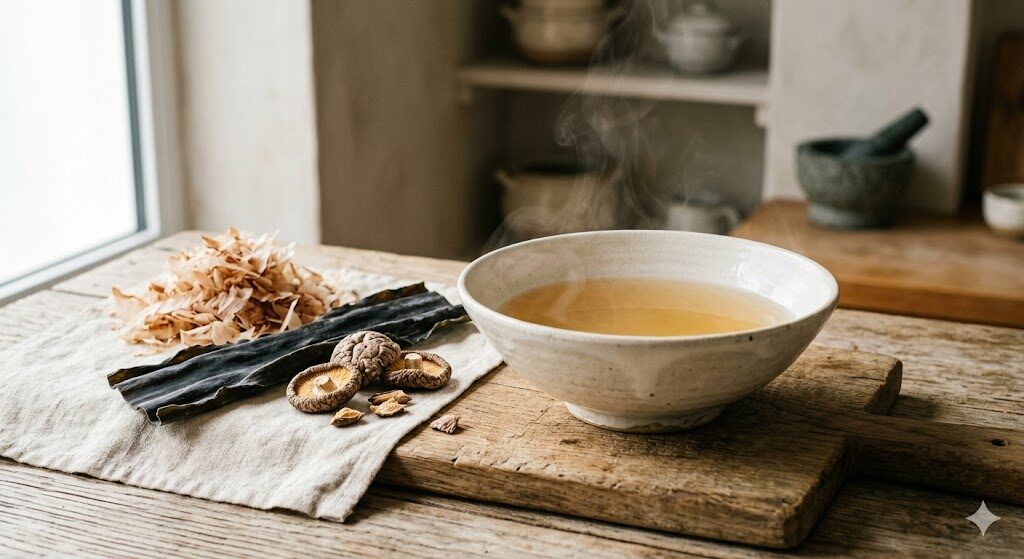
The most fundamental dashi, made from dried kombu kelp (Saccharina japonica or related species). Kombu is extraordinarily rich in glutamic acid — the compound responsible for umami. A single piece of kombu wiped clean and cold-steeped in water overnight produces a stock that tastes clean, oceanic, and deeply savory with virtually no effort.
Cold steep method: 10g kombu per 1 liter of cold water, refrigerate 8–12 hours, remove kombu, use the liquid. This is my preferred method — the cold extraction is cleaner and doesn’t develop the slippery texture that hot extraction can produce.
Hot method: 10g kombu per 1 liter cold water, bring slowly to just below simmering (60–65°C for 30 minutes, or simmer briefly), remove kombu before it reaches a full boil. Boiling extracts bitter compounds and creates a mucilaginous texture.
Kombu dashi is vegan, mild, and suits vegetables, tofu, and delicate dishes. It’s the foundation for shojin ryori (Buddhist temple cuisine) where no fish products are used.
Katsuobushi Dashi (Bonito Dashi)
Made from shaved katsuobushi — smoked, fermented, dried skipjack tuna. The fine shavings steep briefly in hot water and are immediately strained. The result is distinctly different from kombu dashi: smokier, more meaty in character, with a pronounced fish presence that’s not unpleasant but is unmistakably there.
Method: Bring 1 liter of water to just below boiling. Add 20–30g of katsuobushi. Remove from heat and steep 3–4 minutes. Pour through a fine strainer without pressing the flakes (pressing adds astringency). Do not squeeze or stir vigorously.
Katsuobushi dashi suits miso soup, noodle broths, and dishes where you want a more assertive, smoky stock character.
Awase Dashi (Combined Dashi)
The most commonly used dashi in everyday Japanese cooking — a combination of kombu and katsuobushi. The two ingredients create a synergistic umami effect: kombu’s glutamates and katsuobushi’s inosinates combine to produce an umami intensity that exceeds either ingredient alone. This is literally the scientific basis of umami synergy, documented in research.
Method: Start with the kombu cold steep or heat it in water to just below simmer. At 80°C, add the katsuobushi, bring just to a brief simmer, remove from heat, steep 4 minutes, strain completely. The result is a clear, golden, clean-tasting stock with remarkable depth.
Awase dashi is the default for most miso soups, clear soups (suimono), simmered dishes (nimono), and Japanese egg dishes like chawanmushi and dashi tamago. Most classic Japanese cooking recipes that simply say “dashi” mean awase dashi.
Niboshi / Iriko Dashi
Made from small dried sardines or anchovies (niboshi or iriko). More strongly flavored than bonito dashi with a distinctly fishy, mineral character. It’s the traditional dashi in parts of western Japan and is particularly associated with Kyushu-style miso soup and some Osaka dishes.
Method: Remove the heads and dark entrails from 15–20g of niboshi (this reduces bitterness), then cold-steep in 1 liter of water for 1 hour at room temperature, or bring to a gentle simmer for 10 minutes. Strain before using.
The strong, assertive character means niboshi dashi pairs best with bold miso (red or medium paste), root vegetables, and hearty simmered dishes where delicate kombu-bonito stock would be overwhelmed.
Shiitake Dashi
Dried shiitake mushrooms in cold water overnight produce a deeply umami stock that’s entirely different from kombu or bonito dashi. The dominant compound here is guanylate, which has yet a different umami character — earthier, richer, and more persistent on the palate than glutamate.
Shiitake dashi is used in vegetarian Japanese cooking, in dishes where a darker, earthier character is wanted, and in the dipping sauce for some noodle dishes. It can be intensely flavored — dilute as needed and use the soaked mushrooms themselves in the dish.
Using Dashi in Practice
Dashi degrades quickly — use within 3 days refrigerated or freeze in ice cube trays for up to 3 months. For daily use, granule dashi (hondashi) is a reasonable shortcut that produces acceptable results in about 30 seconds.
The rule of thumb: use kombu or shiitake dashi for vegan dishes and delicate flavors; use awase or bonito dashi for everyday Japanese cooking; use niboshi dashi for bold, rustic dishes.
Frequently Asked Questions
Can I reuse kombu after making dashi?
Yes. The second steep is weaker but still useful for cooking rice, adding to simmered dishes, or as a secondary dashi. The spent kombu can also be thinly sliced and cooked with soy sauce and mirin as a condiment called kobujime.
What’s the difference between first dashi and second dashi?
Ichiban dashi (first dashi) uses fresh kombu and katsuobushi and is bright, clean, and flavorful — used for clear soups and dishes where dashi is the star. Niban dashi (second dashi) re-steeps the same ingredients longer and is richer but murkier — better for miso soup and simmered dishes where the dashi is a supporting player.
Is instant dashi powder as good as homemade?
No, but it’s significantly better than nothing. Hondashi (Ajinomoto’s brand) is the standard and produces acceptable results quickly. For special dishes, homemade is worth the effort. For daily miso soup, hondashi is a reasonable practical choice.
Can I make dashi without fish for a vegan version?
Yes — kombu dashi and shiitake dashi are both completely vegan and produce excellent results. Combining them creates a vegan awase dashi with good umami synergy (glutamates from kombu plus guanylates from shiitake).