Every Japanese Green Tea Type Explained
Japanese green
This guide covers all the major Japanese green
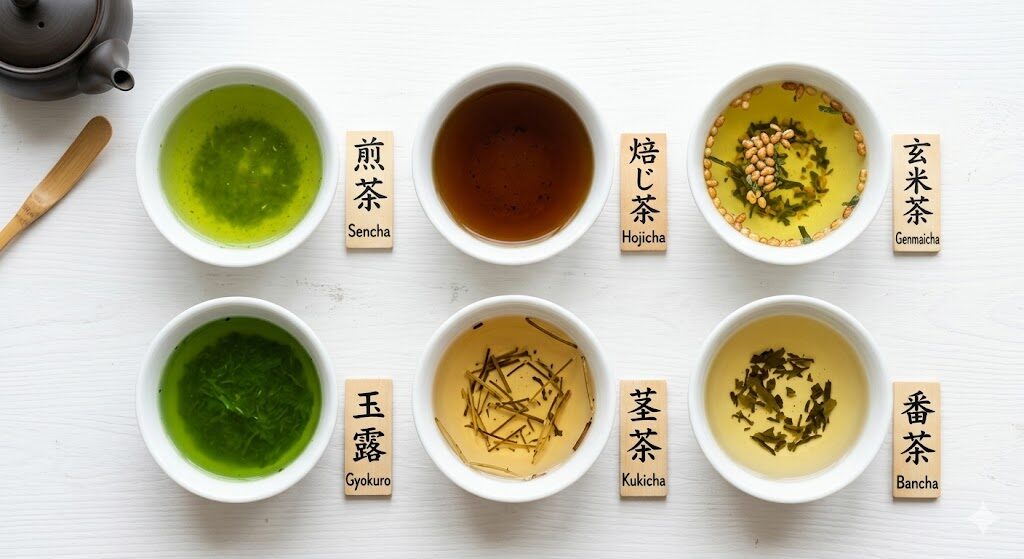
Quick Comparison: All Japanese Green Tea Types
| Tea Type | Caffeine | L-Theanine | Flavor Profile | Brew Temp | Best For |
|---|---|---|---|---|---|
| Gyokuro | High (35–55 mg) | Very high | Intense umami, sweet, seaweed-like, no bitterness | 50–60°C | Deliberate, focused |
| Matcha | High (60–80 mg) | High | Creamy, rich umami, slightly sweet, thick | 75–80°C | Tea ceremony, lattes, baking, sustained focus |
| Kabusecha | Moderate-high (25–40 mg) | High | Sweet, grassy, covered aroma (ooika), gentler than gyokuro | 65–70°C | Daily premium drinking; gyokuro alternative |
| Sencha (standard) | Moderate (20–35 mg) | Moderate | Bright, grassy, slightly sweet, balanced astringency | 75–80°C | Everyday quality |
| Shincha | High (30–50 mg) | Very high | Fresh, sweet, intensely grassy, light | 70–75°C | Seasonal celebration; spring drinking |
| Fukamushi Sencha | Moderate (20–35 mg) | Moderate | Rounder, less sharp than standard sencha, cloudier | 80°C | Everyday drinking; works well with food |
| Tamaryokucha | Moderate (20–35 mg) | Moderate | Fruity, mild, less grassy than sencha | 75–80°C | Variety; different approach to unshaded green |
| Bancha | Low (15–25 mg) | Low | Earthy, mild, woody, cereal-like | 85–95°C | All-day, with meals, evening, children |
| Kukicha | Very low (5–10 mg) | Moderate | Sweet, nutty, mild, light-colored | 70–80°C | Low-caffeine drinking; sweet gentle character |
| Genmaicha | Low (10–20 mg) | Low | Nutty, toasty, popcorn-like, warm | 85–90°C | Meals; afternoon; Japanese comfort |
| Hojicha | Very low (7–15 mg) | Low | Roasted, nutty, caramelized, warm | 90–100°C | Evening; low-stimulant; children; with food |
| Kyobancha | Near zero | Very low | Smoky, campfire-like, woody, earthy | 100°C | After meals; evening; caffeine-free equivalent |
Shade-Grown Teas: The Premium Category
The single biggest flavor and quality distinction in Japanese
Gyokuro (玉露)
Gyokuro is the most prestigious shade-grown Japanese
Gyokuro’s L-theanine concentration is roughly three times that of regular sencha, which explains both its intense sweetness and its distinctive calm-alertness effect. It’s brewed at unusually low temperatures (50–60°C) to preserve L-theanine extraction while limiting catechin bitterness — the opposite of most teas. A gyokuro brewed at 80°C will taste bitter and harsh; at 55°C it’s one of the most complex experiences in Japanese
Yame (Fukuoka) and Uji (Kyoto) are the primary producing regions for exceptional gyokuro, though Mie and Shizuoka also produce quality examples.
Matcha (抹茶)
Matcha is powdered
Ceremonial-grade matcha is whisked with hot water to produce a thick, frothy bowl of
Uji (Kyoto) dominates premium matcha production. Quality indicators: bright, vivid green (not olive or brown), fine particle size, sweet umami smell. Good matcha should not smell grassy or stale.
Kabusecha (冠茶)
Kabusecha occupies the middle ground between sencha and gyokuro: shaded for 7–14 days (compared to gyokuro’s 20–30), producing a
Mie Prefecture produces the largest volume; Uji and Shizuoka produce the most celebrated examples. Kabusecha is often a strong entry point for people who find gyokuro too intense but want to move beyond standard sencha.
Sencha and Its Variations: The Everyday Foundation
Sencha is Japan’s most consumed
Standard Sencha (煎茶)
Sencha’s flavor profile is bright, grassy, and slightly sweet with moderate astringency. First-flush sencha (ichibancha) from Shizuoka or Uji is the most complex; second-flush (nibancha) is solid but less nuanced. The correct brewing temperature is critical: 75–80°C produces the balanced result sencha is known for. Hotter water pulls more bitterness from the catechins; cooler water produces a sweeter, thinner result.
Sencha accounts for roughly 80% of Japanese
Shincha (新茶 — New Tea )
Shincha is the first-harvest sencha of the year — the
Shincha has the highest L-theanine content of any Japanese green
The traditional picking date is hachiju-hachiya — the 88th day from Risshun (start of spring, February 4), approximately May 1–2. This day was believed to produce the best possible
Fukamushi Sencha (深蒸し煎茶 — Deep-Steamed Sencha)
Fukamushi processing steams
Fukamushi was developed in Shizuoka to compensate for
Tamaryokucha (玉緑茶)
Tamaryokucha (also called guricha) is processed without the final rolling step that gives standard sencha its needle-like shape. The leaves curl into comma-like spirals instead. The flavor profile is milder and fruitier than sencha, with less of the sharp grassy quality. It’s primarily produced in Nagasaki and Saga prefectures in Kyushu, and in some Shizuoka operations. Relatively rare outside Japan, but worth trying for people interested in the range of unshaded Japanese green teas.
Lower-Caffeine and Everyday Teas
The lower tier of Japanese green
Bancha (番茶)
Bancha uses older, more mature leaves from the second, third, and fourth harvests — the material that remains after the premium first-flush has been collected. The mature leaves have lower concentrations of everything that makes premium
Bancha brews at 85–95°C — almost boiling — and tolerates brewing errors that would ruin a sencha. It’s the practical everyday
Kukicha (茎茶 — Twig Tea )
Kukicha is made from stems, stalks, and twigs pruned from
The quality of kukicha depends heavily on its source material. Kukicha from gyokuro or matcha processing (sometimes called karigane) inherits elevated L-theanine from the shade-grown source and can be surprisingly sweet and complex. Kukicha from sencha production is more straightforwardly mild and nutty. It’s used in macrobiotic diets and served to children in Japan — a warm, sweet, essentially caffeine-free option that satisfies the same role herbal
Genmaicha (玄米茶)
Genmaicha blends green
The flavor is uniquely satisfying: the nuttiness and warmth of roasted grain alongside the grassy body of green
Hojicha (ほうじ茶)
Hojicha is roasted green
Hojicha brews at near-boiling water (90–100°C) because the roasting has eliminated the temperature-sensitive compounds that require lower temperatures in other teas. It works as hot
Understanding the Shade vs. Sun Difference
The most important factor in Japanese green
| Gyokuro | Matcha/Tencha | Kabusecha | Sencha | Bancha/Hojicha | |
|---|---|---|---|---|---|
| Shade days | 20–30 | 20–30 | 7–14 | 0 | 0 |
| L-theanine | ★★★★★ | ★★★★★ | ★★★★ | ★★★ | ★★ |
| Catechins | ★★ | ★★ | ★★★ | ★★★★ | ★★★★ |
| Chlorophyll | ★★★★★ | ★★★★★ | ★★★★ | ★★★ | ★★ |
| Caffeine | ★★★★ | ★★★★★ | ★★★★ | ★★★ | ★★ |
| Sweetness/umami | ★★★★★ | ★★★★★ | ★★★★ | ★★★ | ★★ |
| Astringency | ★ | ★ | ★★ | ★★★ | ★★ |
| Price | ★★★★★ | ★★★★★ | ★★★★ | ★★★ | ★ |
Brewing Temperature Reference
Water temperature is the most important variable in green
| Tea | Temperature | Effect of Getting It Right | Effect of Brewing Too Hot |
|---|---|---|---|
| Gyokuro | 50–60°C (122–140°F) | Maximum umami, no bitterness | Harsh, bitter, completely different |
| Kabusecha | 65–70°C (149–158°F) | Sweet, ooika aroma prominent | More astringent, loses covered aroma |
| Sencha / Shincha | 70–80°C (158–176°F) | Balanced grass and sweetness | Bitter, astringent, loses brightness |
| Fukamushi Sencha | 75–80°C (167–176°F) | Round, rich, full-bodied | Slightly harsh, loses roundness |
| Kukicha | 80–90°C (176–194°F) | Sweet, nutty, light | Slightly more astringent, manageable |
| Genmaicha | 85–90°C (185–194°F) | Full nutty-grassy balance | Forgiving; near-boiling still works |
| Bancha | 85–95°C (185–203°F) | Earthy, mild, mineral | Very forgiving; boiling still drinkable |
| Hojicha | 90–100°C (194–212°F) | Full roasted aroma released | No problem; roasted teas need heat |
Choosing the Right Tea for the Moment
- Morning focus work: Gyokuro or kabusecha — highest L-theanine for calm alertness without jitters
- Everyday morning: Sencha or shincha — bright, energizing, appropriate caffeine
- With breakfast or lunch: Genmaicha or bancha — works with food, doesn’t overpower
- Afternoon: Sencha (if you can handle caffeine), bancha or kukicha (if lower caffeine preferred)
- With dinner: Bancha or hojicha — mild enough not to compete with food, low caffeine
- Evening: Hojicha or kyobancha — very low caffeine, satisfying warmth
- For children: Hojicha, kukicha, or genmaicha — low caffeine, approachable flavor
- Tea ceremony or special occasion: Matcha (ceremonial grade) or gyokuro
- Baking and cooking: Matcha (culinary grade), hojicha powder
- Cold brew: Sencha, bancha, or hojicha cold-brewed are all excellent; sencha cold brew is particularly clean and refreshing
Frequently Asked Questions
What is the most popular Japanese green tea ?
What’s the difference between gyokuro and matcha?
Both are shade-grown Japanese teas with high L-theanine content, but they’re produced and consumed differently. Gyokuro is brewed as whole leaves in water and the leaves are removed after steeping — you drink the extraction. Matcha is ground into powder and the entire leaf is consumed in the bowl. Matcha therefore delivers more total caffeine, L-theanine, and chlorophyll per serving. Gyokuro is brewed at 50–60°C; matcha at 75–80°C. Both are expensive relative to unshaded teas, but from different producing regions (Yame/Uji for gyokuro; Uji/Nishio for matcha).
Why is matcha expensive?
Multiple cost drivers: shade growing (requires labor-intensive shade structure installation and management); selective harvest of only the most tender leaves; the tencha processing stage (steaming, de-stemming, de-veining) before grinding; and the stone-milling process itself, which is slow (a stone mill produces only 30–40g of matcha powder per hour) and produces significant heat that must be managed to preserve freshness. High-quality stone-milled ceremonial matcha from certified Uji farms represents one of the highest labor inputs per gram of any
Is hojicha and genmaicha the same thing?
No. Hojicha is roasted green
What Japanese green tea is lowest in caffeine?
Kyobancha (Kyoto’s heavily roasted late-harvest bancha) has caffeine levels so close to zero it’s served to children and recommended for evening consumption. Hojicha is next at 7–15 mg per cup. Kukicha (twig
What does the Japanese tea ceremony use?
The