How to Make Tempura at Home: The Science of Perfect Batter
Tempura has a reputation for being difficult. It shows up on lists of Japanese techniques that are too hard for home cooks, alongside ramen broth and kaiseki multi-course preparation. This reputation is exaggerated. The fundamentals of tempura are genuinely simple — but they depend on understanding a few principles that most recipes don’t explain well.
The Science: Why Cold, Under-Mixed Batter Works
Tempura batter violates almost every instinct about making batter. Lumps are acceptable. Cold water is required. Ice is added directly to the mixture. The batter is made seconds before frying, not in advance.
Here’s why: wheat flour contains glutenin and gliadin proteins. When combined with water and agitated, these form gluten — the network that gives bread its chew and holds cakes together. In tempura, gluten development is the enemy. Glutinous batter fries into a thick, doughy, bread-like coating. You want a coating so thin and light it shatters.
Cold water slows gluten formation. Minimal mixing leaves the flour-water combination barely combined — just enough to coat. Working quickly and using the batter immediately ensures the limited gluten that did form doesn’t continue developing. Lumps of dry flour in the batter are not a flaw; they’re intentional and fry into the irregular, lacy surface that defines good tempura.
The Batter Recipe
For 4 servings:
- 1 egg yolk
- 200ml ice-cold water
- 100g cake flour or all-purpose flour
Beat the egg yolk briefly. Add the cold water. Add flour all at once. Mix with chopsticks in 10–15 strokes — just enough to roughly combine. Do not stir in circular motions or whisk; chopsticks make under-mixing easier. Batter will be lumpy. This is correct. Use immediately.
The ice in the water matters — keep a bowl of ice water and set your batter bowl in it to keep everything cold throughout frying.
The Oil: Temperature Is Everything
Tempura fries at 170–180°C. Too low (under 160°C) and the batter absorbs oil before setting — producing greasy, heavy tempura. Too high (over 190°C) and the outside burns before the inside cooks.
Test oil temperature with a small drop of batter: at correct temperature, it sinks slightly, then rises quickly to the surface. At too-low temperature, it sinks and stays down. At too-high temperature, it immediately splatters and stays on the surface.
Use a neutral, high-smoke-point oil. Traditional Japanese tempura uses sesame oil (or a blend with neutral oil) for flavor, but pure sesame oil is expensive for home use. Vegetable, canola, or rice bran oil all work. The quantity matters — you need enough oil for things to float freely (at least 4–5cm depth in your pan).
Best Ingredients for Tempura
Shrimp (Ebi)
The classic. Shell the shrimp, remove the vein, make 4–5 shallow cuts on the belly side, then straighten by pressing gently on the cutting board. This prevents curling during frying and produces the distinctive straight tempura shrimp shape.
Vegetables
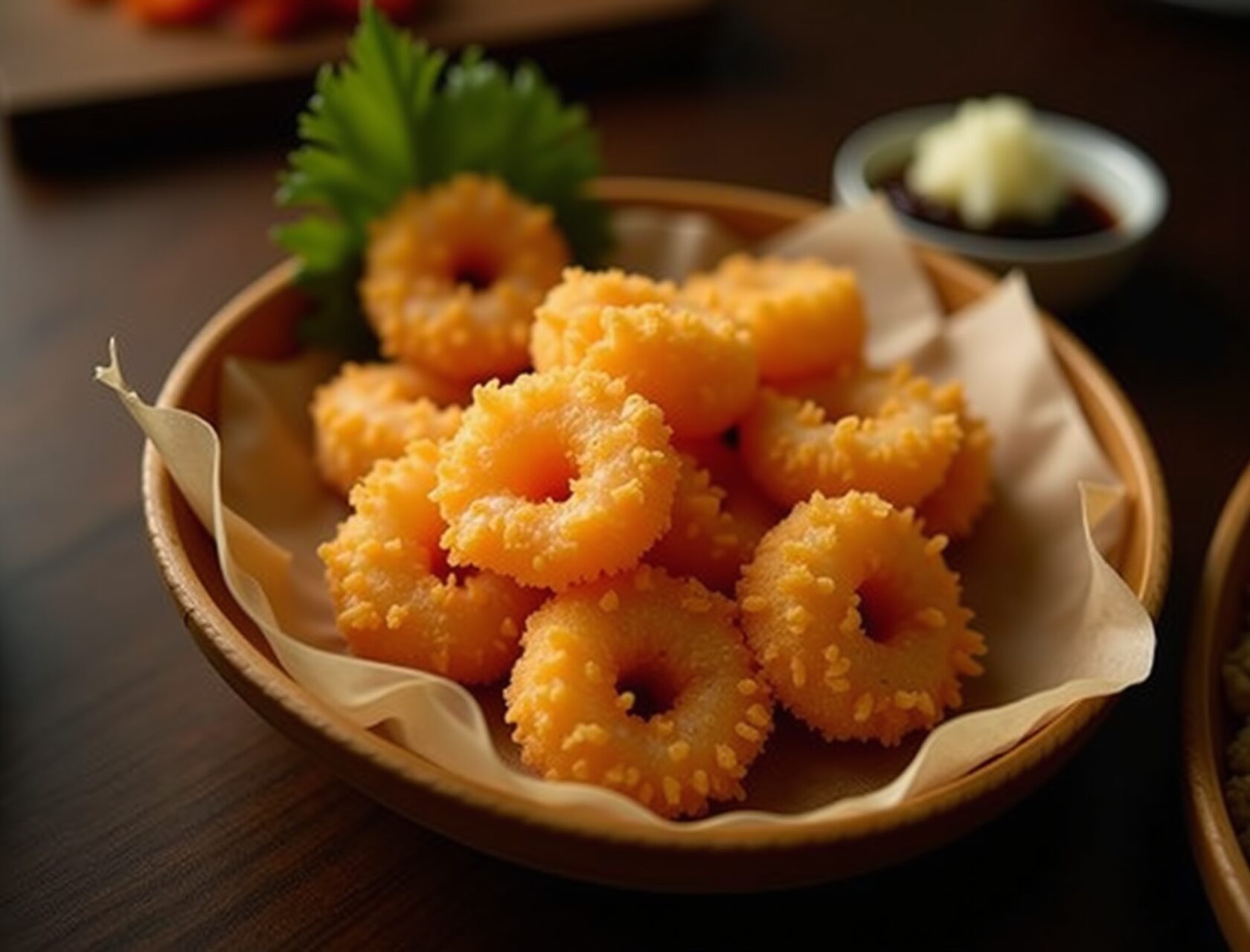
Renkon (lotus root) — slice into rounds, the holes create beautiful texture. Sweet potato — thick slices that need the full frying time. Kabocha squash — sweet, firm, fries beautifully. Green beans — quickly fried whole. Shiso leaves — fry for 30–40 seconds on one side only, extraordinary texture.
Cut everything to similar thickness to cook evenly. Pat dry before battering — surface moisture is the enemy of tempura crispness.
White Fish
Whiting, cod, grouper. Fish fillets at about 1cm thickness fry in 30 seconds to 1 minute. Season the fish lightly with salt before battering.
The Frying Technique
Work in small batches — adding too much at once drops the oil temperature and results in greasy tempura. Dip ingredients briefly, let excess batter drip off, then lower carefully into the oil. Fry without moving for 30–40 seconds before gently flipping. Total frying time:
- Shrimp: 30 seconds to 1 minute
- Thin vegetables: 1–2 minutes
- Dense vegetables (sweet potato, kabocha): 3–4 minutes
- Fish: 30 seconds to 1 minute
Remove, drain on a wire rack (not paper towels — steam trapped underneath makes tempura soggy). Serve immediately.
Tentsuyu (Dipping Sauce)
Combine 200ml dashi, 50ml mirin, and 50ml soy sauce. Bring to a brief simmer to cook off alcohol. Serve warm with finely grated daikon and grated ginger on the side. The daikon is stirred into the sauce and provides freshness against the fried coating.
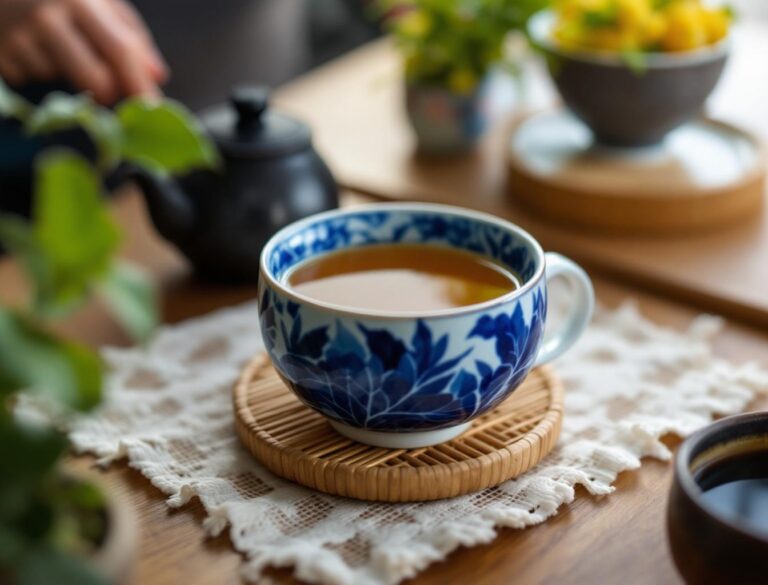
A cup of warm genmaicha alongside tempura is a particularly good pairing — the toasty grain notes complement the lightly fried coating.
Frequently Asked Questions
Why is my tempura batter thick and doughy?
Over-mixing or using water that wasn’t cold enough. Both develop gluten. Start fresh: ice-cold water, minimal mixing, use immediately.
Can I make tempura batter in advance?
No — tempura batter is made immediately before use. Even 10–15 minutes of sitting allows gluten to develop and ruins the texture. Make small batches as needed.
What’s the secret to crispy tempura?
Three factors: cold batter, oil at correct temperature (170–180°C), and serving immediately. Tempura goes soft within minutes after frying, which is why Japanese tempura restaurants fry to order.
Can I reheat leftover tempura?
In a dry pan or briefly in an oven at 200°C, tempura revives reasonably well. Avoid the microwave — it steams the coating and produces exactly the soggy texture you’re trying to avoid.
What makes Japanese tempura different from Western fried batter?
The underdevelopment of gluten is the primary difference — Japanese tempura batter aims for minimal mixing and cold temperatures to prevent the protein network that creates chewy, thick coatings. The result is lighter, crisper, and less bread-like than beer batter or other Western frying batters.