Best Cutting Board for Japanese Knives: Which Material Protects the Blade?
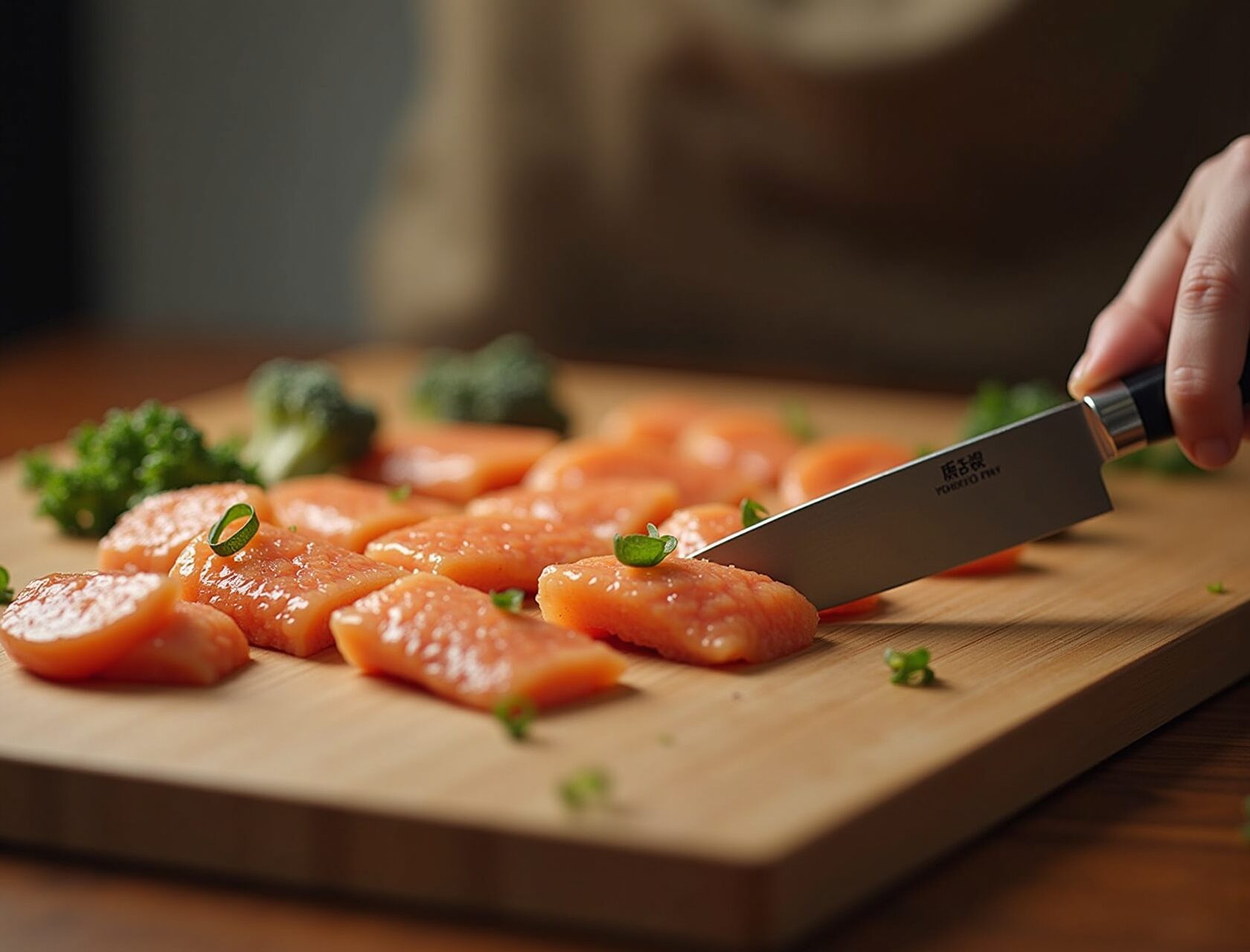
Japanese kitchen knives are precision instruments — thin-ground, hard steel, often sharpened to 15° edges or less. They are fundamentally incompatible with hard cutting surfaces. Use a Japanese knife on glass, stone, hard plastic, or even some dense hardwoods regularly, and you will dull or chip the edge within weeks. The cutting board matters as much as the knife.
Here’s what works, what doesn’t, and which specific boards to consider.
Why Japanese Knives Need a Specific Board Type
The key variable is hardness — specifically, the hardness of the cutting surface relative to the knife steel.
A typical Western chef’s knife is made from steel around 55-58 HRC (Rockwell hardness). It’s hard enough for regular use but soft enough to have some “give” — it deflects slightly on impact rather than transmitting all impact energy to the edge. Western knife manufacturers design their blades knowing they’ll hit hard surfaces repeatedly.
A Japanese knife is typically 60-67 HRC or higher. Higher hardness allows a thinner, more refined edge — which is why Japanese knives cut so precisely. But higher hardness means more brittleness. A hard edge that hits a hard surface chips or rolls rather than deflects. The thin geometry makes this worse: there’s less material behind the edge to absorb impact.
The solution: a cutting surface that yields to the blade rather than stopping it hard. The edge should sink slightly into the surface, not bounce off it.
Materials Ranked: Best to Worst for Japanese Knives
Best: Japanese Softwood (Hinoki, Paulownia)
Hinoki (Japanese cypress) and paulownia are the traditional Japanese choices for exactly this reason. Both are softer than Western hardwoods, allowing the blade to sink slightly into the surface on each cut. The result: the edge is preserved dramatically longer than on harder surfaces.
Hinoki has the additional benefit of natural antibacterial properties from hinokitiol. Paulownia is even lighter and softer — the most edge-friendly common cutting board wood available. Both require no oiling (unlike Western hardwoods) and respond well to sanding when the surface wears.
Browse our hinoki cutting boards — available in multiple sizes.
Excellent: Ginkgo Wood
Ginkgo (icho) wood occupies an interesting middle position — slightly denser than hinoki but still softer than Western hardwoods. Professional Japanese kitchens, particularly high-end sushi restaurants, favor thick ginkgo boards for their combination of slight density (stability) and relative softness (edge preservation). The wood is also believed to have natural self-healing properties — knife marks close over time.
Shop our ginkgo cutting boards.
Good: End-Grain Walnut or Maple
End-grain Western hardwood boards (maple, walnut) are a reasonable compromise if you don’t have access to Japanese boards. The end-grain orientation means the wood fibers run vertically — the blade sinks between the fibers rather than across them, similar to cutting into a brush. End-grain boards have no proven edge-retention advantage over long-grain boards of the same species, based on scientific sharpness testing (based on Knife Grinders study).
Walnut is slightly softer than maple and generally preferred for Japanese knives among Western wood options. Regular mineral oil application is required — unlike hinoki.
Acceptable: Soft Plastic (Polyethylene)
High-density polyethylene (HDPE) boards are common in professional kitchens for sanitation reasons. They’re easier to sanitize than wood and meet commercial kitchen standards. Soft HDPE (like a typical white commercial kitchen board) is relatively edge-friendly. However:
- High-density polypropylene is actually highly edge-friendly and has been shown to improve edge retention through a burnishing effect (based on Knife Grinders study). — feel the surface before buying
- Plastic boards develop deep grooves that harbor bacteria over time
- The feel under a Japanese knife is less satisfying than wood
Avoid: Bamboo
Bamboo is marketed as eco-friendly and is popular in kitchen retail, but bamboo boards are harder than most hardwoods due to their silica content. Using a Japanese knife on bamboo will rapidly dull the edge. Bamboo is a fine choice for Western knives but incompatible with Japanese knife care.
Absolutely Avoid: Glass, Stone, Ceramic
Glass cutting boards, marble slabs, and ceramic surfaces are uniformly terrible for knife edges of any type — but especially for Japanese knives. A single session on glass can visibly damage a finely sharpened Japanese edge. These materials should never be used as cutting surfaces with quality knives.
Our Specific Recommendations
Best Overall: Hinoki, 36x24cm, 3cm+ Thick
A 3-4cm thick hinoki board in a medium-large size covers most home kitchen prep work and provides sufficient surface area for any technique. The thickness adds stability and allows multiple resurfacings over the board’s life. Our hinoki cutting boards start at this specification.
Best for Professional Use: Thick Ginkgo Board
A 5-6cm thick ginkgo board is the choice of many professional Japanese chefs for its stability and edge preservation. Heavier investment but lasts decades in a working kitchen.
Best Budget Option: Soft HDPE Professional Board
If budget is the primary constraint, a commercial-grade HDPE board (white or color-coded) provides acceptable edge preservation at low cost. Not ideal, but meaningfully better than bamboo or glass.
Caring for Your Japanese Knife Board
Regardless of the board material, good cutting surface maintenance extends both the board and your knife edges:
- Keep the surface smooth — resurface with fine sandpaper when deep grooves accumulate
- Never let the board dry out under only one surface (causes warping)
- Hinoki boards do require periodic oiling to keep the wood in good condition and prevent drying (based on MUSASHI).
- For walnut and maple end-grain: monthly mineral oil application
Frequently Asked Questions
Can I use a bamboo board with Japanese knives?
Not recommended. Bamboo’s high hardness will dull Japanese knife edges quickly. The eco-friendly marketing doesn’t change the hardness properties.
Does the thickness of a cutting board matter for knives?
Thicker boards are more stable (don’t slide or flex) and absorb impact better. For heavy cutting tasks, 3cm+ thickness is preferred. Thin boards flex underfoot during heavy cutting, which transfers uneven forces to the knife edge.
Is a hinoki board good for meat and fish?
Yes. Hinoki’s antibacterial properties are genuine. Standard food safety practices (thorough washing, complete drying after raw meat use) apply regardless.
Why does my Japanese knife chip even on a wood board?
Chipping can result from: hitting a hard inclusion in the food (seeds, pit, bone), a technique issue (twisting or lateral movement), or sharpening at too fine an angle for the steel’s hardness. Board surface isn’t always the culprit.
What size cutting board should I use with Japanese knives?
Bigger is generally better — more room to work means less awkward angles and less stress on the blade from boundary-of-board cuts. Minimum 30x20cm for practical work; 40x28cm is comfortable for most home cooking.