Loaded Potato Soup Recipe

What is Loaded Potato Soup?
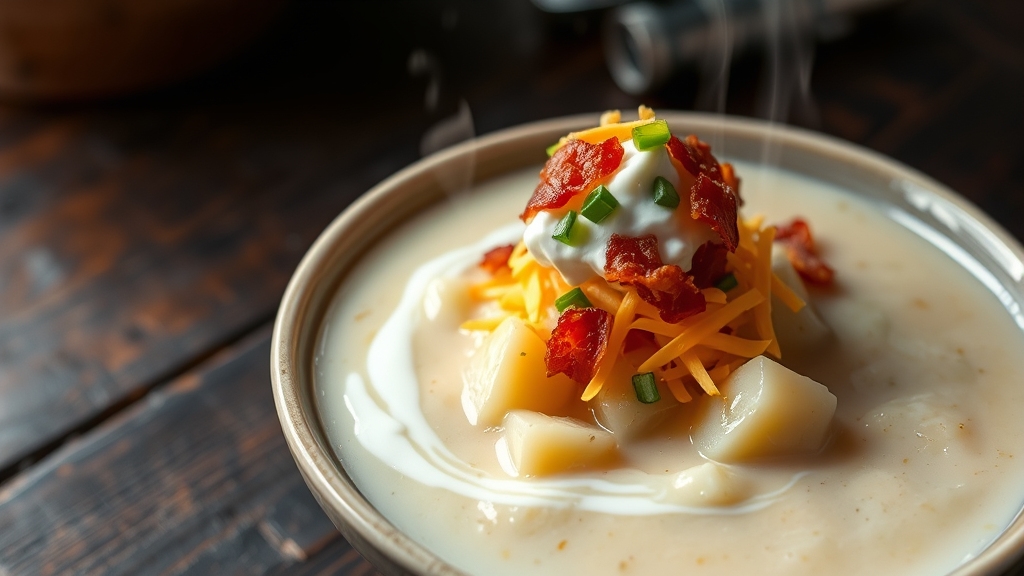
Loaded potato soup is the ultimate comfort food classic that combines the natural creaminess of russet potatoes with savory bacon, aromatic onions, and rich chicken stock. This hearty dish has earned its place in the pantheon of comfort foods for good reason – it delivers restaurant-quality satisfaction in every spoonful while being remarkably simple to prepare at home.
The science behind potato soup’s comforting quality lies in its starch content. During cooking, potatoes release amylose, creating that signature creamy texture without necessarily requiring heavy cream (though we’ll be using some in this recipe for extra richness!). What sets truly superior potato soup apart is technique: properly sautéing aromatics, selecting the right potato variety, and mastering the perfect simmer time.
What Does Loaded Potato Soup Taste Like?
Loaded potato soup offers a harmonious blend of flavors and textures that dance across your palate. The first spoonful delivers velvety smoothness from the starchy potatoes, followed by the savory richness of bacon and the subtle sweetness of sautéed onions. The creamy base carries hints of garlic that complement rather than overwhelm the natural potato flavor.
Each bite provides textural contrast – tender potato chunks against crispy bacon bits, and the occasional pop of freshness from chopped chives or green onions. The soup coats your mouth with a silky richness that feels indulgent without being heavy, while toppings like sharp cheddar and sour cream add tangy notes that balance the soup’s richness perfectly.
The Other Potato Soup Variation – Leek and Potato
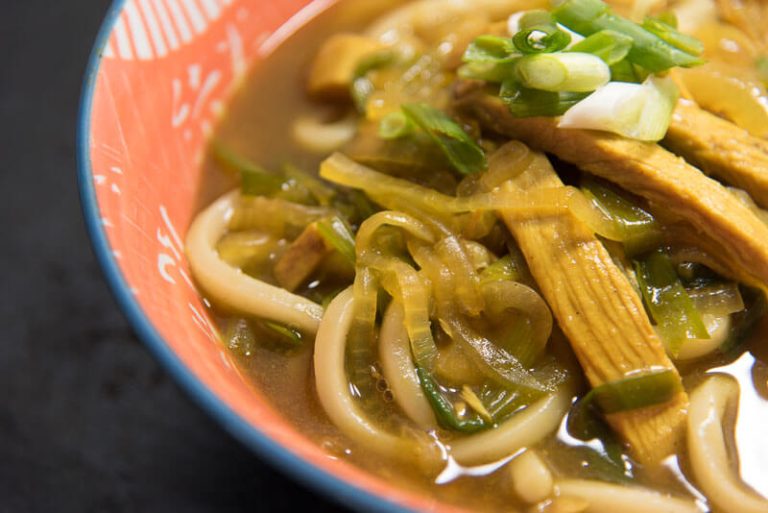
While loaded potato soup embraces richness with its bacon and dairy components, the classic leek and potato soup (sometimes called vichyssoise when served cold) offers a more delicate, refined approach. This variation substitutes leeks for onions, creating a more subtle aromatic base. It often skips the bacon entirely, focusing instead on the clean flavors of potato and leek enhanced with herbs like thyme or bay leaf.
Leek and potato soup typically uses less cream and might incorporate white wine for acidity. The texture is often smoother, with the soup being fully puréed rather than maintaining chunks of potato. While loaded potato soup celebrates abundance with multiple toppings, leek and potato soup might be finished with just a sprinkle of chives or a swirl of olive oil, allowing the simplicity of its ingredients to shine.
Don’t Want to Make Loaded Potato Soup?
If you’re craving potato soup but don’t have time to make it from scratch, several alternatives can satisfy your comfort food craving:
- Quality premade soups from the refrigerated section of specialty grocery stores often provide better flavor than canned options
- Use instant potato flakes to thicken a quick soup made with store-bought chicken broth, sautéed onions, and pre-cooked bacon bits
- Try a “semi-homemade” approach by doctoring canned potato soup with fresh toppings like cheese, bacon, and chives
- Consider a baked potato bar instead, which delivers similar flavors in a different format without the soup-making process
Recipe History/Cultural Context
Potato soup appears in culinary traditions across Europe, particularly in regions where potatoes became dietary staples after being introduced from the Americas. In Ireland, simple potato soups sustained generations through harsh winters. German potato soups often incorporated sausage and herbs, while Eastern European versions might include mushrooms and dill.
The “loaded” version we know today, with its abundance of toppings and additions, has roots in American cuisine, particularly the popularity of loaded baked potatoes that emerged in steakhouse culture during the mid-20th century. The concept of transferring those beloved toppings—bacon, cheese, sour cream, and chives—to a creamy soup was a natural evolution that combined traditional soup-making techniques with American preference for hearty, flavorful comfort foods.
The Secret to Perfect Loaded Potato Soup: The One Thing You Must Know

The single most crucial element to exceptional potato soup is proper potato selection and preparation. Russet potatoes are essential for their high starch content, which naturally thickens and enriches the soup without requiring excessive flour or cream. Cut them into uniform ½-inch cubes to ensure even cooking and partial mashing once tender.
The technique of partially mashing some potatoes against the side of the pot while leaving others intact creates the ideal texture – simultaneously creamy and chunky. This balanced texture is what separates restaurant-quality potato soup from homestyle versions. Resist the urge to purée the soup completely; the varying textures are what make each spoonful interesting and satisfying.
Don’t Fear the Curdling!
Many home cooks worry about dairy curdling when added to hot soups, resulting in a grainy texture rather than smooth creaminess. This concern often leads to timid addition of dairy or skipping it altogether, robbing the soup of its full potential richness.
Overcome this fear with simple techniques: first, always reduce the heat before adding dairy components like milk, cream, or sour cream. Second, temper your dairy by gradually whisking a small amount of the hot soup into it before adding the mixture back to the pot. Finally, once dairy has been added, never allow the soup to boil again. Keep it at a gentle simmer and you’ll achieve perfectly smooth, creamy results every time.

Equipment Needed
- Heavy-bottomed Dutch oven or stockpot (6-8 quart capacity)
- Sharp chef’s knife for precise potato cubing
- Sturdy wooden spoon for stirring
- Potato masher for partial mashing
- Ladle for serving
- Measuring cups and spoons
- Cutting board with ample surface area
- Heat-resistant silicone spatula
Tips
- Save time by cooking bacon in the oven on a sheet pan while preparing other ingredients
- For extra flavor, use the bacon fat to sauté your onions instead of butter
- Create a more robust flavor by using homemade chicken stock if available
- Add garlic only after onions have softened to prevent burning
- For silkier texture, warm your dairy ingredients to room temperature before adding them to the soup
- Taste and adjust seasonings before serving, as potatoes tend to absorb salt during cooking
Recipe Modifications
Dietary Adjustments:
- Vegetarian: Replace chicken stock with vegetable broth and omit bacon or use plant-based bacon bits
- Gluten-Free: Thicken with cornstarch (2 tbsp) instead of flour and verify all broths are certified gluten-free
- Dairy-Free: Substitute olive oil for butter, coconut milk for dairy cream, and nutritional yeast for cheese flavor
Flavor Variations:
- Southwest Style: Add roasted corn, diced jalapeño, and cumin
- Seafood Upgrade: Incorporate flaked smoked salmon and fresh dill
- Loaded Baked Potato: Top with crispy potato skins for added texture
Loaded Potato Soup – Common Questions
What’s Loaded Potato Soup Made of?
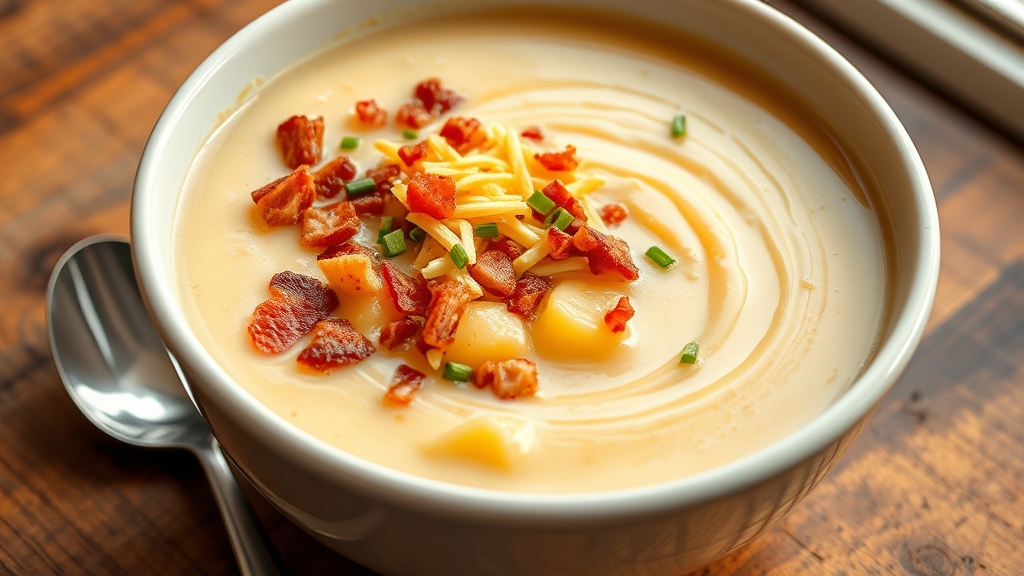
The foundation of loaded potato soup consists of:
- Russet potatoes: Their high starch content creates ideal creaminess
- Bacon: Provides smoky flavor and crispy texture contrast
- Onions and garlic: Create an aromatic base
- Chicken stock: Forms the liquid foundation with depth of flavor
- Dairy: Heavy cream, milk, and/or sour cream contribute richness
- Cheese: Usually sharp cheddar, adds savory depth and creaminess
- Garnishes: Fresh chives or green onions add color and bright flavor
Each ingredient plays a crucial role in the soup’s overall flavor profile and texture.
Is Loaded Potato Soup Healthy?
Traditional loaded potato soup prioritizes comfort and flavor over nutritional considerations. While potatoes themselves offer vitamin C, potassium, and fiber, the additions of bacon, heavy cream, and cheese contribute significant fat and calories.
However, you can create healthier versions by:
- Using turkey bacon or reducing bacon quantity
- Substituting half-and-half or whole milk for heavy cream
- Incorporating additional vegetables like carrots or celery
- Using reduced-fat cheese in moderation
- Adding extra herbs for flavor without additional calories
Even in its traditional form, loaded potato soup can be part of a balanced diet when served with a side salad and consumed in moderate portions.
Is Loaded Potato Soup the Same as Baked Potato Soup?
While very similar, these soups have subtle differences in preparation and texture. Loaded potato soup typically starts with raw potatoes that cook directly in the soup base. Baked potato soup often begins with potatoes that have been baked or roasted first, imparting a deeper, slightly caramelized flavor to the final dish.
The distinction can also be regional or simply a matter of naming convention. Both varieties typically feature similar toppings inspired by loaded baked potatoes: bacon, cheese, sour cream, and chives. The flavor profiles are comparable, with baked potato soup sometimes having a slightly more complex, roasted flavor undertone.
Can You Use Loaded Potato Soup in Other Dishes?
Absolutely! Leftover loaded potato soup is remarkably versatile:
- Use as a creamy sauce for baked potatoes or roasted vegetables
- Thin slightly with milk and use as a base for a casserole
- Add to shepherd’s pie as a flavorful alternative to standard mashed potato topping
- Use as the binding liquid in savory bread pudding
- Reduce slightly and use as a filling for savory hand pies or empanadas
- Incorporate into breakfast by pouring over toast and topping with a fried egg
Serving Suggestions
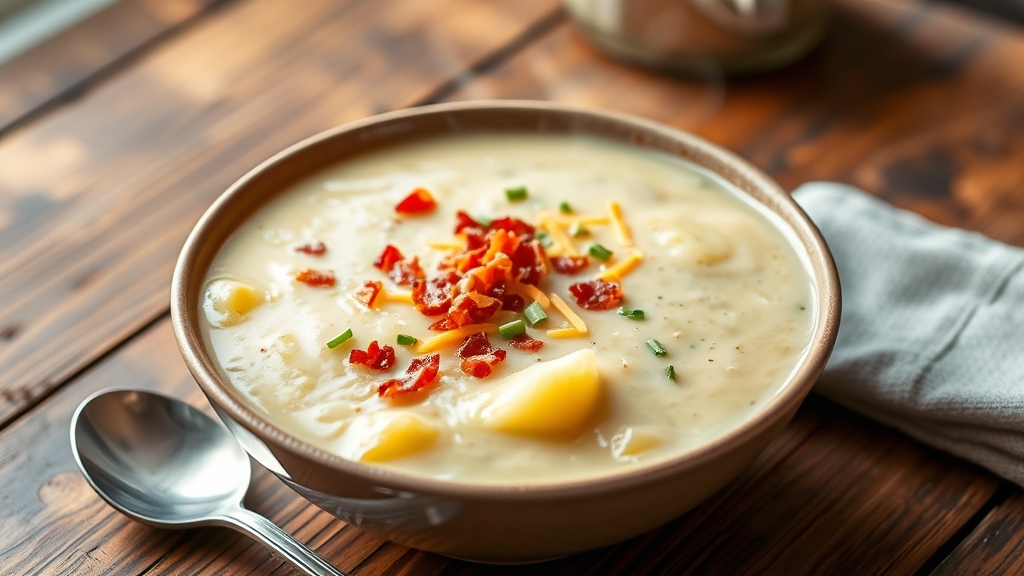
Elevate your potato soup meal with these thoughtful accompaniments:
- Serve in warmed bowls to maintain temperature throughout the meal
- Accompany with crusty sourdough bread or garlic bread for dipping
- Balance the richness with a crisp side salad dressed with vinaigrette
- For beverages, pair with a light-bodied white wine like Pinot Grigio or a crisp lager
- For casual gatherings, create a “soup bar” with various toppings for customization
- Consider small, individual bread bowls for an impressive presentation
Make-Ahead and Storage Tips
Potato soup can be made ahead and stored with minimal quality loss:
| Storage Method | Duration | Quality Notes |
|---|---|---|
| Refrigerator | 3-4 days | Maintains texture |
| Freezer | 2-3 months | Slight texture change |
| Meal prep containers | 3-4 days | Perfect for portioning |
| Slow cooker (warm) | 2-3 hours | For serving gatherings |
| Vacuum sealed | 4-5 days | Best freshness retention |
When reheating, warm slowly over medium-low heat, stirring occasionally. Add fresh milk or cream if the consistency needs adjustment. Never boil when reheating as this may cause dairy separation. For best results when freezing, consider leaving out the dairy and adding it fresh when reheating.
Loaded Potato Soup Recipe

A creamy, hearty potato soup loaded with bacon, cheese, and topped with sour cream and chives – the ultimate comfort food.
- Prep Time: 10 minutes
- Cook Time: 20 minutes
- Total Time: 30 minutes
- Yield: 6 bowls 1x
- Cuisine: American
Ingredients
For the Soup Base:
- 2 pounds russet potatoes, peeled and diced into 1/2-inch cubes
- 8 ounces bacon, diced
- 1 medium yellow onion, finely diced
- 2 cloves garlic, minced
- 1/4 cup all-purpose flour
- 4 cups chicken stock
- 2 cups whole milk
- 1 cup heavy cream
- 1 teaspoon salt (adjust to taste)
- 1/2 teaspoon black pepper
- 2 tablespoons butter
For Toppings:
- 1 cup sharp cheddar cheese, shredded
- 1/2 cup sour cream
- 1/4 cup chives or green onions, finely chopped
- Extra bacon bits from the soup preparation
Instructions
- In a large Dutch oven or heavy-bottomed pot, cook diced bacon over medium heat until crispy. Remove bacon with a slotted spoon and set aside on paper towels, leaving the bacon fat in the pot.
- Add butter to the bacon fat and melt. Add diced onion and sauté until translucent, about 3-4 minutes.
- Add minced garlic and cook for another 30 seconds until fragrant.
- Sprinkle flour over the onion mixture and stir constantly for 1 minute to create a roux.
- Gradually whisk in chicken stock, stirring continuously to prevent lumps from forming.
- Add diced potatoes, salt, and pepper. Bring to a simmer.
- Reduce heat to medium-low, cover partially, and cook until potatoes are tender, about 15-20 minutes.
- Using a potato masher or the back of a wooden spoon, mash some of the potatoes against the side of the pot while leaving others whole for texture.
- Reduce heat to low. Gradually stir in milk and heavy cream.
- Add half of the reserved bacon back to the soup and stir to combine.
- Allow the soup to gently heat through for 5 minutes, being careful not to boil.
- Taste and adjust seasonings as needed.
- Serve hot, topped with shredded cheddar cheese, a dollop of sour cream, remaining bacon bits, and chopped chives.
Notes
For extra richness, use the bacon fat to sauté your onions. Warm dairy ingredients before adding to prevent curdling.
Nutrition
- Serving Size: per serving
- Calories: 480
- Fat: 32 g
- Carbohydrates: 38 g
- Protein: 12 g