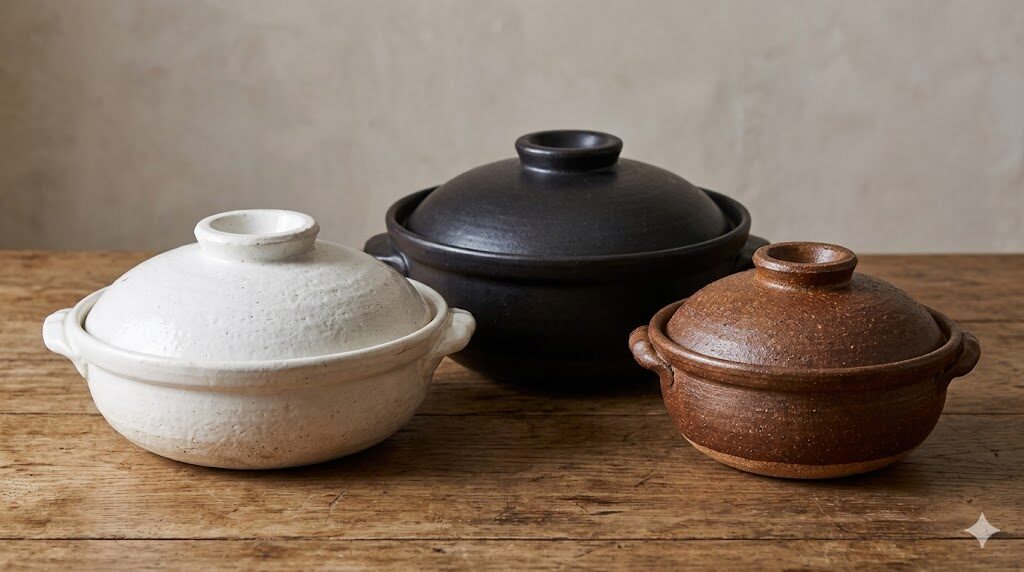
Best Donabe (Japanese Clay Pot): Complete Buying Guide and Comparison
A donabe is the Japanese clay cooking pot used for hot pots (nabe), rice, soups, stews, and slow cooking. It’s one of those kitchen tools that quietly transforms the way you cook — the clay construction provides even heat distribution and gentle, moist cooking that’s impossible to replicate with a metal pot. If you cook Japanese food regularly, a donabe is worth the investment. Here’s how to choose the right one.
What Is a Donabe?
Donabe (土鍋, “earthen pot”) is a traditional Japanese clay cooking vessel. Made from coarse, porous clay, donabe pots are used on stovetops and in ovens to cook rice, make hot pots (sukiyaki, shabu-shabu), prepare soups, steam, and slow-cook stews. Unlike metal cookware, the clay walls slowly absorb and radiate heat, resulting in gentler, more even cooking with less temperature fluctuation.
Clarify the geography. While both are in Mie Prefecture, they are distinct traditions from different cities. “Banko-yaki originates from Yokkaichi in Mie Prefecture, while Iga-yaki comes from Iga.” Iga clay is particularly porous and heat-resistant, making it ideal for stovetop cooking that cycles through temperature changes repeatedly.
Clay Types: Iga vs. Tokoname vs. Others
Iga clay: The premium choice for donabe. Iga clay is high in organic matter and fired at lower temperatures than other Japanese ceramics, leaving it more porous. This porosity is the key: the clay absorbs moisture, releasing it as steam during cooking, which creates a gentler, more moist cooking environment. Iga donabe can withstand direct flame better than smoother clays. The surface is rough, textured, and rustic.
Tokoname clay: More commonly associated with teapots, but some donabe are made from Tokoname clay. Denser and less porous than Iga. Good heat retention, but slightly less ideal for stovetop donabe use.
Banko yaki clay (purple clay): Very heat-resistant, thinner-walled, lighter than Iga. Banko donabe are known as excellent rice-cooking pots — the thin walls allow more precise temperature control for the delicate art of Japanese rice cooking.
Mass-produced donabe (Mino ware, etc.): Functional for most purposes, lower cost. Less porous and durable than Iga, but perfectly serviceable for occasional use.
Donabe Styles and Cooking Uses
Standard nabe pot (straight-sided): The most common shape. Deep with straight or slightly flared sides. Used for hot pots, soups, stews, and anything requiring liquid cooking.
Rice donabe: A specialized shape with a wide base and domed double-lid that traps steam. The double lid creates pressure within the pot that improves rice cooking. Brands like Nagatani-en make donabe specifically engineered for perfect Japanese rice.
Shallow casserole donabe: Wide, low shape for grain dishes, roasted vegetables, or shallow braises.
Steam donabe: Has a built-in steaming basket. Excellent for dumplings, vegetables, and fish.
What Size Donabe Should You Buy?
Donabe are measured in go (1 go = 180ml of rice) or in cm (diameter). Standard sizing:
| Donabe Size | Suitable For | Approx. Servings |
|---|---|---|
| 6-go (~7.5 inches) | 1-2 people, small hot pots | 1-2 |
| 8-go (~9.4 inches) | 2-3 people, family nabe | 2-4 |
| 10-go (~12 inches) | 3-5 people, entertaining | 4-6 |
| 12-inch+ | Large groups, restaurant use | 6+ |
For most households, an 8-inch (8-go) donabe is the ideal starting point — versatile enough for everyday cooking, large enough for a family meal.
Seasoning a New Donabe Before First Use
Soften the absolute statement. “Many traditional donabe must be seasoned before their first use, though several modern donabe (such as certain Banko-yaki pots) are designed to be used immediately without seasoning.” The porous clay can crack if introduced to direct heat while dry. The seasoning process:
- Fill the donabe 70-80% with water and add about 1/2 cup of cooked rice or rice porridge (okayu)
- Bring to a simmer over low heat — never start on high heat
- Simmer for 20-30 minutes
- Allow to cool completely in the donabe
- Empty, rinse gently, and allow to dry completely before storing
This fills the tiny pores in the clay with starch, preventing cracking and food sticking. Some manufacturers recommend repeating this process 2-3 times with a new pot.
Our Picks
Best Overall Iga Donabe: Nagatani-en
Nagatani-en in Iga, Mie Prefecture has been making donabe for generations and their pots are widely considered the best available in Japan. Their standard nabe pots use authentic Iga clay, handcrafted with traditional techniques. They’re available in multiple sizes and last decades with proper care.
Best for Rice: Nagatani-en Kamado-san or Banko Rice Donabe
A specialized rice donabe with a double dome lid is worth the investment if you cook Japanese rice regularly. The steam management of a proper rice donabe produces consistently superior rice to a metal pot.
Best Entry-Level: Quality Mino Ware Donabe
For a first donabe or occasional use, a well-made Mino ware donabe at $40-$70 is a practical starting point. Less porous than Iga but functional and attractive.
Browse our Japanese cooking pot collection.
Donabe Care and Maintenance
- Never use on high heat — always start low and build up
- Never put a hot donabe on a cold surface — thermal shock can crack clay
- Wash by hand with warm water and a soft cloth — no soap (the clay absorbs it)
- Dry completely before storing — standing on edge in a ventilated area
- Store with the lid ajar to allow air circulation
- Do not put in the dishwasher
Frequently Asked Questions
Can you use donabe on an induction cooktop?
Standard clay donabe are not induction-compatible — clay doesn’t respond to induction heating. Some donabe manufacturers have introduced special induction-compatible versions with iron inlaid in the base. Confirm compatibility before purchasing if you have induction.
Can a donabe go in the oven?
Many donabe are oven-safe up to around 200-220°C, but verify with the specific product. Rapid temperature changes remain the risk — bring the pot to temperature slowly.
How do I fix a cracked donabe?
Minor surface cracks (not through-cracks) can sometimes be sealed by the seasoning process — fill with rice porridge and simmer as described above. Through-cracks that allow liquid to seep through mean the pot should be retired.
Is Iga donabe worth the premium over mass-produced pots?
For regular, serious Japanese cooking — yes. The clay quality translates to better heat distribution, more resilience over years of use, and superior cooking results for rice and simmered dishes. For occasional use, mass-produced pots work fine.
What can I cook in a donabe besides hot pot?
Rice (exceptional in a proper rice donabe), risotto-style rice dishes (takikomi gohan), soups, stews, braised meats, steamed vegetables and dumplings, and slow-cooked beans. A donabe is more versatile than the “hot pot pot” reputation suggests.