Kabusecha vs Sencha: The Shaded Tea That Falls Between
If you’ve explored Japanese green
What Is Kabusecha?
Kabuse (被せ) means “to cover” in Japanese. Kabusecha is
The partial shading triggers a similar response to what full shading produces in gyokuro: reduced photosynthesis slows catechin development (the compounds responsible for bitterness and astringency) while amino acid production, particularly L-theanine, continues. The leaves remain more tender and develop more chlorophyll than fully sun-grown sencha.
How Kabusecha Differs from Sencha
Flavor
Sencha: Fresh, grassy, sometimes sweet, with noticeable vegetal character. Good sencha has a clean astringency and brightness. Ordinary sencha can tip into bitterness if brewed hot or too long.
Kabusecha: Smoother and sweeter than sencha, with more umami depth from the elevated L-theanine. The grassy character is present but gentler. There’s a creaminess and softness in kabusecha that sencha of equivalent harvest quality doesn’t have. The cup is less astringent and more lingering.
The difference is most pronounced in the second and third sips: kabusecha reveals more complexity as you drink, while ordinary sencha is fairly consistent throughout.
L-Theanine and Catechin Levels
Kabusecha has meaningfully higher L-theanine than unshaded sencha and lower catechin levels. This shifts the flavor balance toward sweetness and umami and away from astringency. For people who find sencha too astringent or bitter, kabusecha is often the solution without needing to go all the way to the expense of gyokuro.
Caffeine
Shading increases caffeine slightly in the leaves (the plant produces more as part of its light-response mechanism). Kabusecha has slightly more caffeine than equivalent sencha — typically 20–30mg per 8oz cup. It’s not dramatically different, but worth noting for caffeine-sensitive drinkers.
Color
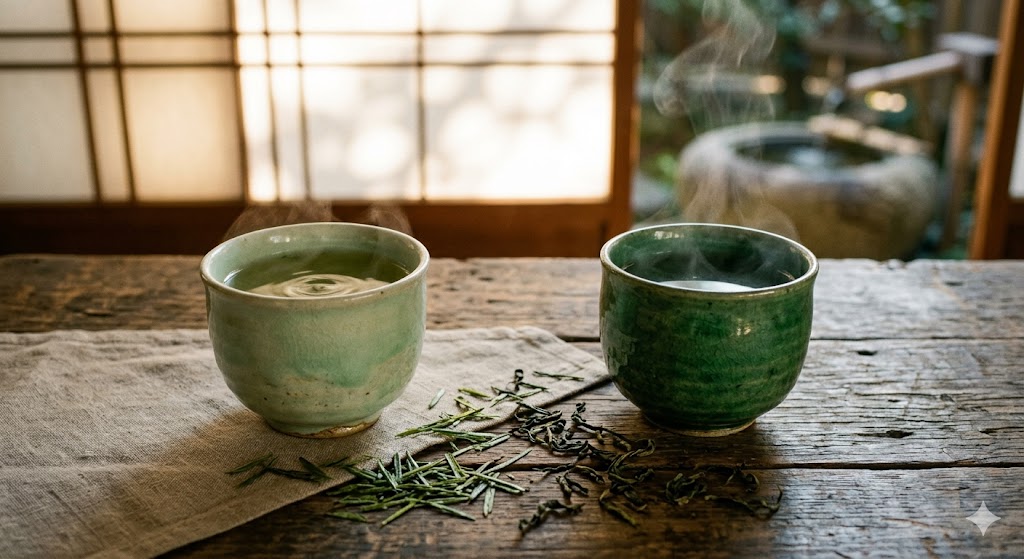
Kabusecha brews notably more vivid green than equivalent sencha — the shading increases chlorophyll production in the leaves. The cup is a richer, deeper green that’s visually distinctive. This is one easy way to identify it: if your Japanese
How Kabusecha Differs from Gyokuro
Gyokuro is the premium category above kabusecha — 3–4 weeks of shading, typically with more elaborate overhead cover, producing the highest L-theanine concentrations of any Japanese green
Kabusecha is more accessible than gyokuro in two ways: it’s considerably less expensive, and it’s less demanding to brew. Gyokuro requires very low water temperature (50–60°C) to avoid extracting bitterness from its extremely concentrated catechins. Kabusecha brews well at 70–75°C, which is much closer to normal sencha temperatures.
How to Brew Kabusecha
Kabusecha deserves careful brewing to express its full potential:
- Water temperature: 70–75°C
- Leaf amount: 5–6g per 150ml
- Steep time: 60–90 seconds
- Re-steeps: 2–3 times (second infusion is often excellent)
The lower temperature is important — it prevents extracting the bitter catechins that shading left behind in milder form. You’re specifically trying to capture the sweet, umami-forward compounds that shading encouraged, and higher temperatures disproportionately extract the astringent compounds instead.
Our kabusecha responds particularly well to this temperature range, producing a sweeter and richer first infusion.
When to Drink Kabusecha
Kabusecha is ideal when you want more complexity and sweetness than everyday sencha provides, but don’t have the time or patience for the full gyokuro ritual. It pairs well with:
- Japanese sweets (wagashi), where its sweetness complements rather than competing
- Light sushi and sashimi, where the umami depth aligns with the fish
- Quiet afternoons when you want a
tea that rewards attention - Guests who know
tea and want to try something thoughtfully chosen
Frequently Asked Questions
Is kabusecha worth buying over good sencha?
For people who appreciate umami depth and smoother, sweeter cup profiles: yes, absolutely. For people who enjoy bright, fresh, grassy green
Where is kabusecha produced?
Kabusecha is produced throughout Japan’s
Is kabusecha the same as fukamushi kabusecha?
No — fukamushi refers to deep-steamed processing (longer steaming time during production), while kabuse refers to shading during cultivation. You can have fukamushi kabusecha (deeply steamed and shaded), which produces a very different product from regular kabusecha.
Can I use kabusecha to make iced tea ?
Yes — kabusecha makes excellent iced