Japanese Tea Gift Box: Best Options for Every Budget
A Japanese
What Makes a Good Japanese Tea Gift Box
Not all
- Origin specificity: Does the box tell you where each
tea comes from? “Japanese greentea ” is vague. “First-flush sencha from Kagoshima” or “Uji genmaicha” tells you you’re getting something with actual provenance. - Tea variety: A good gift box should include 3–5 different teas, giving the recipient a genuine exploration experience. Single-tea boxes are fine as pantry gifts but less interesting as introductions.
- Packaging integrity: Individual teas should be sealed separately — either in nitrogen-flushed packets or well-sealed tins. Loose
tea tossed into a decorative box without inner sealing is a freshness red flag. - Brewing notes: Quality gift sets include tasting notes and brewing instructions. This matters especially for recipients who are new to Japanese
tea — a gyokuro brewed at the wrong temperature is a wasted gift.
Under $30: The Practical Introduction
At this price point, you’re looking for 3–4 teas in modest quantities (10–20g each) with solid quality. Good options:
Sampler sets from specialty importers: 3–5 teas in small trial quantities. Ideal for someone curious but not yet committed. A set with hojicha, genmaicha, and bancha — Japan’s three most approachable everyday teas — introduces the range without overwhelming. Browse our Japanese tea sampler sets here.
Avoid: department store or big-box
$30–60: The Sweet Spot
This is where Japanese
- 3–4 teas in full sizes (25–50g each) from named Japanese regions
- A mix of styles: perhaps a sencha, a hojicha, a genmaicha, and a kabusecha
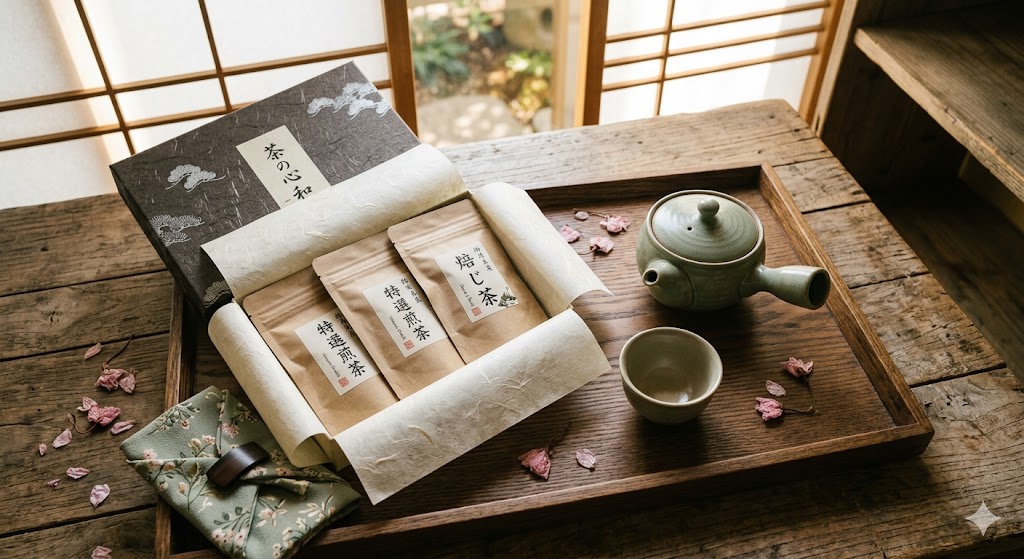
- Attractive presentation packaging — tin, furoshiki-wrapped box, or traditional washi paper packaging
Our Japanese Tea Gift Set in this range focuses on the four core teas we carry — hojicha, genmaicha, bancha, and kabusecha — each in individually sealed portions with brewing guides included. It’s our most-gifted product.
Who this is perfect for: Anyone who cooks Japanese food at home, anyone exploring Japanese culture,
$60–100: The Connoisseur’s Box
At this level, you can include premium teas — kabusecha, high-grade genmaicha, spring-harvest hojicha from Uji — alongside a small piece of teaware. A Hario glass teacup or a simple ceramic yunomi alongside 4–5 premium teas creates a gift that’s visually striking and immediately usable.
Options at this tier:
- Premium
tea + teaware bundle: 3–4 premium teas ($40 worth) + a glass Hario teacup or kyusu ($25–35) in coordinated packaging - Uji specialty box: Focus on Uji (Kyoto) origin teas — gyokuro, Uji hojicha, and matcha (if the recipient uses matcha) — the prestige of Uji origin elevates the gift perception substantially
- Seasonal gift set: Spring shincha (first-flush) sets become available April–June and make extraordinary gifts — the freshest Japanese
tea of the year
$100+: The Ultimate Japanese Tea Experience
At this investment, you’re building a complete experience:
- 5–6 premium teas including at least one gyokuro or high-grade kabusecha
- A full Hario glass teapot or ceramic kyusu
- Two yunomi cups
- Brewing guide cards for each
tea - Perhaps a bag of premium nori or dashi powder to complete the Japanese pantry theme
This is the gift for a serious occasion: housewarming for a Japanese food enthusiast, a meaningful birthday gift, or a host gift that will genuinely be remembered.
Japanese Tea Gift Ideas by Recipient
- Coffee drinker trying
tea : Hojicha-forward set. Its toasty, roasted flavor bridges the coffee-to-tea gap more naturally than grassy green teas. - Health-conscious friend: Low-caffeine set: hojicha, bancha, genmaicha. Emphasize the evening-friendly nature of these teas.
- Serious foodie: Go premium — kabusecha, gyokuro, Uji hojicha with a teapot. They’ll appreciate the specificity.
- Someone who cooks Japanese food: Include dashi powder and nori alongside the teas — cover the pantry, not just the
tea shelf. - Tea beginner: 3-tea intro set with a simple brewing guide. Don’t overwhelm — give them 3 great teas and the confidence to brew them right.
Seasonal Japanese Tea Gifts
Spring: Shincha (first-flush) sets — available May–June, the most anticipated teas of the Japanese calendar
Summer: Cold brew sets with hojicha and genmaicha + a glass pitcher
Autumn/Winter: Warming sets with hojicha, roasted bancha, genmaicha — teas that feel seasonal
Holiday season: Any well-presented set, but the teaware +
Frequently Asked Questions
Is Japanese
How do I know the
Should I include brewing instructions? Yes — especially if the recipient is new to Japanese
What
Can I customize a Japanese